
Review · ITALY
Apulia: Guided Wine Tasting with Local Appetizers
The best part of this Apulian tasting is its setting: you sip wine among the vines at a working farm in the Itria Valley, not in a polished city tasting room. I like the four indigenous-grape wines and the fact that each comes with its own homemade appetizer, so you taste the food and wine as locals intend.
I also like the friendly family-business feel. Guides explain how the grapes are harvested and how the farm moved toward organic agriculture. The main consideration is that this is a compact two-hour introduction, not a full winery tour with a large production facility or a long meal.
Key points at a glance
- Four local grape varieties: Taste Verdeca, Moscato, Nero di Troia rosé, and Nero di Troia red.
- A vineyard walk comes first: You get a short look at the rows of vines before sitting down to taste.
- Food is part of every pour: Four typical Apulian appetizers are paired with the four wines.
- A personal family-farm setting: The atmosphere is informal, friendly, and tied to local agriculture.
- Useful wine education: Expect explanations of grape differences, harvest methods, and organic farming.
- Good value at $37: Four glasses, four appetizers, a guided tasting, and the vineyard setting make this a sensible evening activity.
A two-hour taste of the Itria Valley
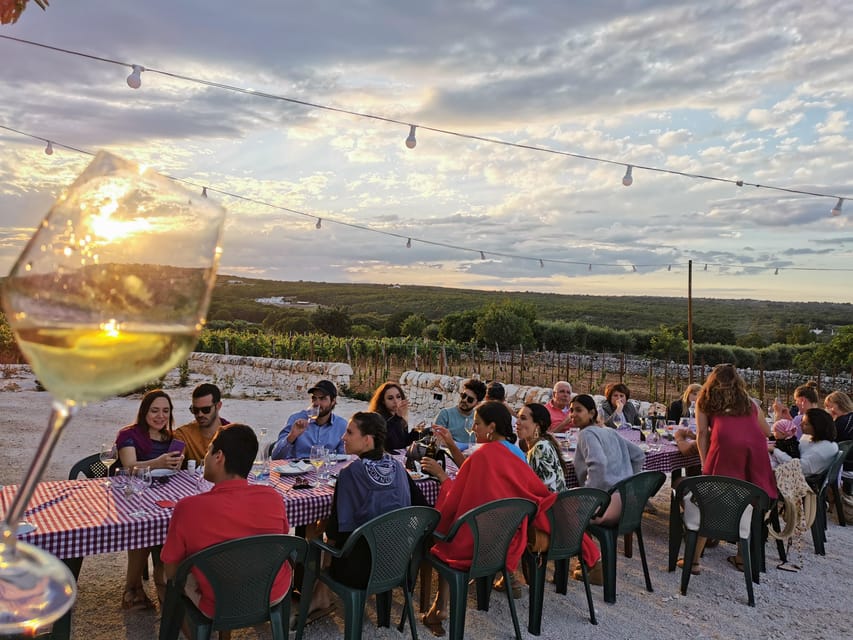
Vigna il Castagno, operated by Puglia dei Trulli, offers a simple idea that works well: walk through the vineyard, sit down with local food, and taste a set of wines made from Apulian grapes.
That order matters. You first see the vines and the farm setting, then taste what comes from them. It gives the wine a sense of place without turning the visit into a technical lecture.
The experience is offered in English or Italian. The guide leads the walk and explains the wines, grape varieties, harvest, and agricultural practices. The tone appears to be friendly rather than formal, which suits a small family-run farm better than a scripted tasting room.
You should allow about two hours. That is enough time to taste four wines at an unhurried pace, but not enough for a full winery tour, extensive cellar visit, or multi-course dinner. Think of this as a focused introduction to Apulian wine and farm food.
More Wine Tasting Tours in Italy
- Florence: Chianti Wineries Tour with Wine Tasting
★ 4.5 · 10,071 reviews - Small-Group Wine Tasting Experience in the Tuscan Countryside
★ 5.0 · 7,392 reviews - Rome: Tuscany & Montepulciano Day Trip with Lunch & Wine Tasting
★ 4.5 · 5,232 reviews
Walking among the vines before the tasting
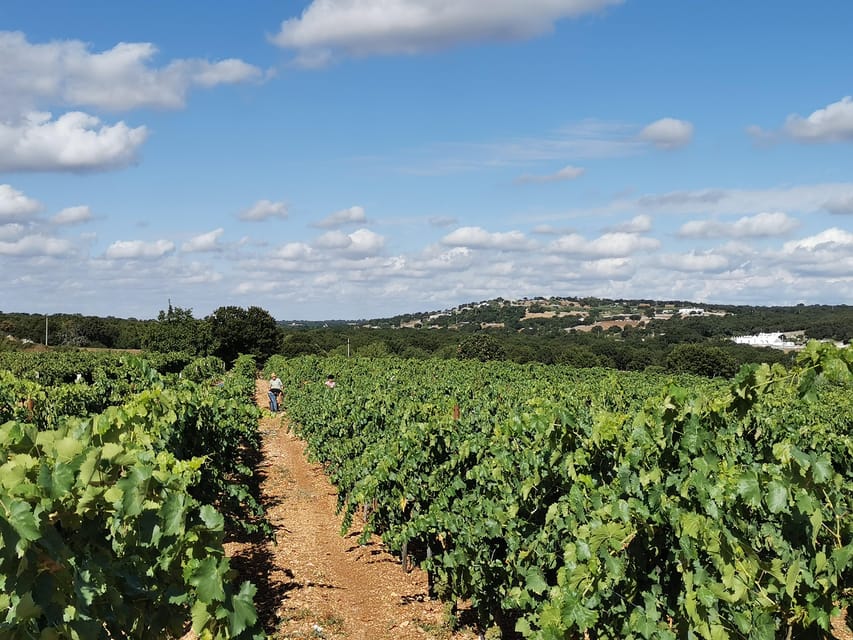
The vineyard walk is a small part of the outing, but it gives the visit its character. You are not simply handed four glasses at a table. You begin among the rows of vines in the Itria Valley, where the surrounding farm setting helps explain the connection between the bottles and the land.
The walk is also useful if you do not know Apulian wine. The guide can point out how different grapes are used and explain how the harvest works. One particularly interesting topic is the farm’s move toward organic farming, a change that gives you a better sense of how the business operates today.
Do not expect a long hike. The supplied details describe walking in the vineyard, not a countryside trek. Wear shoes suitable for a farm path, especially if the ground is uneven or dry. The setting is a major reason to choose this activity, so you will get more from it if you arrive ready to spend time outdoors rather than treating the walk as a quick photo stop.
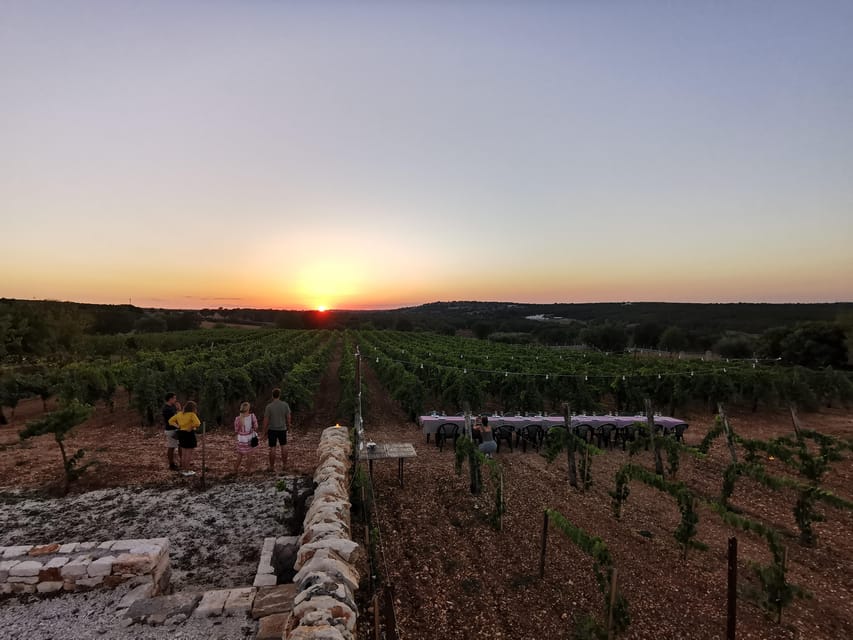
The vineyard is especially appealing near sunset. An evening tasting can bring softer light and cooler air, though starting times depend on availability. If you want that mood, check the schedule before booking.
Four wines, four different introductions to Apulia
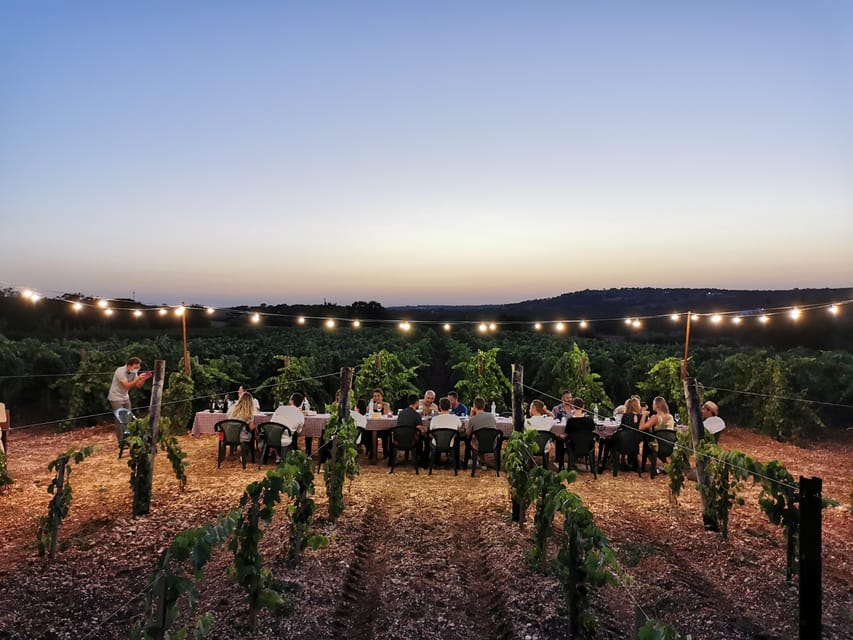
The tasting includes four glasses from Vigna il Castagno. The exact wines can change if availability requires it, but the planned lineup offers a useful spread of styles and grapes.
Pietra Viva, Verdeca white
Pietra Viva is a still white made from 100 percent Verdeca, an indigenous grape of the area. It is labeled IGP Valle d’Itria and has an alcohol level of 12 percent.
This is a good opening wine because it gives you a taste of a local white grape before the stronger flavors of the rosé and red. The guide can help you notice how Verdeca differs from the other grapes in the flight. If you usually choose familiar international varieties, this is one of the bottles that makes the tasting worthwhile.
Same town, a different pour:
- Tuscany Day Trip from Florence: Siena, San Gimignano, Pisa and Lunch at a Winery
★ 5.0 · 21,634 reviews - SMALL-GROUP Wine Safaris: Tuscan Wine Tasting Tours from Florence
★ 5.0 · 5,088 reviews - Winner 2025 Florence Sunset Food & Wine Tour by Eating Europe
★ 5.0 · 5,015 reviews - From Florence: Siena, San Gimignano, Pisa & Lunch at Winery
★ 4.8 · 4,538 reviews
1929 Moscato, dry white
The 1929 Moscato is made from 100 percent Moscato and is listed as a dry white with a natural color. It is labeled IGP Puglia and has an alcohol level of 12.5 percent.
Many people expect Moscato to be sweet. This bottle gives you a chance to compare that expectation with a dry version. Pay attention to the contrast between this wine and the Verdeca. They are both whites, but the grape and style offer a different profile.
The supplied information also identifies the grape as Moscato di Trani. That local connection adds another useful talking point during the tasting.
1° Luglio, Nero di Troia rosé
The 1° Luglio is a still rosé made from 100 percent Nero di Troia. It carries the IGP Puglia designation and has an alcohol level of 12.5 percent.
This is a helpful middle point in the tasting. You move from whites into a wine with more color and a different expression of the Nero di Troia grape. The guide can show you how one grape can appear in both rosé and red form, which makes the later comparison more meaningful.
Terra Viva, Nero di Troia red
Terra Viva is a still red made from 100 percent Nero di Troia, with IGP Puglia status and 13 percent alcohol.
Tasting the Nero di Troia rosé and red in the same session is one of the most educational parts of the lineup. You can compare the grape without having to remember a tasting from another day. The red gives the flight a natural finish and pairs well with a more substantial local appetizer.
The wines are served as four glasses rather than full pours. That is typical for a tasting and lets you try several styles without committing to four large glasses. Still, anyone hoping for generous restaurant-sized servings should set expectations accordingly.
Homemade appetizers make the wines easier to understand
Each wine comes with a typical Apulian appetizer. The individual dishes are not specified in advance, so you should not book this expecting particular ingredients or a fixed menu.
That flexibility is not necessarily a weakness. At a small farm, the pairings can reflect what is available and what fits the wine that day. The important point is that food is built into the experience rather than added as an afterthought.
The appetizers recreate the farm-to-table side of Apulia in a modest way. You taste the wine alongside local flavors, which helps you understand why a crisp white, dry Moscato, rosé, and red are served in sequence.
The food is described as homemade and typical, not as a full dinner. I would plan a separate meal if you need a substantial evening plate. For a light early evening tasting, the four pairings should make the wine feel more complete and help prevent the alcohol from catching up with you.
What the guide adds to the visit
The guide is central to the value here. Without explanations, four glasses of wine and four small bites could feel pleasant but forgettable. With a good host, you learn why these grapes matter and how the farm works.
The talk covers how each grape makes different wines, how the grapes are harvested, and how the farm became an organic producer. Those are practical subjects, not abstract wine theory. You get information you can use when ordering wine elsewhere in Apulia.
The tour is suitable for beginners because you do not need to know tasting vocabulary. It also gives experienced wine drinkers enough local material to make the visit worthwhile, particularly through the indigenous varieties and the Nero di Troia comparison.
Vincenzo is one named member of the team connected with the experience. He has also helped arrange pickup and drop-off for at least one visitor, but transportation is not listed as a standard inclusion. Do not assume a transfer is included. Ask directly if you need help reaching the farm.
The setting and atmosphere
The farm is repeatedly described as beautiful, with the vineyard itself serving as the main backdrop. That setting does much of the work. You get an agricultural view of Apulia, rather than a tasting surrounded by shelves of bottles or a busy urban crowd.
The family-run character is another strength. The mood is friendly and relaxed, with guides who make an effort to explain things clearly. That makes this a good choice for couples, families with adult children, and small groups looking for an evening activity that feels personal.
The experience is not designed around spectacle. There is no stated cellar tour, cooking class, vineyard harvest, or formal meal. If you want a large estate with extensive production equipment, this may feel too intimate. If you prefer a small farm and direct contact with the people who make the wine, the scale is a plus.
Some visitors have also purchased wine, olive oil, and spices from the farm. These products are available for sale, but buying them is optional. This can be handy if you find a bottle you want to remember the evening by, though you should not treat shopping as a promised part of the tour.
Is $37 a fair price?
At $37 per person, the value is strong for a two-hour guided tasting. The fee covers a vineyard walk, four wines, four typical appetizers, and live explanations in English or Italian.
The setting adds value that a basic bar tasting cannot provide. You are paying not only for the liquid in the glasses, but also for access to a working farm and a local guide who can explain grape varieties and farming practices.
It is still important to compare the experience with what you want. If your priority is a large amount of wine, a long meal, or a technical tour of winemaking equipment, $37 may not buy the kind of visit you have in mind. If you want a relaxed introduction to Apulian grapes with enough food to accompany the tasting, the price is reasonable.
The ability to reserve now and pay later gives you some flexibility, and cancellation is free up to 24 hours before the activity for a full refund. Those terms are useful when your Apulia plans are still shifting.
Who should book this tasting?
I would choose this for anyone staying near the Itria Valley who wants a local food and wine experience without spending an entire day on it.
It suits:
- First-time wine tasters who want clear explanations.
- Experienced drinkers interested in Verdeca, Moscato di Trani, and Nero di Troia.
- Couples looking for a relaxed evening among the vines.
- Small groups who value a family-run atmosphere.
- Visitors who want to learn about Apulian farming as well as wine.
It is less suitable if you need a fully specified menu, large meal, winery production tour, or guaranteed transportation. The activity is also not the right choice if you dislike walking outdoors or prefer a strictly formal tasting led through advanced wine terminology.
Practical advice before you go
Check the available starting time, especially if you want a sunset visit. The experience lasts two hours, and the vineyard setting is one of its best features.
Wear comfortable shoes for walking among the vines. Bring a light layer if you are booking later in the day, since the tasting takes place in a rural outdoor setting or a farm environment.
Tell the guide if you are new to wine. The session is meant for both enthusiasts and connoisseurs, so there is no reason to pretend you know more than you do. You will get more from the tasting if you ask how Verdeca differs from Moscato, or how Nero di Troia changes between rosé and red.
Remember that the appetizer selection and wine lineup may vary with availability. The listed four wines are the intended program, but the farm may make substitutions.
Should you book it?
Book this tasting if you want two easygoing hours of Apulian wine, homemade food, and vineyard scenery for $37. The strongest reasons are the local grape varieties, the clear explanations about farming, and the warm family-business atmosphere.
Skip it if you are searching for a major winery complex, a full dinner, or a long technical tour. For most visitors based in the Itria Valley, though, this is a well-priced way to connect a glass of wine with the farm and traditions that produced it.
FAQ
Where does the wine tasting take place?
It takes place at Vigna il Castagno, a farm in Apulia’s Itria Valley.
How long does the experience last?
The guided tasting lasts two hours.
How many wines are included?
Four glasses of wine are included.
Which grape varieties are used?
The planned tasting includes Verdeca, Moscato, and Nero di Troia. Nero di Troia is served as both a rosé and a red.
What wines are listed for the tasting?
The listed wines are Pietra Viva Verdeca white, 1929 Moscato dry white, 1° Luglio Nero di Troia rosé, and Terra Viva Nero di Troia red.
Is food included?
Yes. Four typical Apulian appetizers are included, with one paired with each wine.
Is there a vineyard walk?
Yes. Walking in the vineyard is included.
Which languages are available?
The live guide is available in English and Italian.
Can the wines change?
Yes. Wine selections may vary depending on availability.
Can I cancel for a refund?
You can cancel up to 24 hours in advance for a full refund.
Can I pay later?
Yes. You can reserve the activity and pay later, so you do not need to pay at the time of booking.
Freshly poured around Italy
- Polignano a Mare: Private Cruise with Champagne★ 4.8 · 66 reviews
- Polignano: Coastline Tour With Prosecco And Taralli & Swim★ 4.7 · 103 reviews
- Rome: Pompeii Tour with Wine and Lunch by High Speed Train★ 4.8 · 485 reviews
- Polignano a Mare: Boat Cruise to Scenic Caves with Prosecco★ 4.7 · 550 reviews
- Polignano a Mare Boat Tour with Prosecco and Taralli★ 4.9 · 334 reviews
- Polignano a Mare: Boat Tour with Prosecco and Snacks★ 4.8 · 282 reviews
- Pisa: Cathedral Guided Tour and Tower tickets & wine tasting★ 4.8 · 78 reviews
- Piedmont: Winery Tour, Taste Barolo, Barbaresco & Local Food★ 4.6 · 61 reviews
Wine Tasting Tours, side by side.
From Porto: Douro Valley w/ Boat Tour, Wine Tasting & Lunch
Read our review →
Complete Douro Valley Wine Tour with Lunch, Wine Tastings and River Cruise
Read our review →
Florence: Chianti Wineries Tour with Wine Tasting
Read our review →
From Split: Krka Waterfalls, Food & Wine Tasting Tour
Read our review →
Small-Group Wine Tasting Experience in the Tuscan Countryside
Read our review →
Montserrat & Cogwheel Train, Gourmet Wine Tasting & Tapas/Lunch
Read our review →
Rome: Tuscany & Montepulciano Day Trip with Lunch & Wine Tasting
Read our review →
SMALL-GROUP Wine Safaris: Tuscan Wine Tasting Tours from Florence
Read our review →Lists this tasting sits in