
Review · BORDEAUX
Workshop Bordeaux wine tasting: 4 reds & charcuterie pairing
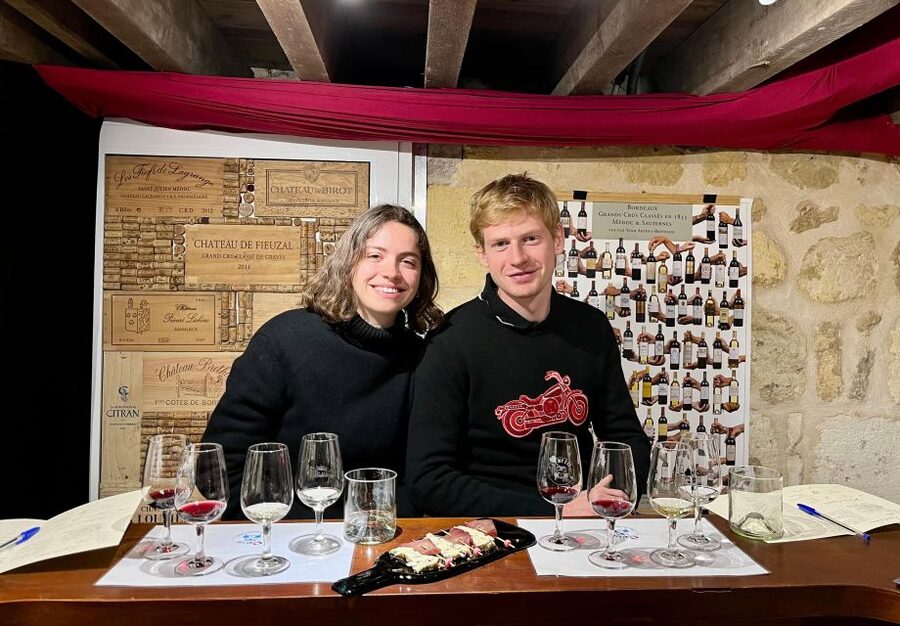
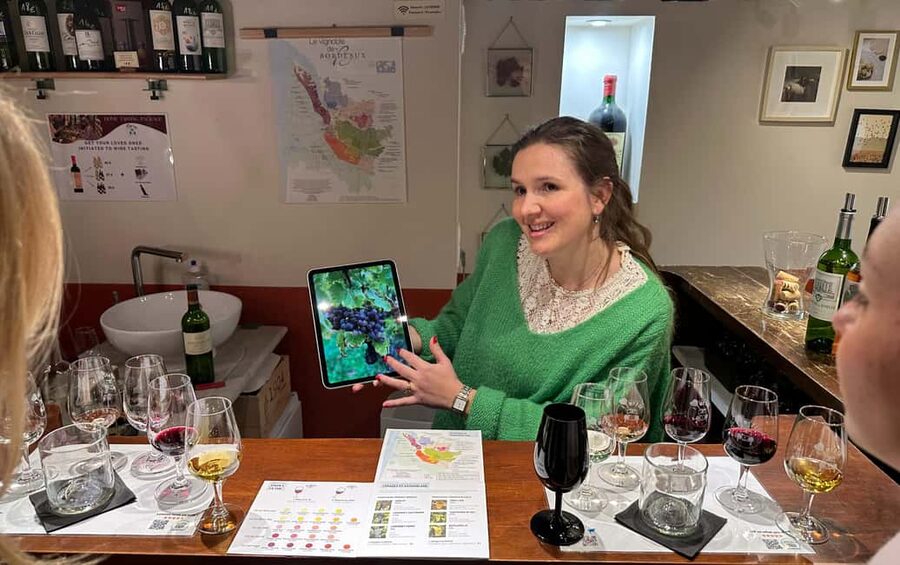
Bordeaux wine can seem like a code of regions, grapes, blends, and grand names. This one-hour class makes that code easier to read, using four red wines, a mystery glass, an aroma game, and charcuterie. You will taste the contrast between Cabernet Sauvignon-led Médoc and softer Merlot from Saint-Émilion without leaving Bordeaux city.
I like the six-person limit, which keeps the session conversational rather than stiff. I also like the teaching plan: one wine may show a single grape clearly, another may come from an organic family estate, and another may be a prestigious Grand Cru or a mature bottle. The main consideration is the short format. You get a strong introduction, not a full vineyard day or a long technical seminar.
Key points at a glance
- Four Bordeaux reds plus a mystery glass: Compare grape, blend, age, and style in a compact tasting.
- Cécilia and Mathilde lead the class: Both are certified wine experts trained at the Université du Vin.
- Left Bank and Right Bank explained: Learn why Cabernet Sauvignon and Merlot can create very different wines.
- Charcuterie is part of the lesson: Food pairing helps you notice how texture and flavor change with each wine.
- The setting can vary: Expect a stone tasting room, private courtyard, or cool underground cellar, depending on the season.
- Small group, easy location: The room is 100 meters from the Stalingrad stop on tram A, but the entrance is easy to miss.
A clear introduction to Bordeaux reds
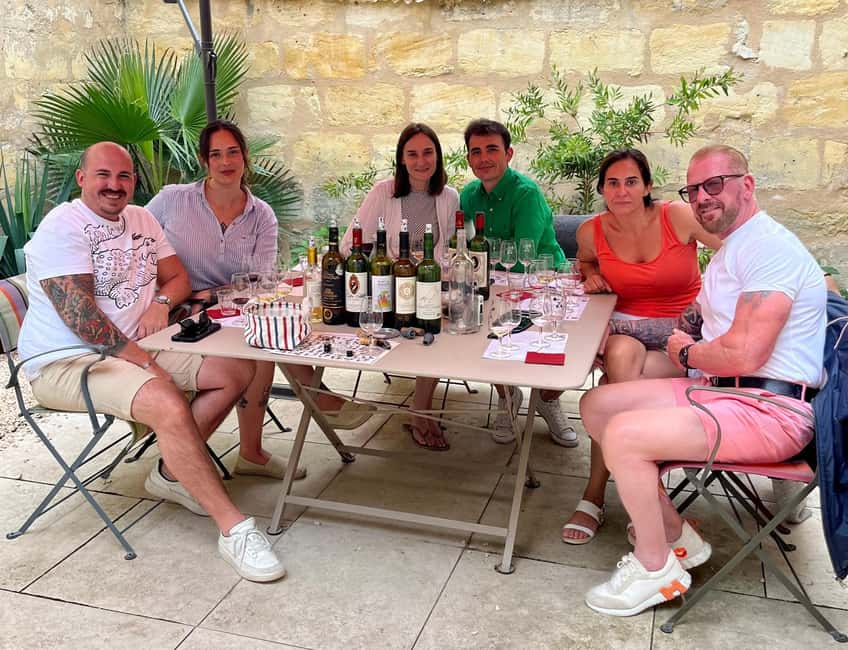
The value here is not simply the number of glasses. It is the comparison. Bordeaux is famous for blends, yet a new wine drinker can easily taste several bottles without understanding what makes them different. This class gives each wine a job.
You may encounter a single-varietal wine that shows the personality of Merlot or Cabernet Sauvignon on its own. You may then taste a blend from a family-run organic estate, followed by a more prestigious wine where place, cellar work, and age matter more. One mature wine is included, giving you a chance to notice how Bordeaux changes over time.
That sequence matters. Young reds often speak in terms of fruit, tannin, and freshness. Older reds can show softer structure and more developed aromas. You will not just hear that wine ages well. You will taste why age changes the experience.
More Wine Tasting Tours in Bordeaux
- Bordeaux: Cité du Vin Entry Ticket and Wine Tasting
★ 4.6 · 3,885 reviews - From Bordeaux: Afternoon Saint-Emilion Wine Tasting & snack
★ 4.8 · 1,581 reviews - Medoc or Saint Emilion Wine Tasting and Chateau from Bordeaux
★ 5.0 · 1,415 reviews
Left Bank versus Right Bank in one hour
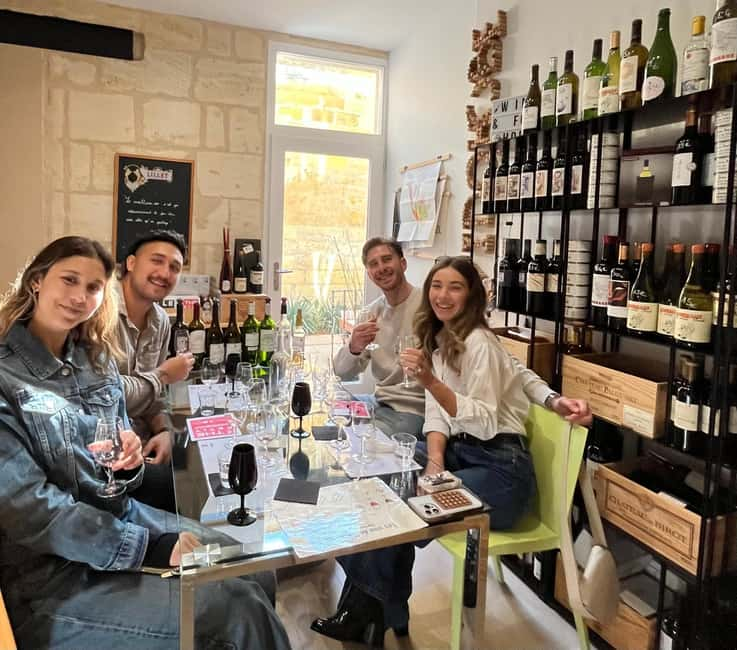
The class focuses on one of Bordeaux’s most useful dividing lines. On the Left Bank, areas such as the Médoc are closely linked with Cabernet Sauvignon. That grape can bring firm structure, darker fruit, and the capacity to age. On the Right Bank, Saint-Émilion is strongly associated with Merlot, often giving a rounder, smoother, more immediately fruity style.
These are broad patterns, not rigid rules. Bordeaux producers blend grapes, and the final character also depends on soil, vintage, winemaking, and time in the bottle. Still, the Left Bank and Right Bank comparison gives you a practical map for future menus and shop shelves.
I especially like this approach for anyone who has visited, or plans to visit, Médoc or Saint-Émilion. A vineyard excursion shows you scenery and estates. This class helps you taste the difference side by side. It can also make a later winery visit more rewarding because you already have a few reference points.
What happens at 25 Avenue Thiers
You meet at 25 Avenue Thiers, 33100 Bordeaux, just 100 meters from the Stalingrad stop on tram A. The address is convenient, but do not expect a prominent street-front wine bar. The tasting room sits behind a building.
Look for the Guy Hoquet panel. The entrance is the gray door beside it, with a bell marked I ♥️ TASTING. This is worth noting because the meeting point can be easy to pass if you are watching for a shop sign or restaurant.
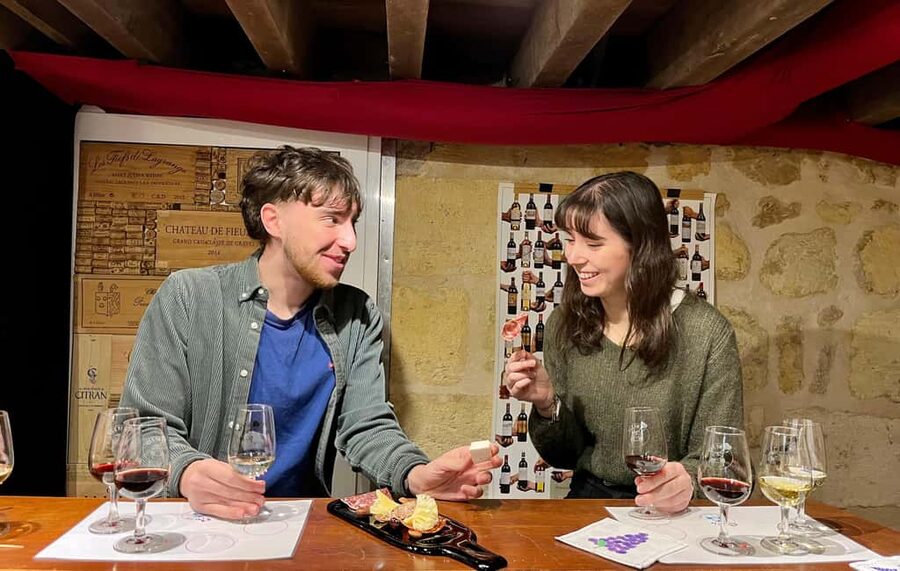
The room changes with the season. You might sit in a stone-built tasting room, a private courtyard, or an underground cellar. That variation affects the mood, but the central purpose remains the same: a small, focused class rather than a large commercial tasting.
The setting is also one reason to allow a few extra minutes for arrival. You do not want to begin the hour searching around the block, especially when the entrance is tucked behind another building.
The four glasses and the mystery pour
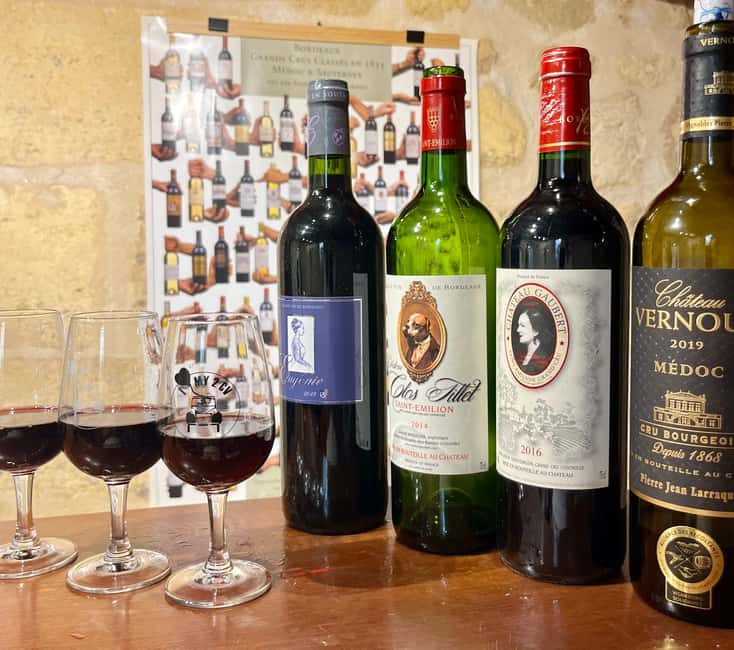
The main tasting includes four Bordeaux red wine glasses. The selection is designed to show range rather than simply present four similar bottles.
You can expect the lesson to touch on:
- Grape variety: How Merlot and Cabernet Sauvignon differ in fruit, structure, and texture.
- Appellation: Why the name of a Bordeaux area gives clues, but does not tell the whole story.
- Blend: How producers combine grapes to shape balance and ageing potential.
- Terroir: How the place where grapes grow affects the finished wine.
- Vinification: How cellar choices influence aroma, body, and feel.
There is also a mystery glass. That adds a useful break from passive listening. You have to use your senses and make a judgment before the answer is given. The aroma game works in the same way, helping you put words to smells that may be familiar but hard to name.
You do not need a polished wine vocabulary. The point is to notice. Is the wine fruity, firm, soft, fresh, mature, or more complex? You will get more from the class if you say what you actually sense instead of trying to sound like a sommelier.
More Wine Tasting Tours in France
- Saint Emilion Day Trip with Sightseeing Tour & Wine Tastings from Bordeaux
★ 5.0 · 1,120 reviews - Saint Emilion Half-Day Trip with Wine Tasting & Winery Visit from Bordeaux
★ 4.5 · 1,034 reviews - From Bordeaux: Half-Day Saint-Émilion Tour and Wine Tasting
★ 4.7 · 699 reviews - Bordeaux: Vineyards Wine Tasting Half-Day Trip
★ 4.2 · 470 reviews
Why the charcuterie pairing matters
The charcuterie is not just a snack placed beside the wine. It is used to show how food affects your impression of a red.
Fat, salt, seasoning, and texture can soften the feel of tannin or make fruit seem more pronounced. A wine that feels stern by itself may seem more balanced with food. Another may lose some of its charm beside a strongly flavored bite. These small comparisons teach a practical lesson you can use at a French restaurant later in your trip.
The pairing also makes the hour more relaxed. Wine instruction can become overly formal when you are asked to stare at a glass and listen to a long explanation. A plate of artisanal charcuterie gives you something concrete to discuss and helps the group connect the tasting to real meals.
If you prefer white wine, tell the provider in advance. A white Bordeaux tasting can be arranged for accompanying people, according to the information provided. The standard experience, however, centers on four red wines.
Cécilia and Mathilde as guides
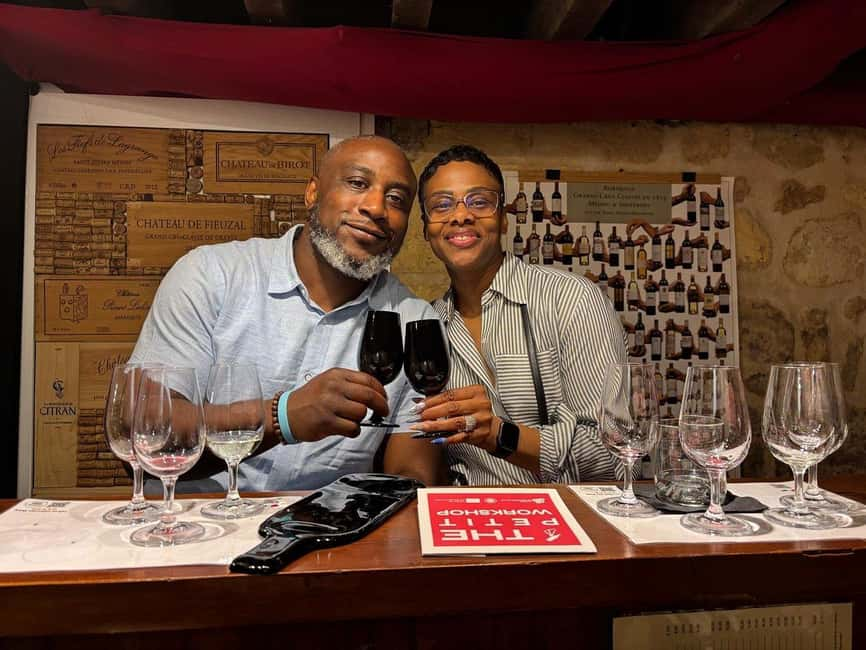
Cécilia and Mathilde are certified wine experts trained at the Université du Vin. Their role is not simply to pour and recite facts. The format is built around conversation, questions, and sensory exercises.
That style suits beginners who may feel nervous about tasting in front of other people. You are not expected to know the difference between every appellation before you arrive. The class starts with the basics and uses each glass to make the ideas concrete.
It also works for serious wine fans. The lesson can move into blending, ageing, grape selection, and winemaking choices rather than stopping at broad tourist facts. One participant even found the blending exercise especially useful, since it showed how the flavor and depth of a wine can change when the balance shifts.
The tone is likely to depend on the group and on whether Cécilia or Mathilde leads your session. The consistent strengths are the small size, the relaxed setting, and the focus on making technical ideas understandable.
A useful souvenir, not just another tasting
You receive a personal booklet covering Bordeaux wines and the tasting method. That is a small feature, but it improves the value of the class.
Wine information is easy to forget after a few glasses. With the booklet, you can revisit the basic tasting steps and the Bordeaux terms later. It can help when you are standing in a shop trying to remember why one bottle is labeled by a village, another by a château, and another by an appellation.
The booklet also gives you a way to continue learning without buying a separate introductory guide. You will not leave as an expert, but you should have a clearer system for looking, smelling, tasting, and comparing.
The bottles tasted are available for purchase on site. That is useful if one of the wines becomes a favorite, though the class itself does not include bottles to take home.
The one-hour format and its limits
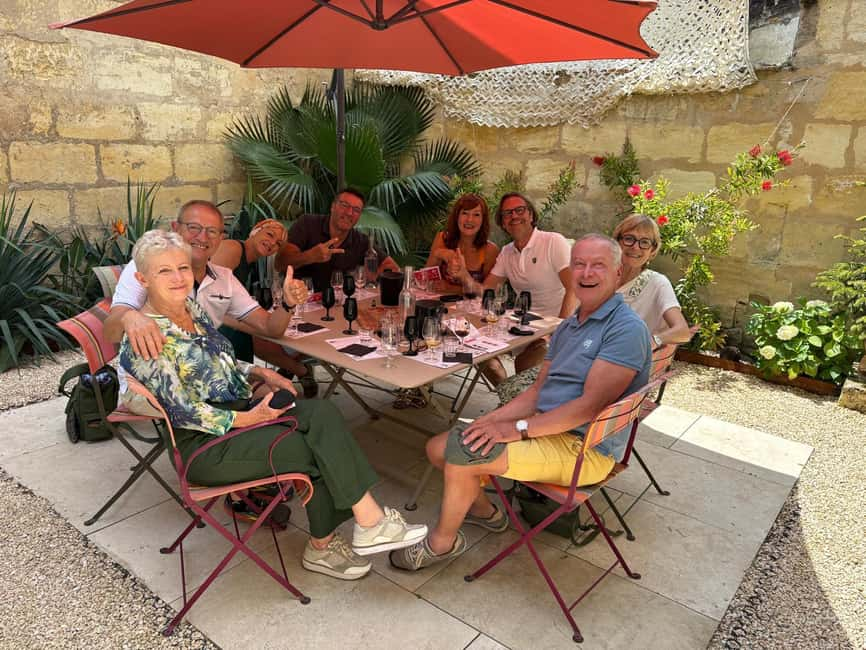
One hour is enough to create a strong first framework. You can taste four wines, compare styles, try the aroma game, work through food pairings, and ask questions without giving up half a day.
The short duration is particularly handy if you are fitting wine education between Bordeaux’s museums, riverfront walks, and meals. The central location near tram A also makes it easier to combine with other plans.
There is a tradeoff. You will not visit vineyards, walk through a château, inspect barrels, or explore several Bordeaux districts in person. You also should not expect a slow tasting of a large number of bottles. The experience gives you a concentrated lesson in the city.
If you already have advanced wine training, you may want to ask detailed questions during the booking process and use the class as a focused comparison rather than a complete Bordeaux course. For most curious drinkers, the compact format is an advantage.
Is $46 a fair price?
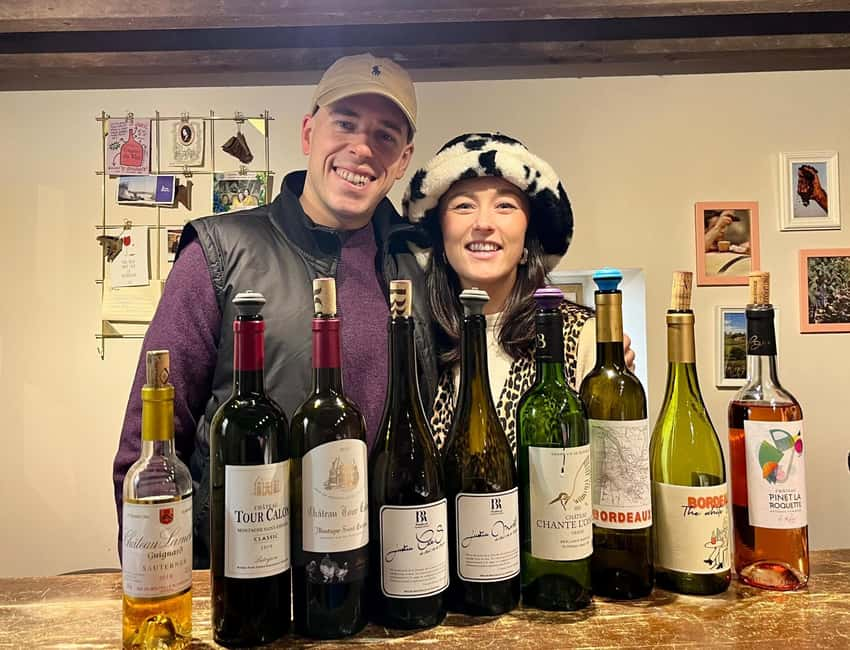
At $46 per person, the price is reasonable for a private-feeling class with four wines, a mystery pour, charcuterie, an aroma game, and a take-home booklet. You are paying for instruction as well as wine, and the group limit of six makes the guidance more personal than a crowded tasting counter.
The value is strongest if you want to understand Bordeaux rather than simply sample it. A bottle tasting with no explanation might cost less, but it would not necessarily help you tell Médoc from Saint-Émilion or understand why a blend feels different from a single-varietal wine.
The price is less compelling if your main goal is a full-day countryside outing. This is not a replacement for a Médoc or Saint-Émilion excursion. It is a city-based lesson that gives you context before or after those trips.
Who should book this experience?
I would choose this for first-time Bordeaux visitors who want an approachable start. It is also a good fit for couples, friends, and solo visitors who prefer a small group and direct conversation.
Wine lovers with some experience should appreciate the comparison between grape varieties, blends, organic estate wines, prestigious bottles, and a mature vintage. The class is not limited to people who are new to wine.
It may not suit you if you have mobility limitations, since the experience is listed as unsuitable for people with mobility impairments. It may also disappoint anyone looking specifically for vineyard views, transport into the countryside, or a meal-sized food tour.
The provider asks you to get in touch for groups larger than six. The normal format is capped at six, so larger parties should not assume they can simply arrive together and join the regular session.
Booking details worth knowing
The experience is offered in English, French, and Spanish. Starting times vary, so you need to check availability for your date.
Hotel pickup and drop-off are not included. You make your own way to Avenue Thiers, with tram A providing the clearest stated transport reference.
You can cancel up to 24 hours in advance for a full refund, and the reserve-now, pay-later option lets you hold a place without paying immediately. Those terms are helpful if your Bordeaux plans are still shifting.
Should you book it?
Book this class if you want Bordeaux wine explained clearly, with real comparisons and enough food to keep the tasting grounded. The small group, skilled guidance from Cécilia or Mathilde, and mix of young, blended, prestigious, and mature wines give the hour more substance than a basic pour-and-move-on session.
Skip it if you want vineyards, château architecture, or a long countryside day. For everyone else, $46 buys a practical foundation you can use at restaurants, wine shops, and future winery visits. I would schedule it early in your Bordeaux stay, then use what you learn for the rest of your trip.
FAQ
Where does the Bordeaux wine tasting take place?
It takes place at 25 Avenue Thiers, 33100 Bordeaux, about 100 meters from the Stalingrad stop on tram A.
How do I find the entrance?
The tasting room is behind a building. Look for the Guy Hoquet panel, then use the gray door beside it. The bell is marked I ♥️ TASTING.
How long does the experience last?
The tasting class lasts one hour.
How many people are in the group?
The group is limited to six participants.
Which languages are available?
The experience is offered in English, French, and Spanish.
How many wines will I taste?
You will taste four Bordeaux red wines and one mystery glass.
Is food included?
Yes. The experience includes a charcuterie pairing with the wines.
Is a tasting guide included?
Yes. You receive your own booklet covering Bordeaux wines and the tasting method.
Can people who prefer white wine join?
Yes. A white Bordeaux tasting can be arranged for accompanying people if you contact the provider in advance.
More Workshops and Classes in Bordeaux
- Guided Bordeaux Wine Tasting Class with 6 Wines and pairings
★ 4.9 · 181 reviews - Rome: Pasta Making Class with Wine, Limoncello, and Dessert
★ 4.9 · 3,177 reviews - Rome Cooking Class: Make Pasta and 3 Spritz Cocktails
★ 5.0 · 2,937 reviews - Barcelona Paella Cooking Class with Market Visit, Tapas & Sangria
★ 5.0 · 2,531 reviews
Freshly poured around Bordeaux
- From Bordeaux: Essential Morning Tour with Wine Tasting★ 4.8 · 55 reviews
- From Bordeaux: Half-Day Saint-Émilion Tour and Wine Tasting★ 4.7 · 699 reviews
- Guided Bordeaux Wine Tasting Class with 6 Wines and pairings★ 4.9 · 181 reviews
- From Bordeaux: Saint-Émilion Half-Day Tour with Wine Tasting★ 4.9 · 389 reviews
- From Bordeaux: Half-Day Saint-Emilion Wine Tour★ 4.8 · 257 reviews
- From Bordeaux: Full-Day Medoc Wine Tour★ 4.8 · 119 reviews
- From Bordeaux: Medoc Half-Day Wine Tour★ 4.6 · 280 reviews
- From Bordeaux: Medoc Wineries Tour with Tastings★ 4.6 · 182 reviews
Wine Tasting Tours, side by side.
From Porto: Douro Valley w/ Boat Tour, Wine Tasting & Lunch
Read our review →
Complete Douro Valley Wine Tour with Lunch, Wine Tastings and River Cruise
Read our review →
Florence: Chianti Wineries Tour with Wine Tasting
Read our review →
From Split: Krka Waterfalls, Food & Wine Tasting Tour
Read our review →
Small-Group Wine Tasting Experience in the Tuscan Countryside
Read our review →
Montserrat & Cogwheel Train, Gourmet Wine Tasting & Tapas/Lunch
Read our review →
Rome: Tuscany & Montepulciano Day Trip with Lunch & Wine Tasting
Read our review →
SMALL-GROUP Wine Safaris: Tuscan Wine Tasting Tours from Florence
Read our review →Lists this tasting sits in