
Review · BUDAPEST
Budapest: Essentials of Hungarian Wine Tasting Class
Hungary’s wine story is far more varied than the familiar bottle of Tokaj suggests. This two-hour tasting moves from sparkling wine and whites to reds and a sweet botrytised Tokaj aszú, giving you a useful map of the country’s regions and grapes without asking you to spend a day on a vineyard. Guides such as Tomas, Carlos, John, and Christian have led the sessions, and the host for your evening may vary.
I especially like the small-producer focus, since the wines are bought directly from makers the team knows. I also like the relaxed food pairing: Hungarian cheeses, meats, bread, and other local flavors make this more than a series of formal sips. The main consideration is that pours can be generous. If you finish every glass, eight wines can leave you pleasantly, or rather seriously, tipsy.
Quick takeaways from the Budapest tasting
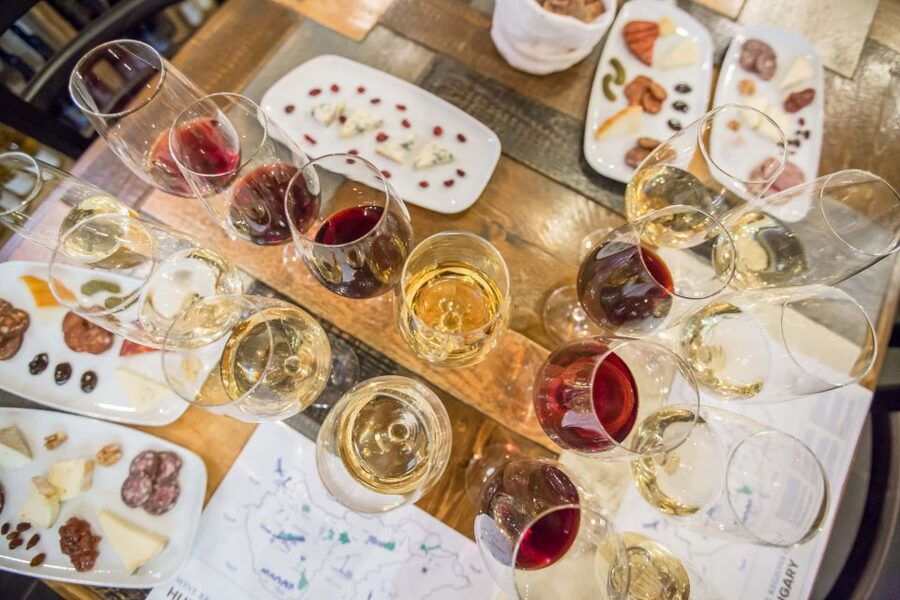
- Eight wines tell the full story: You taste an aperitif, several whites and reds, perhaps a rosé, and a sweet Tokaj aszú.
- The lesson is regional: Your sommelier explains Hungary’s major wine areas, grapes, soils, climate, and current winemaking trends.
- The food is useful, not decorative: Local cheese, charcuterie, bread, and other Hungarian flavors help show how the wines work with food.
- The setting is central: The Tasting Table Budapest is about 150 meters from the National Museum, near Astoria and Kálvin tér.
- The evening is social: You share a table with other wine drinkers, making this a good choice for solo visitors and couples.
- The value is strong: At $65 per person, you receive eight wines, food, mineral water, instruction, and tasting notes over two hours.
Why Hungarian wine deserves two hours of your Budapest trip
Many visitors arrive in Budapest knowing Tokaj, if they know any Hungarian wine at all. Tokaj aszú is the country’s famous sweet wine, but it is only the final chapter of this tasting. The class introduces you to a wider set of regions, grape varieties, and styles.
That matters because Hungarian wine can be hard to decode from a restaurant list. Grape names may be unfamiliar, and the country’s wine regions are not always easy to place. A sommelier gives you a framework: where the wine comes from, what the local climate and soil contribute, and why one bottle tastes different from another.
I like this approach for a first contact with Hungarian wine. You are not simply handed eight unrelated glasses. The wines are chosen to create a story, so you can start deciding what you like and remember a few names for the rest of your trip.
The class is aimed at anyone with an interest in wine, not only serious wine students. You do not need to know how to identify obscure aromas or discuss tannins like a professional. The tone is friendly and informal, while the subject matter can still satisfy someone who already knows the basics.
More Wine Tasting Tours in Budapest:
- Budapest: Hungarian Wine Tasting with 8 Wines and Tapas
★ 4.9 · 446 reviews - 8-Tier Hungarian Wine Tasting in a Cozy Downtown Wine Bar
★ 4.9 · 269 reviews - Budapest: Food Tour with Wine tasting By Foodapest™ 2025
★ 4.8 · 64 reviews
Inside The Tasting Table Budapest
The meeting point is The Tasting Table Budapest on Bródy Sándor utca 9, in District VIII. It is only about 150 meters from the National Museum, so it fits neatly into an evening around the museum and central Pest.
From public transport, the room is a five-minute walk from Astoria on metro line M2 or Kálvin tér on metro line M3. Trams 47 and 49 also stop at those areas. That easy location is useful after a full day of sightseeing, when you want an evening activity that does not require a long ride across Budapest.
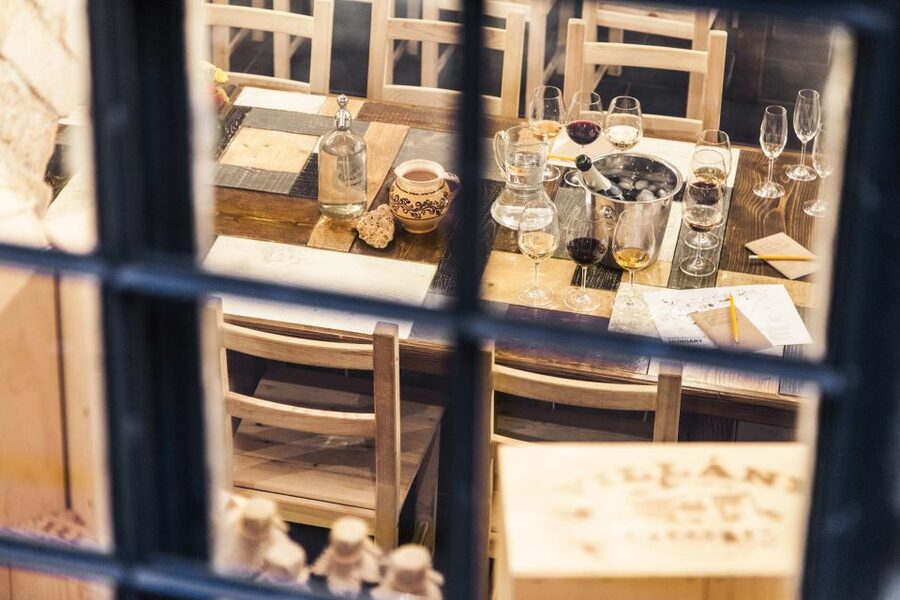
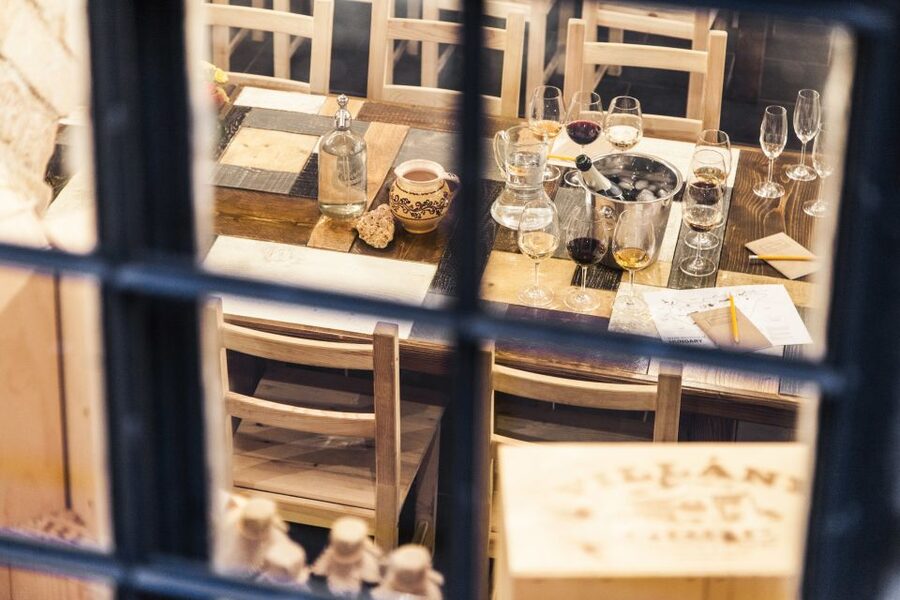
The tasting room has been described as a charming old cellar with brick arches. The atmosphere is part of the appeal. You are in a wine-focused room rather than a large restaurant, and the setting gives the class a clear sense of place without becoming fussy.
Most sessions run from 6:00 to 8:00 PM. That timing works well as an aperitif before dinner, though the food served can be substantial enough to cover much of an evening meal. One useful detail: the 6:00 PM session has been particularly popular with past participants, so check the available start time when booking.
The eight-glass route through Hungary
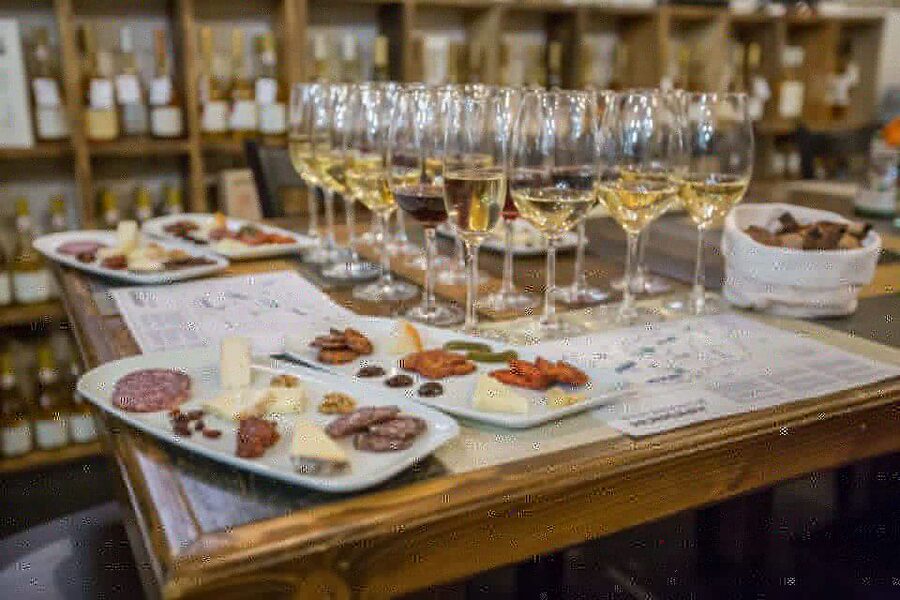
The exact bottles change, which is a good thing for a shop that works with small producers. Still, the overall sequence follows a clear pattern.
You begin with an aperitif. This gets the table talking and lets the sommelier explain how the tasting will work. It is also a gentle start for anyone who is not used to formal wine sampling.
The whites come next, with the possibility of a rosé depending on the selection. This is where the regional comparisons become especially helpful. Your guide can point out differences in grape, acidity, climate, and style, rather than leaving you to judge each glass in isolation.
The red wines follow. You may taste several styles and varieties, with each bottle chosen for a reason. The class is not designed to prove that every Hungarian wine tastes the same. It shows how broad the country’s output can be, from lighter and more restrained bottles to fuller reds.
The closing wine is a sweet botrytised Tokaj aszú. Botrytis, often called noble rot, concentrates grapes and creates the rich sweetness associated with this famous style. Ending with Tokaj aszú gives the tasting a memorable finish and places Hungary’s best-known wine in the context of everything that came before.
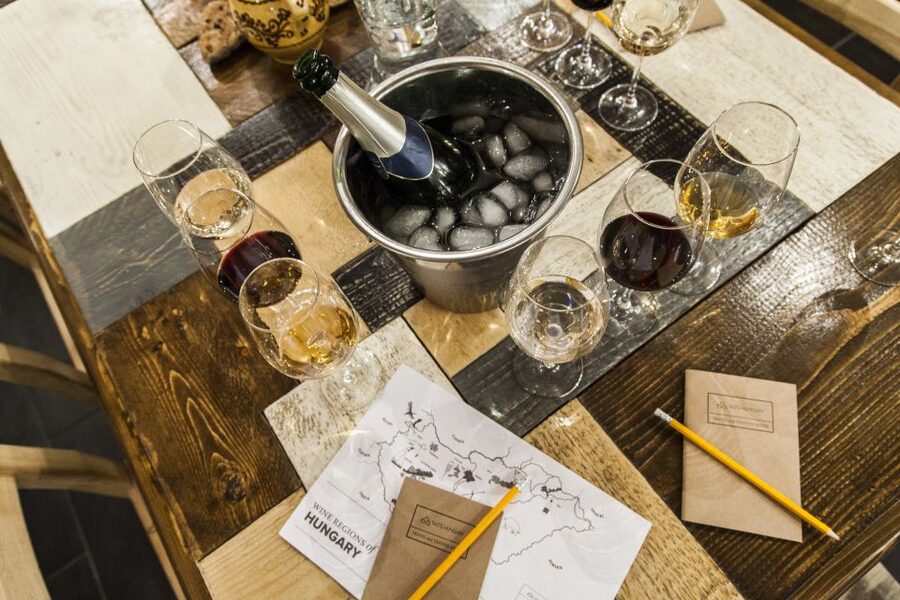
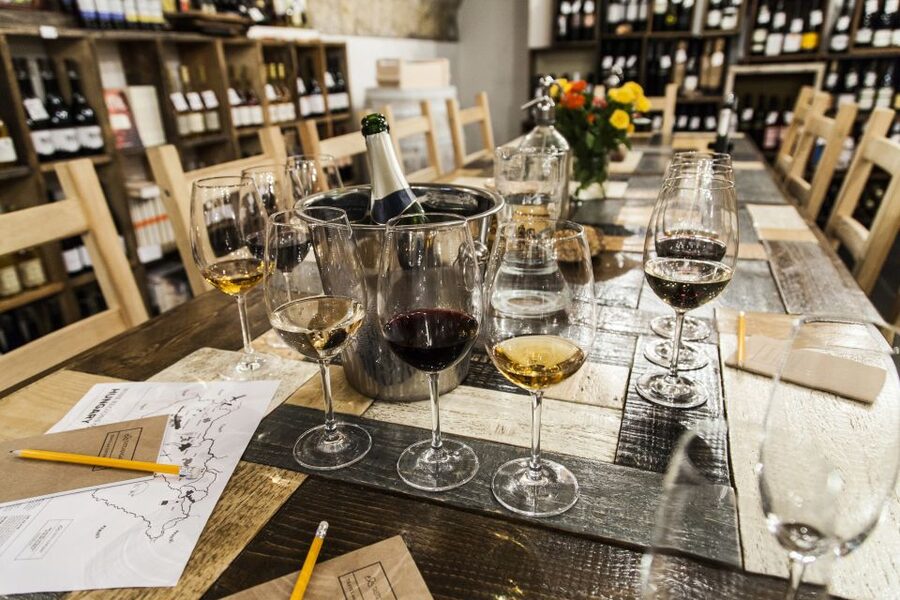
The tasting sheet and map of Hungarian wine regions are practical touches. I recommend writing down the names of grapes and bottles you enjoy early in the evening. Several people have found the wines good enough to buy afterward, and notes become harder to read once you reach the later glasses.
Food pairings that make the wine easier to understand
The food is not an afterthought. You receive Hungarian flavors, with cheese and charcuterie appearing often, along with bread and other accompaniments. One past session included pumpkin seed oil and chutney, while other tables have received generous boards of meats and cheeses.
This helps in two ways. First, the food slows down the effect of the alcohol. Second, it shows you how Hungarian wine behaves alongside salt, fat, spice, and texture. A wine that seems sharp by itself may work beautifully with cheese or cured meat.
The portions have sometimes been described as generous enough to replace dinner. I would not book the class solely as a guaranteed meal, since the exact pairings can change. Still, you should not expect only a few crackers beside eight wines.
One small point to keep in mind is the amount of food. One participant wanted more munchies with the wines, while another found the cheese and charcuterie abundant. Appetite varies, and the pairing selection is not intended to be a full restaurant dinner for everyone.
More Workshops and Classes in Budapest:
- Rome: Pasta Making Class with Wine, Limoncello, and Dessert
★ 4.9 · 3,177 reviews - Rome Cooking Class: Make Pasta and 3 Spritz Cocktails
★ 5.0 · 2,937 reviews - Barcelona Paella Cooking Class with Market Visit, Tapas & Sangria
★ 5.0 · 2,531 reviews - Fettuccine & Tiramisù: Cooking Class with Wine & Limoncello
★ 4.9 · 2,103 reviews
The sommelier makes or breaks the evening
The host is central to this experience. The English-speaking guides have included Tomas, Carlos, John, Christian, Sebastian, Sam, Somali, and others. Your host may differ, but the recurring strength is a mix of regional information, wine expertise, and easy conversation.
Tomas has been praised for explaining how soil and climate affect taste. Carlos has been described as both entertaining and well informed about Hungary and its wines. John has brought personal stories to the subject, while Christian and Sebastian have been noted for clear, welcoming presentations.
The format appears to vary slightly by host. Some explain each wine and then allow time to drink, chat, and compare impressions. That is a good rhythm. You receive enough instruction to learn something, but you are not listening to a lecture from the first pour to the last.
There is one possible weakness: a talkative group can make it hard to hear. One participant also found the guide supplied more information than anyone could retain. My advice is simple: do not worry about remembering everything. Pay attention to the regions and grapes that interest you, and let the rest pass by with the wine.
The social side can be a real bonus. The shared-table format gives solo visitors an easy way to meet people, while couples and friends still have room to talk among themselves. The atmosphere has sometimes continued after the formal session, with participants going out for another drink together.
How much wine do you actually receive?
The advertised selection is eight wines. A typical sequence described for the class includes one sparkling wine, three whites, three reds, and one sweet wine, though the current selection may vary and can include rosé.
The pours are not always tiny tasting measures. Several descriptions of the experience point to generous servings, closer to a small glass than a quick sample. That is part of the value, but it also means you should pace yourself.
Mineral water is included. Use it. Eat with the wine, take notes early, and do not feel obliged to finish every glass if you have had enough. The class is about learning what you like, not proving your stamina.
Hungary’s legal drinking age is 18, so participants aged 18 and above can take part. Since the session takes place in the evening and includes eight pours, plan your return to your accommodation sensibly.
Is $65 a fair price?
At $65 per person, this is not the cheapest way to drink wine in Budapest. It is a good value if you want instruction and food along with the bottles.
The price includes eight Hungarian wines, mineral water, local food pairings, a sommelier-led lesson, tasting sheets, and a regional map. Buying eight separate wines, finding a suitable place to taste them, and paying for an expert explanation would quickly cost more, especially if the pours are generous.
The value is strongest for a first visit to Hungary. You leave with a better idea of which regions and grapes to seek in restaurants or wine shops. You may also find bottles you want to buy for later. The shop has offered the option to purchase tasted wines, and one past participant returned the next day to buy more.
The value is less clear if you already know Hungarian wine well and mainly want a quiet dinner. This is a social class, not a private tasting. The selection changes, the host varies, and conversation around the table is part of the evening.
Who should book this experience?
I would choose this class for you if:
- You are curious about Hungarian wine but do not know where to begin.
- You want an evening activity close to central Budapest.
- You enjoy meeting other people around a shared table.
- You like learning the reason behind a wine, not just drinking it.
- You want local cheese, charcuterie, and other flavors with your tasting.
- You are traveling alone and would welcome an easy social setting.
- You want to identify bottles worth ordering later in the trip.
It is also a smart choice for a short Budapest visit. Two hours gives you a useful introduction without committing a whole day to the countryside. If the class sparks your interest, you can then plan a separate visit to one of Hungary’s wine regions with a better sense of what to seek.
I would hesitate if you dislike group activities, prefer very small pours, or need a quiet room. The number of participants can vary, and a lively table may sometimes make the talk harder to follow. You should also be comfortable with the possibility of drinking more than expected.
Timing, booking, and small practical details
The class is offered on most evenings, usually from 6:00 to 8:00 PM. Check the available start time because the schedule can change.
At least two people are required for the session. A booking can be canceled after confirmation if that minimum is not met, in which case you are offered an alternative or a full refund.
You can cancel up to 24 hours before the activity for a full refund. The reserve-now, pay-later option is useful if your Budapest plans are still moving around.
The activity is conducted in English. Confirmation is provided at booking, and the central location makes it easy to reach by metro or tram.
Should you book the Hungarian wine tasting?
Yes, if you want a friendly, well-organized introduction to a part of Hungarian food culture that many visitors miss. The combination of eight wines, regional explanation, local pairings, and a central cellar setting gives you much more than a standard bar tasting.
The strongest reasons to go are the small-producer selection, the final Tokaj aszú, and the hosts’ personal connection to Hungarian wine. I also value the practical result: after two hours, you should have a clearer idea of what to order, what to buy, and which wine regions deserve more of your time.
Book it early in your Budapest stay if possible. That gives you time to use what you learn at restaurants and shops. Just pace yourself, bring an open mind, and remember that the class is as much about conversation and discovery as it is about finishing eight glasses.
FAQ
Where does the Hungarian wine tasting take place?
It takes place at The Tasting Table Budapest, Bródy Sándor utca 9, 1088 Budapest, in District VIII.
How long is the tasting?
The tasting lasts two hours, usually from 6:00 PM to 8:00 PM.
How many wines are included?
Eight Hungarian wines are included. The sequence begins with an aperitif and generally includes whites, reds, and a sweet Tokaj aszú. A rosé may also appear.
Is Tokaj aszú included?
Yes. The tasting ends with a sweet botrytised Tokaj aszú wine.
Is food included?
Yes. The package includes food pairings based on local Hungarian flavors, including cheese, charcuterie, and other accompaniments.
Is mineral water included?
Yes, mineral water is included with the wine tasting.
Is the activity conducted in English?
Yes. The host or greeter speaks English, and the tasting is offered in English.
How old must I be to participate?
Hungary’s legal drinking age is 18, so anyone aged 18 or older can take part.
How close is the venue to public transport?
The venue is a five-minute walk from Astoria on metro line M2 and Kálvin tér on metro line M3. Trams 47 and 49 also stop at Astoria and Kálvin tér.
Can I cancel for a full refund?
Yes. You can cancel up to 24 hours in advance for a full refund. A minimum of two participants applies, and if that number is not reached, you are offered an alternative or a full refund.
Freshly poured around Budapest
- Budapest: Happy Hour Sightseeing Cruise★ 4.5 · 201 reviews
- Guided Tipsy Food Tour with Drinks Included in Budapest★ 4.9 · 100 reviews
- Budapest: Summer Brunch & Cruise with Prosecco or Cake★ 4.2 · 193 reviews
- From Budapest: Half-Day Countryside Wine Tour with Meal★ 4.8 · 657 reviews
- Budapest: Unmissable Bar Crawls with Shots & VIP Club Entry★ 3.9 · 84 reviews
- Budapest: Sip and Sail River Cruise with Unlimited Prosecco★ 4.5 · 755 reviews
- Budapest: Sunset Cruise with 2 Cocktails★ 4.4 · 379 reviews
- Budapest: Sip & Sail Danube Cruise with Unlimited Beer★ 4.4 · 95 reviews
Wine Tasting Tours, side by side.
From Porto: Douro Valley w/ Boat Tour, Wine Tasting & Lunch
Read our review →
Complete Douro Valley Wine Tour with Lunch, Wine Tastings and River Cruise
Read our review →
Florence: Chianti Wineries Tour with Wine Tasting
Read our review →
From Split: Krka Waterfalls, Food & Wine Tasting Tour
Read our review →
Small-Group Wine Tasting Experience in the Tuscan Countryside
Read our review →
Montserrat & Cogwheel Train, Gourmet Wine Tasting & Tapas/Lunch
Read our review →
Rome: Tuscany & Montepulciano Day Trip with Lunch & Wine Tasting
Read our review →
SMALL-GROUP Wine Safaris: Tuscan Wine Tasting Tours from Florence
Read our review →Lists this tasting sits in