Review · TBILISI
Tbilisi Walking Tour Including Cable Car and Traditional Bakery
Tbilisi reveals itself best on foot, one church, courtyard, bridge, and sulfur bath at a time. This four-hour walk links the city’s big sights with small local touches, including a cable-car ride to Mother of Georgia and a stop at a traditional tone bakery for Georgian pie and lemonade.
I like the strong first-day introduction and the way the route mixes history with ordinary city life. I also like the price: at $19, the cable car, guide, food, and nearly half a day of sightseeing make this an easy value for most visitors.
The main consideration is pace. One account found the walk too slow at times, while others liked the relaxed rhythm. You should also expect hills, uneven streets, changing weather, and church dress rules.
Key points to know before you book
- Mother of Georgia by cable car: Ride from Rike Park up to Sololaki Hill for broad views over Tbilisi.
- A useful first-day route: See many central sights without spending time planning your own path.
- Food is part of the walk: Stop at a tone bakery for a traditional Georgian pie and lemonade.
- Strong guide feedback: Guides named Soso, Ana, Nini, Dimitri, Ellie, Shoti, and others are praised for warmth, clear English, and good local stories.
- Four hours on foot: The route is manageable for most people, but it is not a seated sightseeing tour.
- Practical limits: The cable car may stop in windy weather, and churches require modest clothing.
Why this $19 walk works well as your Tbilisi introduction
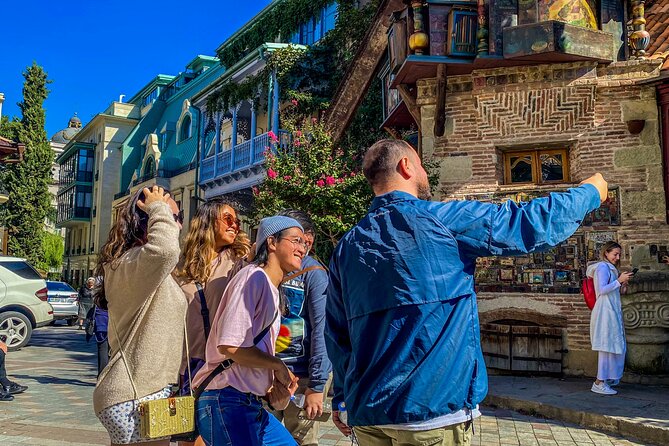
Tbilisi can feel confusing at first. The old city spreads along the Mtkvari River, while hills, churches, balconies, modern buildings, and bathhouses compete for your attention. This tour gives you a basic map in your head before you set off alone.
The route begins near Avlabari Metro at the Traveler’s Meeting Point. That location is more than a signpost. It is a free social space with board games, music, and wine, so you have somewhere identifiable to meet the group. The tour ends near Meidan Bazaar in the center of the old city, putting you in a useful spot for lunch or further exploring.
At $19 per person, the numbers work in your favor. A guide leads the route, the cable car ride is included, and you receive Georgian pie and lemonade. You are paying for structure as much as sightseeing. That matters in Tbilisi, where a good guide can explain why a church, statue, bridge, or street matters instead of leaving you with a string of attractive photographs.
The tour is offered in English, with a morning start at 10:00. The published information also says an evening option may be available, so check the time when booking. The activity is commonly booked well ahead, about 22 days in advance on average, which suggests you should not leave it until the last morning of a short visit.
More rounds worth booking around the world:
- Budapest: Unlimited Prosecco, Beer and Aperol Spritz Cruise
★ 4.8 · 37,304 reviews - Amsterdam: Evening Cruise with Optional Wine and Snacks
★ 4.4 · 22,178 reviews - Tuscany Day Trip from Florence: Siena, San Gimignano, Pisa and Lunch at a Winery
★ 5.0 · 21,634 reviews
Metekhi Cathedral and the founding story of Tbilisi
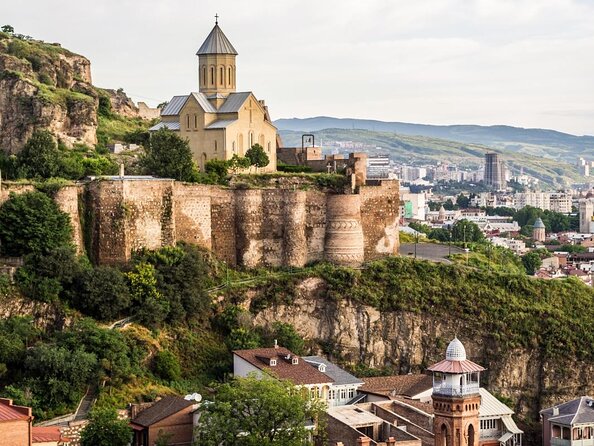
The walk starts with one of the city’s best historic settings. Metekhi Cathedral sits on a cliff above the Mtkvari River, on the left bank. From here, you get an early sense of Tbilisi’s unusual shape: water below, hills around you, and old religious buildings placed wherever the ground allowed.
Your guide explains the church’s links to Vakhtang Gorgasali and the tradition that the site may have held an earlier church connected with the Virgin Mary. You will also hear about Saint Shushanik and the older religious story tied to the place.
The next stop is the monument to King Vakhtang Gorgasali. He ruled Iberia, the kingdom also known as Kartli, during the late fifth and early sixth centuries. Georgian tradition credits him with founding Tbilisi, though the dates and details of his reign are debated.
That mix of legend and history is one of the better features of a guided walk. You are not simply told that a king founded the city. You get a feel for how national memory works in Georgia, where historical figures, religious tradition, and civic identity often overlap.
Europe Square, Rike Park, and the cable car ride
The route crosses Europe Square, where the guide discusses Georgia’s relationship with the European Union. This is a short stop, but it gives current political meaning to what might otherwise seem like an ordinary public space.
You then reach Rike Park on the Mtkvari’s left bank. It is Tbilisi’s youngest major recreational area, with fountains, walking paths, children’s facilities, climbing walls, a maze, and oversized chess boards. The park can feel modern and open after the tighter lanes of the older districts.
The cable-car station is here, close to the Bridge of Peace. The ride to the upper station takes about ten minutes and is included in the tour price. This is one of the clearest reasons to choose the guided route instead of simply wandering on your own. You get a quick change of viewpoint, from river-level streets to the hilltop above the old city.
The cable car does not operate in windy weather. The tour itself runs in all weather, so a bad-weather day could change this part of the experience. If the ride matters most to you, check conditions and keep your expectations flexible.
Mother of Georgia and the best city views
At the upper station, you walk to Kartlis Deda, usually called Mother of Georgia. The twenty-meter aluminum statue was designed by Georgian sculptor Elguja Amashukeli and erected in 1958 for Tbilisi’s 1,500th anniversary.
The figure holds a bowl of wine in her left hand for friends and a sword in her right hand for enemies. It is a simple image, but it says a lot about the Georgian idea of welcome: generous hospitality, paired with a firm sense of self-protection.
This is also one of the tour’s best photo stops. From the hill, you can look down across the old city, the Mtkvari River, Rike Park, and the surrounding slopes. The stop is short, around ten minutes, so you should be ready to listen and take photographs without expecting a long break.
If you prefer a leisurely tour, that short visit may feel tight. If you want a broad overview of Tbilisi without spending the day on hills, it is an efficient use of time.
Same town, a different pour:
- From Porto: Douro Valley w/ Boat Tour, Wine Tasting & Lunch
★ 4.7 · 19,061 reviews - Paris: Moulin Rouge Cabaret Show Ticket with Champagne
★ 4.7 · 16,088 reviews - Chichen Itza, Cenote & Valladolid Tour with Tequila and Lunch
★ 4.5 · 15,789 reviews - Complete Douro Valley Wine Tour with Lunch, Wine Tastings and River Cruise
★ 5.0 · 12,920 reviews
The Bridge of Peace and Tbilisi’s newer face
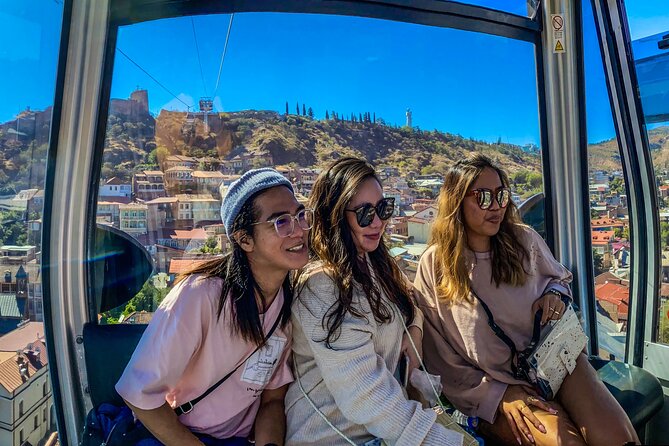
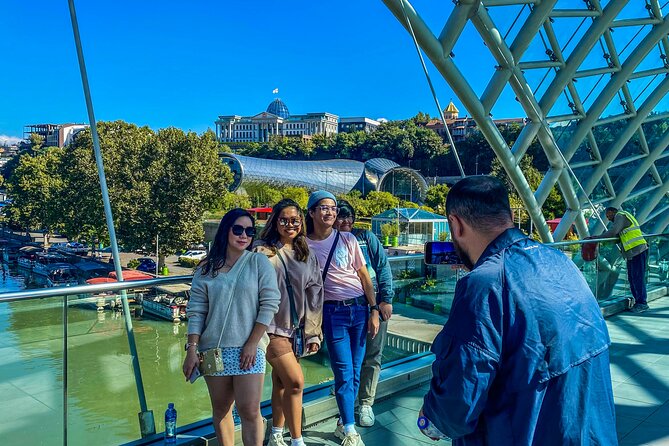
After returning by cable car, the walk reaches the Bridge of Peace. This glass-and-steel pedestrian bridge curves over the Mtkvari and opened in 2010. It was shipped from Italy in 200 sections and fitted together in Georgia.
More than 10,000 LED bulbs light the bridge each evening, starting about 90 minutes before sunset. If you take the evening departure, the lighting may add a different mood. On the morning tour, you see the structure in daylight, which makes its shape and place in the city easier to understand.
The bridge is a useful contrast to the old churches and bathhouses. Tbilisi is not one preserved historic quarter. It is a city where sixth-century buildings, Soviet-era monuments, modern parks, and new architecture share the same compact area.
The group also pauses at the Patriarchate of Georgia and hears about its role. This is another brief stop, more useful for context than for a long visit inside.
Anchiskhati, Sioni, and the city’s oldest churches
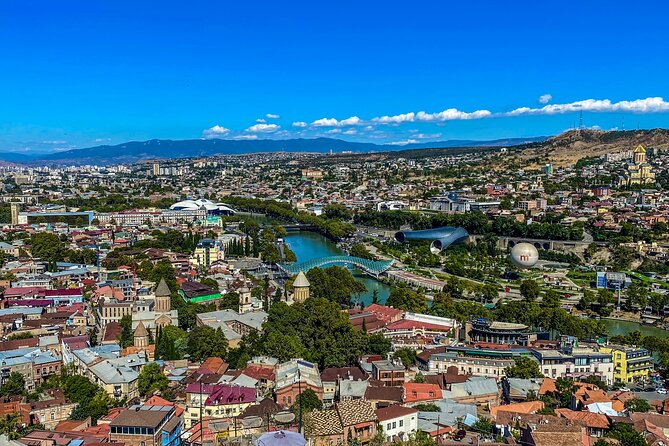
Anchiskhati Basilica is one of the route’s most important religious stops. Located on Shavteli Street in upper Kala, it dates to the sixth century and is associated with Dachi Ujarmeli. Its original dedication was to the Birth of the Virgin Mary.
The church later became known as Anchiskhati after a revered image was moved there from the Anchi church in 1675. Your guide can help connect that name change with Georgia’s long church tradition, rather than leaving you to wonder why the building has two identities.
Sioni Cathedral comes later. It sits on Sioni Street in one of Tbilisi’s oldest districts, and local tradition links the first church on the site to Vakhtang Gorgasali. These visits give the walk a clear religious thread.
Church etiquette matters. Shorts are not permitted, and women need to cover their heads. Bring a scarf if needed, and dress with these rules in mind. The information provided does not state whether scarves are supplied, so it is safer to bring your own.
The churches are working religious places, not just monuments. Keep your voice low and be prepared for a short visit if services or local worship are taking place.
Gabriadze’s clock tower and the charm of old Tbilisi
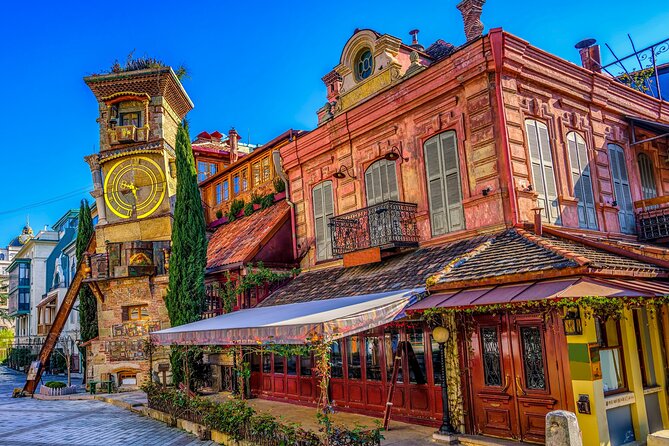
The Rezo Gabriadze Marionette Theater is next to one of Tbilisi’s most playful landmarks, the leaning clock tower. Rezo Gabriadze built the tower in 2010 and decorated it with hundreds of handmade tiles.
Every hour, an angel appears with a small hammer to ring the bell. Twice daily, at noon and 7:00 pm, a puppet show called The Circle of Life takes place inside the tower. The walking tour does not promise that you will see the full show, so treat the tower as a stop rather than planning your day around the performance.
This is a good example of the route’s balance. You move from royal history and old churches to a recent piece of whimsical architecture. Tbilisi is at its best when you notice both sides.
Tone bakery, Georgian pie, and a quick taste of local food
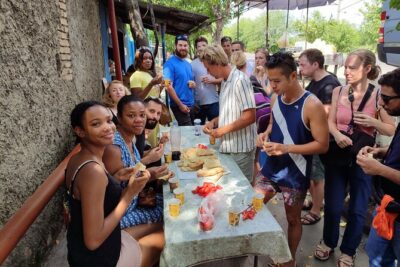
The bakery stop is one of the most useful additions to the walk. A traditional tone bakery uses a clay oven, and you receive a Georgian pie and lemonade. The exact pie may vary, but the food is intended as a taste rather than a full meal.
Some descriptions and past comments also refer to wine tasting, but the stated inclusions for this experience are the bakery item and lemonade. I would not book this tour expecting a substantial wine experience. If wine is a priority, arrange a separate tasting.
The bakery break also helps divide the walking. Four hours can feel long if every stop is another lecture, so a small food stop gives you time to reset. It is especially helpful on a warm day.
Tamada, Shardeni Street, and the sulfur baths
The Tamada statue introduces one of Georgia’s most famous social customs. Tamada means toastmaster, the person who guides a Georgian feast through a series of formal toasts.
You hear stories about this role near the statue. The stop is short, but it offers a useful key to Georgian hospitality. Food and drink are not only refreshments here. They can carry ritual, friendship, memory, and respect.
The tour then passes along Jan Shardeni Street, one of the old city’s best-known pedestrian lanes. It is popular, lined with places to eat and drink, and easy to revisit after the tour ends. This section may feel more commercial than the churches and river views, but it helps you understand where the old city’s social life gathers today.
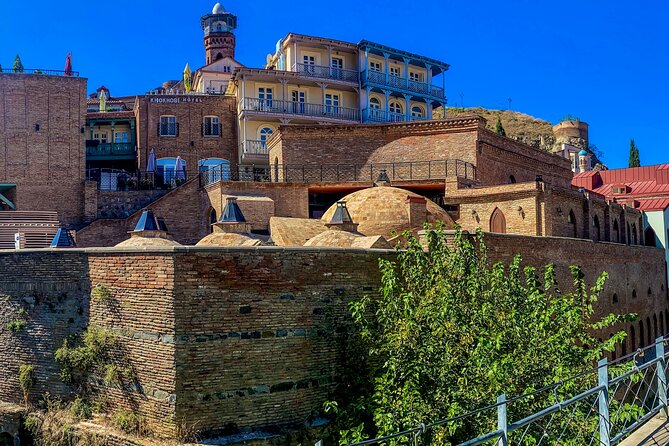
Abanotubani follows. The name means bath district, and the area is known for public bathhouses fed by sulfur hot springs. The domed bathhouses are among Tbilisi’s signature sights. You only spend about five minutes here, so the tour does not include a bath visit. If soaking interests you, make a separate booking for another time.
Leghvtakhevi Waterfall and the end near Meidan Bazaar
The final stop is Leghvtakhevi Waterfall, a small natural break inside the city. It is a popular place to cool off when the weather is hot, and the narrow setting feels very different from the open views at Mother of Georgia.
The waterfall helps explain why Tbilisi developed where it did. The city has water, hot springs, steep slopes, and small valleys packed into a walkable central area. You do not need a long excursion to find a change of scenery.
The walk ends near Meidan Bazaar, in the heart of the old city. That is a practical finish. You can continue toward the sulfur baths, look for lunch, return to Shardeni Street, or simply use the route as a starting point for your own exploration.
What the guides add to the experience
The strongest part of this tour is the guiding. Guides named Soso, Ana, Nini, Dimitri, Ellie, Shoti, Nene, Toko, Iva, and others are praised for friendly communication, clear English, patience, humor, and a good sense of pace.
That matters because the itinerary is full of short stops. Without a lively guide, five minutes at a statue or ten minutes at a church could feel thin. A good guide turns those pauses into a connected story about kings, religion, architecture, modern politics, food, and daily life.
The feedback is not entirely uniform. One person felt the pace was too slow and that some stops lasted longer than needed. If you like to move quickly and take photographs without much explanation, a self-guided walk may suit you better. If you want context and chances to ask questions, the guided format is the better choice.
The group can reach up to 100 people. That is a large possible maximum, although actual group size may vary. If you prefer private attention, ask the operator about the expected group before booking.
Who should book this Tbilisi walk?
I would recommend it to a first-time visitor who wants the city’s main sights arranged in a sensible order. It also suits a short stay, since four hours covers churches, river views, a hilltop monument, the old city, a bakery, and a waterfall.
Families can join from age five, and most people can take part. Still, you should be comfortable walking outdoors for several hours and handling slopes, steps, and uneven streets.
You also need to dress for the forecast. The tour operates in all weather. Comfortable shoes, a rain layer when needed, water, and a scarf for church visits are sensible choices.
The tour may also work well at the start of a longer Georgia trip. You get basic history and local customs, then finish in the old city where you can return to the places that caught your attention.
Should you book it?
Book this tour if you want a low-cost, well-organized first look at Tbilisi, especially if you value a guide who can connect the sights into a story. The cable car and bakery stop add real value, and the route reaches many of the city’s central highlights without forcing you to plan every turn.
Skip it if you dislike group walking tours, want extended time inside each church, or prefer a fast sightseeing pace. Also remember that the cable car can close in windy weather, and the listed inclusions do not guarantee a full wine tasting.
For $19, I see this as a practical orientation tour rather than a deep specialist visit. Take it early in your stay, keep your afternoon open, and use the final stop near Meidan Bazaar as your launch point for more of Tbilisi.
FAQ
How long does the Tbilisi walking tour last?
The tour lasts approximately four hours.
What time does the tour start?
The listed start time is 10:00 am. A morning or evening option may be available, so confirm the choice when booking.
Where does the tour begin?
It begins at the Traveler’s Meeting Point near M/S Avlabari in Tbilisi.
Where does the tour end?
The tour ends at Meidan Bazaar in the center of Tbilisi’s old city.
Is the cable-car ride included?
Yes. The ride from Rike Park to the upper station near Mother of Georgia is included.
Can the cable car close?
Yes. The cable cars may not operate during windy weather.
What food is included?
The tour includes a traditional Georgian pie and traditional Georgian lemonade at a tone bakery.
Is wine included?
Wine is not listed among the official inclusions for this experience. Some descriptions refer to wine, so ask the operator directly if that part matters to you.
What should I wear to the churches?
Shorts are not allowed inside the churches, and women need to cover their heads.
What is the minimum age?
The minimum age is five.
Is the tour offered in English?
Yes. The tour is offered in English and includes a professional English-speaking guide.
Can I cancel for a full refund?
Yes. You can cancel at least 24 hours before the start time for a full refund. Changes or cancellations made less than 24 hours before the start are not accepted for a refund.
Freshly poured around the world
- Porto: 6 Bridges Port Wine River Cruise with 4 Tastings★ 4.9 · 586 reviews
- Porto: Daytime or Sunset Douro River Cruise With Port Wine★ 4.7 · 714 reviews
- Porto: 6 Bridges Cruise & Port Wine with Sunset Option★ 5.0 · 997 reviews
- Porto: 6 Bridges Port Wine River Cruise with 4 Tastings★ 4.8 · 219 reviews
- Porto: Douro Cruise, 6 Bridges & 4 Port Wines (Max 7)★ 5.0 · 69 reviews
- Portland: Happy Hour Sightseeing Cruise★ 4.6 · 74 reviews
- Portland: Underground Shanghai Tunnel Tour with Beer Tasting★ 4.3 · 102 reviews
- Porto: 3 or 5 Port Wine Tasting with Pairings★ 4.9 · 152 reviews
Tbilisi Drinks Tours, side by side.
Day Trip to Kakheti Wine Region Including 9 Wine Tastings
Read our review →