
Review · TIRANA
Traditional Albanian Cooking Class in Tirana & Raki Tasting
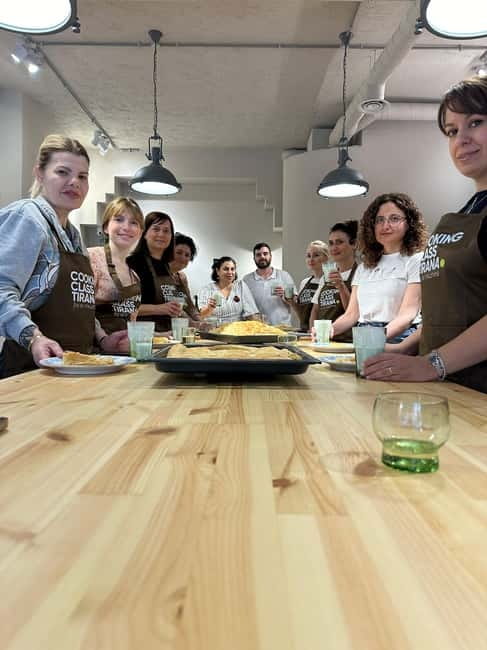
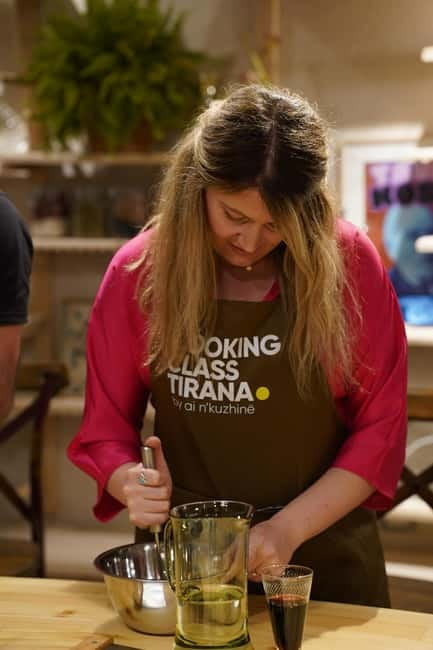
The best part of this Tirana cooking class is how quickly it moves beyond recipes. You learn why Albanian hosts keep feeding you, how local ingredients shape everyday dishes, and why a meal is often a social event rather than a simple stop for food. I like the hands-on pace and the generous spread of appetizers, wine, and rakia. I also like that chef Dervis explains the cultural side of each dish, not just the steps.
The main thing to consider is the drink service. Homemade wine and rakia are available throughout the class, so this is not the right pick if you want a quiet, alcohol-free lesson. Tell the team about dietary needs when booking, since vegetarian, vegan, pescatarian, halal, and lactose-free options can be arranged.
Key points to know before booking
- Three Albanian dishes: Learn recipes such as burek with cottage cheese, village chicken with pershesh, and sheqerpare.
- Chef-led instruction: Dervis is the main host named in the feedback, with Marius or Maris also mentioned as part of the cooking team.
- A full four-hour evening: Cooking is only part of it. You’ll also eat appetizers, taste jams and gliko, drink wine and rakia, and share a long meal.
- Strong value at $44: The class includes instruction, food, unlimited water and homemade wine, rakia tasting, entertainment, and sometimes leftovers to take home.
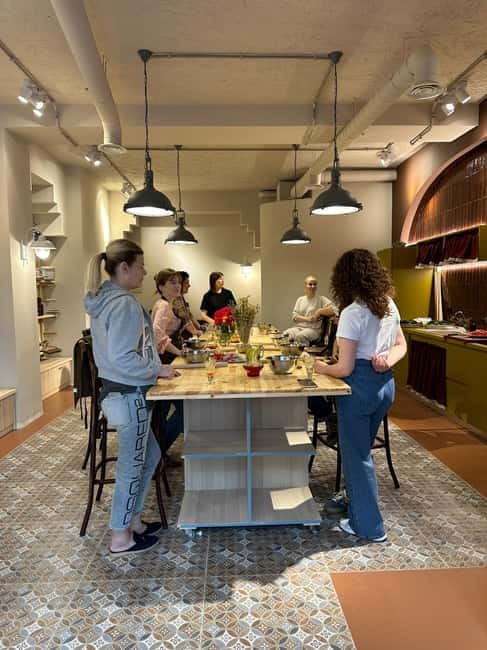
- Easy social setting: You cook at a communal table and meet people from different countries, which works well for solo visitors.
- Practical flexibility: English instruction, wheelchair access, dietary accommodations, reserve-now-pay-later booking, and cancellation up to 24 hours before the start.
A four-hour introduction to Albanian food in Tirana
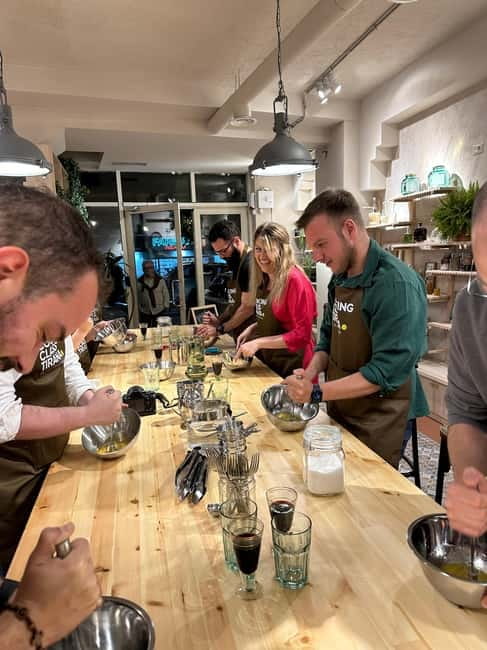
This is a cooking class, but it also functions as a friendly introduction to Albanian customs. You arrive to a prepared setting and begin with an explanation of the menu, local ingredients, and the role food plays in family life.
The class is especially useful early in your trip. You learn dishes you may see elsewhere in Albania, while the talk about olive oil, seasoning, hospitality, and table customs gives you a better eye for later meals. One practical lesson mentioned by a participant was the proper use of salt, a small detail that shows how the class links technique with local habits.
The English instruction makes the class accessible even if you know little about Albanian food. Dervis is often singled out for explaining things clearly, keeping the group moving, and making beginners feel comfortable. You do not need to arrive as a skilled cook. The format is designed for people who want to work with their hands but also enjoy conversation and a relaxed evening.
More Cooking Classes in the world:
- Rome: Pasta Making Class with Wine, Limoncello, and Dessert
★ 4.9 · 3,177 reviews - Rome Cooking Class: Make Pasta and 3 Spritz Cocktails
★ 5.0 · 2,937 reviews - Barcelona Paella Cooking Class with Market Visit, Tapas & Sangria
★ 5.0 · 2,531 reviews
Starting with meze, bread, olives, and Albanian preserves
The food starts before the main cooking is finished. You can expect appetizers such as olives with oregano, fried peppers, cream cheese, and fresh bread. Traditional Albanian jams and gliko are also part of the tasting.
This opening spread matters because it gives you a quick sense of Albanian hospitality. Food is not held back until the lesson ends. You snack while listening, preparing ingredients, and getting to know the people around you.
The appetizers also keep the evening from feeling like a strict classroom. You can taste, ask questions, and settle into the group before taking on the more involved dishes. If you arrive hungry, you will be in good shape. If you eat a full meal beforehand, you may regret it.
The class is generous with portions. Several people found they had enough food to take some home, which is useful but also worth noting: this is a substantial evening meal, not a light tasting.
Rolling burek dough by hand
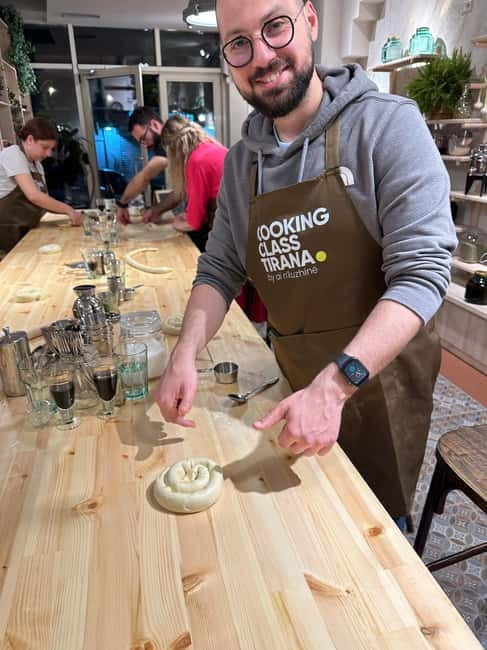
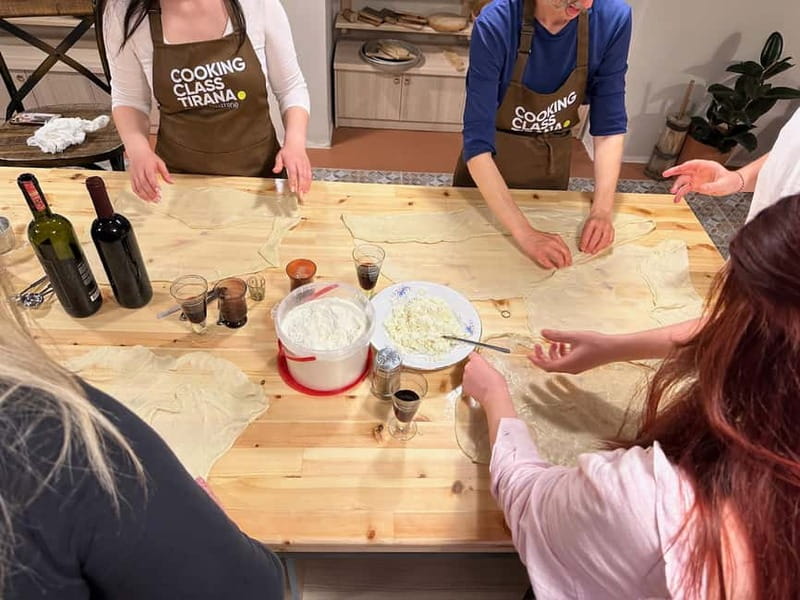
Burek is one of the most useful dishes to learn because it is familiar across the Balkans but varies from place to place. Here, the class focuses on burek with cottage cheese, including the practical work of handling and rolling the dough.
This is the kind of task where a live lesson helps. You can see how thin the dough should be, how the filling is placed, and how the pastry is assembled. The chef can correct small mistakes before they become a collapsed or dry burek.
The class does not treat the recipe as a fixed formula. The point is to understand the method well enough to try it again at home. You learn the shape, texture, and seasoning by watching the instructor and working alongside the group.
Burek can be a little messy, especially for first-time cooks. That is part of its appeal, but you should not expect a polished demonstration where you only watch. You will handle the dough, share work with others, and clean up the results by eating them.
Preparing village chicken with pershesh
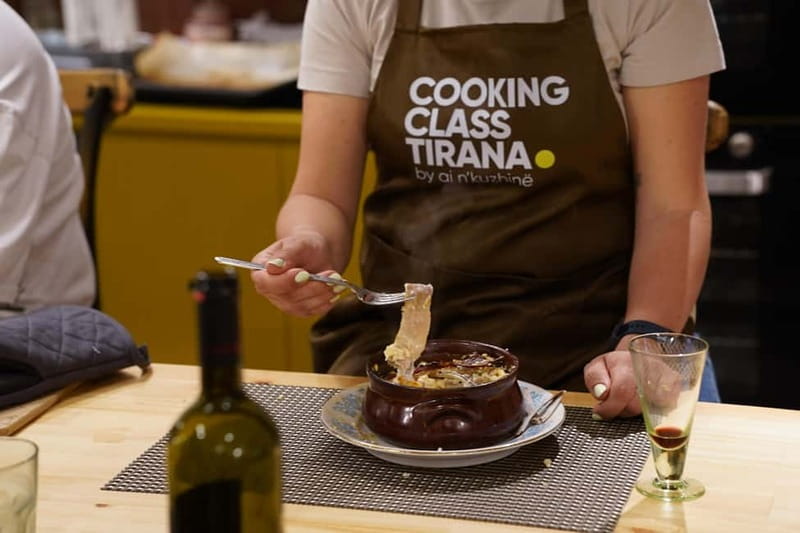
The main savory dish is village chicken with pershesh. Pershesh is a traditional Albanian preparation served with bread or a related grain-based mixture, depending on the recipe and household style. In this class, the focus is on seasoning and building the dish in the traditional way.
The instructor talks you through why each step matters. You learn how to season the chicken properly and how the components come together rather than simply following a list of measurements.
This is one of the places where the class offers more than a recipe card. Albanian cooking often relies on judgment, family habits, and the quality of simple ingredients. Watching the chef adjust and explain the preparation gives you a better sense of how to reproduce the dish without needing every detail measured to the gram.
Vegetarians are not left out. One vegetarian participant received zucchini in place of chicken for the pershesh and kulac preparation. You need to state your dietary requirements at booking so the kitchen can plan the replacement.
More Workshops and Classes in the world:
- Fettuccine & Tiramisù: Cooking Class with Wine & Limoncello
★ 4.9 · 2,103 reviews - Pasta Cooking Class Near the Colosseum with 3 Spritz Cocktails
★ 5.0 · 1,686 reviews - Sorrento: Pizza Lesson, Wine, and Limoncello at a Local Farm
★ 5.0 · 1,513 reviews - Rome Tipsy Cooking Class: Make Pasta and Mix 3 Spritz Cocktails
★ 5.0 · 1,357 reviews
Making sheqerpare for dessert
The dessert is sheqerpare, a traditional Albanian sweet. It is a fitting final recipe because it introduces you to a different part of the country’s home cooking, where simple baked dough and syrup create a rich, sweet finish.
Making dessert during the class helps balance the meal. You are not only preparing a main course and pastry, but also learning a traditional sweet that you can try at home for family meals or special occasions.
The generous portions can catch up with you by this point. Some people took extra dessert home because they were already full. If you want to taste everything at the communal meal, pace yourself during the appetizer course.
Wine, rakia, music, and an informal Albanian table
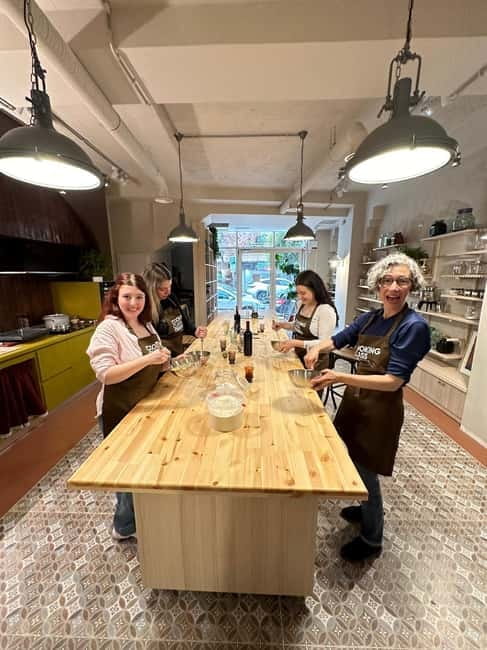
The drink service is a major part of the evening. Water and homemade wine are included, and the class also offers a guided rakia tasting. Rakia is a strong fruit brandy common across the Balkans, and tasting it with an explanation gives you more context than ordering a mystery shot at a bar.
The wine and rakia help create a social mood, but they are not the whole point. You can focus on the food and conversation, or join in more fully if you enjoy the drinking side. The class is not presented as a formal wine course, so expect a friendly tasting rather than technical instruction.
Music and spontaneous dancing may become part of the evening. That will appeal to anyone who likes a lively shared meal. It may be less appealing if you prefer a quiet, tightly structured cooking lesson.
The atmosphere is helped by the host’s style. Dervis is repeatedly described as funny, patient, warm, and easy to understand. The class can feel more like being welcomed into a family kitchen than attending a professional culinary school. That is a strength for most visitors, though it also means the evening has a relaxed, social rhythm rather than a rigid timetable.
The communal meal is the real payoff
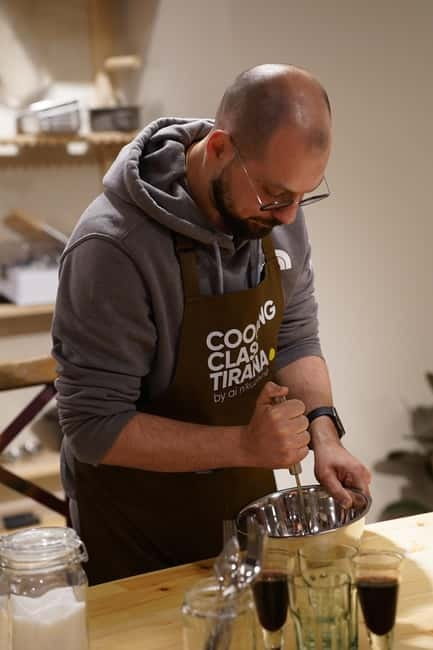
Once the dishes are ready, everyone sits down to eat what they prepared. This shared meal gives the four-hour class a clear arc: learn, cook, taste, talk, and stay at the table.
You will have plenty to discuss because the class attracts people from different countries and often includes solo visitors. The cooking tasks create an easy way to meet others. Instead of having to start a conversation from nothing, you can ask about someone’s pastry, share a serving dish, or compare notes about Albania.
Solo visitors may find this especially useful on the first night in Tirana. One person came alone and was paired with others, which made joining the group easier. Couples and families can also enjoy it, since the cooking is shared rather than designed only for individual participants.
The communal meal also shows why Albanian hospitality is central to the activity. The host keeps serving, brings out more food, and may send you home with leftovers. You leave with recipes, but also with a better understanding of the local habit of feeding people generously.
What $44 gets you
At $44 per person, this class offers strong value for a four-hour activity. The cost covers an English-speaking instructor, hands-on cooking, appetizers, the dishes you prepare, dessert, unlimited water, homemade wine, a rakia tasting, jams and gliko, and the social entertainment.
You are also paying for the setting and the preparation behind the scenes. A cooking class needs ingredients, equipment, advance work, and staff to keep several dishes moving at once. The fact that extra food may be available to take home adds practical value.
Compare it with a normal restaurant dinner and the price still makes sense, especially because you receive a meal and an activity. The best value comes if you enjoy social events and want cultural context. If you only want to eat Albanian food, a restaurant will be quicker and may cost less.
The class is also a good use of an evening when the weather is poor or you want a break from sightseeing. It gives you a structured plan without feeling like another lecture.
Who will enjoy this class most
I would recommend it to:
- Solo visitors who want an easy way to meet people.
- Couples and families who enjoy cooking together.
- First-time visitors to Albania who want food culture explained in plain English.
- Beginners who want clear guidance rather than advanced culinary training.
- People who like generous meals, local drinks, music, and conversation.
- Anyone who wants recipes they can try again at home.
You should think twice if you dislike group activities, strong spirits, or long meals around a shared table. The evening is social and sometimes noisy, with drinking and dancing included in the mood. It is not a private class, and it is not built around quiet, individual instruction.
The class can accommodate vegetarian, vegan, pescatarian, halal, and lactose-free diets, among others. Still, you need to include the request when booking. Do not assume the kitchen will know about a restriction that was not provided ahead of time.
Timing, access, and booking flexibility
The experience lasts four hours, with starting times based on availability. Because the class includes cooking and a full meal, you should keep the rest of your evening open rather than scheduling a tight appointment afterward.
English is the stated activity language. The class is wheelchair accessible, which makes it a useful option for visitors who need an accessible activity, though you should still share any specific requirements when booking.
You can reserve and pay later, which helps if your Tirana plans are still changing. Cancellation is free up to 24 hours before the start time for a full refund. Larger groups can contact the provider directly for arrangements.
Should you book this Tirana cooking class?
Yes, if you want more than a recipe lesson. At $44, the combination of instruction, a large meal, wine, rakia, appetizers, cultural stories, and a friendly group makes this one of the better-value food activities in Tirana.
Book it near the start of your trip if you want food tips and cultural context to shape the rest of your Albania visit. Arrive hungry, mention dietary needs in advance, and go easy on the appetizers if you want room for burek, chicken, and sheqerpare.
Skip it only if you want a private, alcohol-free, highly technical class. For everyone else, this is a warm and practical way to meet people, learn a few Albanian dishes, and understand why hospitality is such an important part of the country’s food culture.
FAQ
How long does the Albanian cooking class last?
The class lasts four hours, including cooking, tastings, the communal meal, drinks, and entertainment.
What dishes will I learn to prepare?
The sample menu includes village chicken with pershesh, burek with cottage cheese, and sheqerpare. Seasonal appetizers and meze are also included.
Is wine included in the price?
Yes. Unlimited homemade wine and water are included. The activity also includes a guided rakia tasting.
Can dietary restrictions be accommodated?
Yes. Vegetarian, vegan, pescatarian, halal, lactose-free, and other dietary requirements can be accommodated. You must specify them when booking.
Is the cooking class taught in English?
Yes. English is the stated language for the instructor and activity.
Is the activity wheelchair accessible?
Yes. The activity is listed as wheelchair accessible.
Can I cancel for a full refund?
Yes. You can cancel up to 24 hours in advance for a full refund. You can also reserve now and pay later to keep your plans flexible.
Freshly poured around the world
- Porto: 6 Bridges Port Wine River Cruise with 4 Tastings★ 4.9 · 586 reviews
- Porto: Daytime or Sunset Douro River Cruise With Port Wine★ 4.7 · 714 reviews
- Porto: 6 Bridges Cruise & Port Wine with Sunset Option★ 5.0 · 997 reviews
- Porto: 6 Bridges Port Wine River Cruise with 4 Tastings★ 4.8 · 219 reviews
- Porto: Douro Cruise, 6 Bridges & 4 Port Wines (Max 7)★ 5.0 · 69 reviews
- Portland: Happy Hour Sightseeing Cruise★ 4.6 · 74 reviews
- Portland: Underground Shanghai Tunnel Tour with Beer Tasting★ 4.3 · 102 reviews
- Porto: 3 or 5 Port Wine Tasting with Pairings★ 4.9 · 152 reviews
Tirana Drinks Tours, side by side.
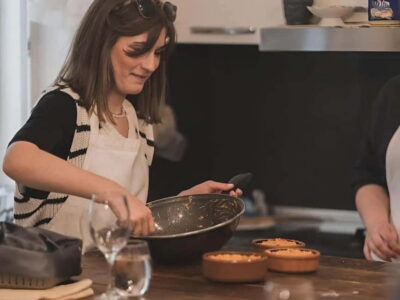
Tirana: Traditional Cooking Class with Wine & Raki Tasting
Read our review →
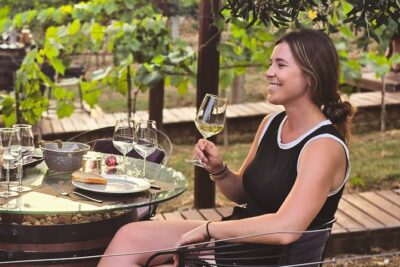
Durrës Countryside Vineyard Experience with Wine & Food Pairing
Read our review →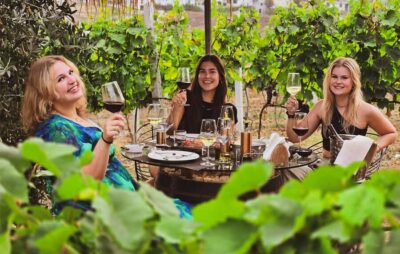
Durres Countryside Vineyards Wine Tasting & Food Pairing
Read our review →Lists this tasting sits in