
Review · ITALY
Bologna: Food and Wine Tasting with Interactive Game
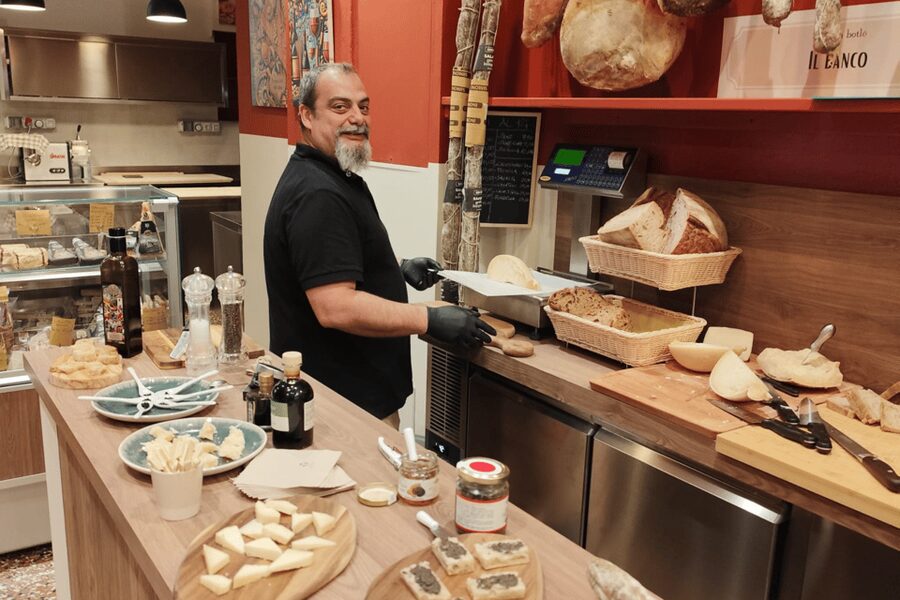
Bologna’s best food and wine lesson comes with a quiz. At Bottega botlé, you taste three local wines alongside prosciutto, mortadella, Parmigiano Reggiano, Modena balsamic vinegar, cheese, and olive oil, then use a tablet to test your nose, eyes, and pairing instincts. I like the small-group setting and the way the game makes wine basics feel useful rather than stiff. I also like that the tastings are small pours, so you can try wines you might not order by the bottle.
The main point to keep in mind is that this takes place in a wine bar, not a private dining room. Evening sessions can have more background noise and less privacy. Still, the friendly hosts make solo visitors, couples, and first-time wine tasters feel at ease, and the $34 price is strong for the amount of food, wine, teaching, and play involved.
Key points at a glance
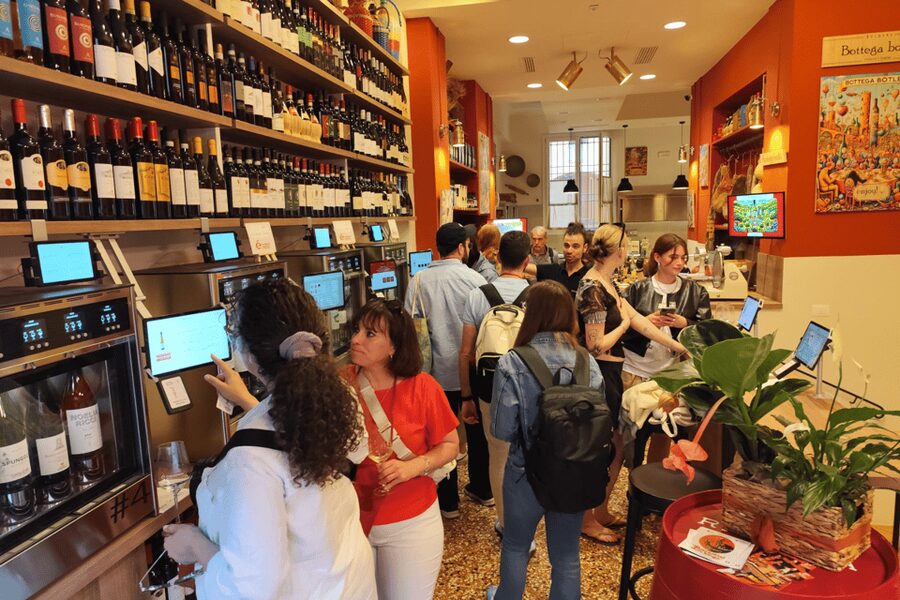
- Three regional wines: Taste Pignoletto, Sangiovese In Purezza, and Sangiovese Appassimento from three Italian wineries.
- Food Valley pairings: Try Bologna mortadella, prosciutto, Parmigiano Reggiano, Modena balsamic vinegar, local cheese, and olive oil.
- A game with a purpose: The tablet-based Sommelier Game helps you notice color, aroma, taste, and food pairing.
- A compact, social format: The group is limited to 10 people, with sessions commonly lasting about an hour to 90 minutes.
- Practical wine guidance: Hosts explain how food can change the flavor of a wine and how to choose a bottle for the table.
- A small souvenir included: You receive a fridge magnet featuring a work from the I.Art exhibition.
Why this Bologna tasting is different
Many wine tastings ask you to listen, sip, nod, and move on. This one gives you something to do. The Sommelier Game runs on a tablet and asks short questions about the wines, including details tied to sight and smell. You can play on your own or compete with friends.
That makes the session a good fit if wine language usually feels slippery. You do not need to know what tannins are before arriving. The questions are approachable, and the explanations help connect a vague impression, such as a wine feeling dry or fruity, with a more useful way to describe it.
I like this format because it turns tasting into practice. You are not just told that a wine has certain traits. You stop, look at the glass, smell it, taste it with food, and then make a choice. The game also gives a group an easy way to laugh together without turning the activity into a loud contest.
The tone is casual. Hosts such as Massimo, Danilo, Claudio, and Ixchel have led sessions, with the exact host depending on the day. The supplied descriptions present the staff as both wine specialists and food pairing guides. That matters because the strongest part of a regional tasting is often the explanation of why a bite works with a particular wine.
More Food and Wine Tours in Italy
- Rome by Night – Ebike Small Group Tour – Food and Wine (Option)
★ 5.0 · 1,275 reviews - From Florence: Chianti Tour with Two Wine and Food Tastings
★ 4.5 · 1,205 reviews - Rome: E-Bike Night Tour with Food and Wine Tasting
★ 4.9 · 1,131 reviews
Starting with Emilia-Romagna on the plate
The session opens with a short introduction to Emilia-Romagna’s food and wine traditions. This gives the tasting a useful frame before you begin sampling. You are not simply handed three glasses and a plate of snacks. The food is presented as part of the region’s identity and production culture.
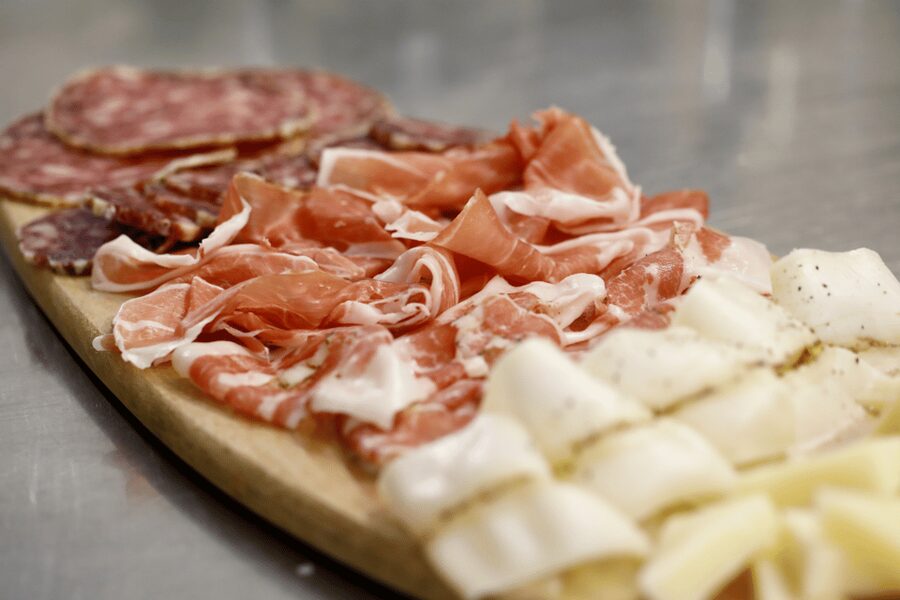
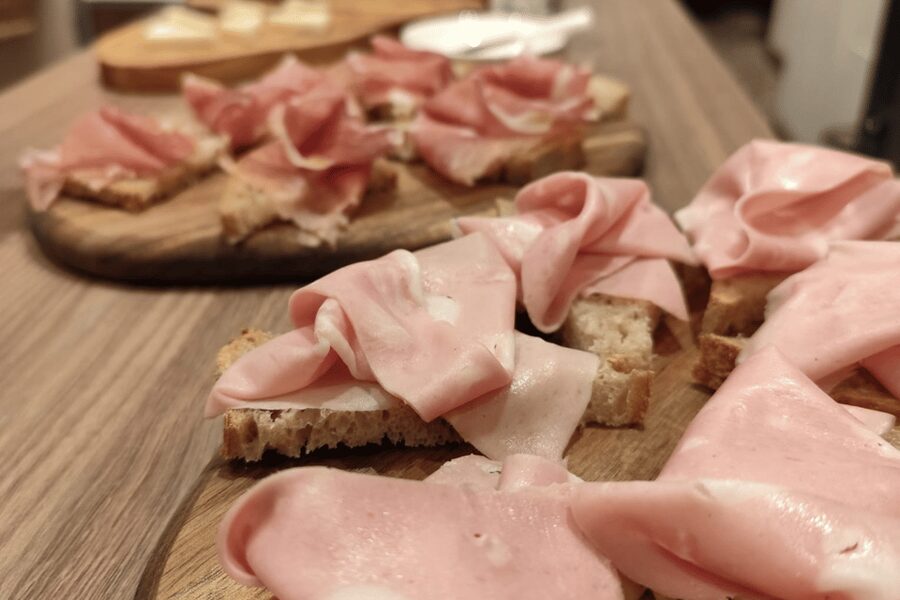
The tasting board brings together some of the names most associated with Bologna and the surrounding Food Valley:
- Prosciutto Crudo
- Mortadella Bologna
- Parmigiano Reggiano aged 12 or 24 months
- Aceto Balsamico IGP di Modena
- Local cheese and other food items
- Monocultivar olive oils from Coratina, Peranzana, and Ogliarola olives
The format is especially useful for comparing how different ingredients affect a wine. Parmigiano at two ages can offer a simple lesson in texture and intensity. Balsamic vinegar brings sweetness and acidity. Salty cured meat can make a wine seem different from the way it tasted alone.
One practical tip: arrive hungry. This is not a full restaurant meal, but the food portion is substantial enough that a large lunch beforehand can work against you. One visitor specifically found the spread generous and wished they had eaten less earlier in the day.
Pignoletto, the easygoing local white
The first listed wine is a 70-milliliter glass of Pignoletto Fermo from La Vallona winery. Pignoletto is closely tied to the Bologna area, so it gives you a direct introduction to a local style rather than beginning with a familiar international label.
The term Fermo indicates a still wine. That is useful to know because many people associate Pignoletto with sparkling versions. Here, the still expression lets you focus on the grape’s flavor and the way it works with the food without bubbles taking center stage.
The host explains the wine before you taste it with the food selection. Pay attention to the difference between tasting it alone and tasting it with cured meat, cheese, or oil. That comparison is one of the most practical parts of the experience. It teaches you that pairing is not a rulebook. A food can soften, sharpen, or redirect what you notice in the glass.
The pour is modest, but that is a plus for a tasting. You can assess the wine without committing to a full glass, and you still have room for the two red wines that follow.
Sangiovese in its clean, direct form
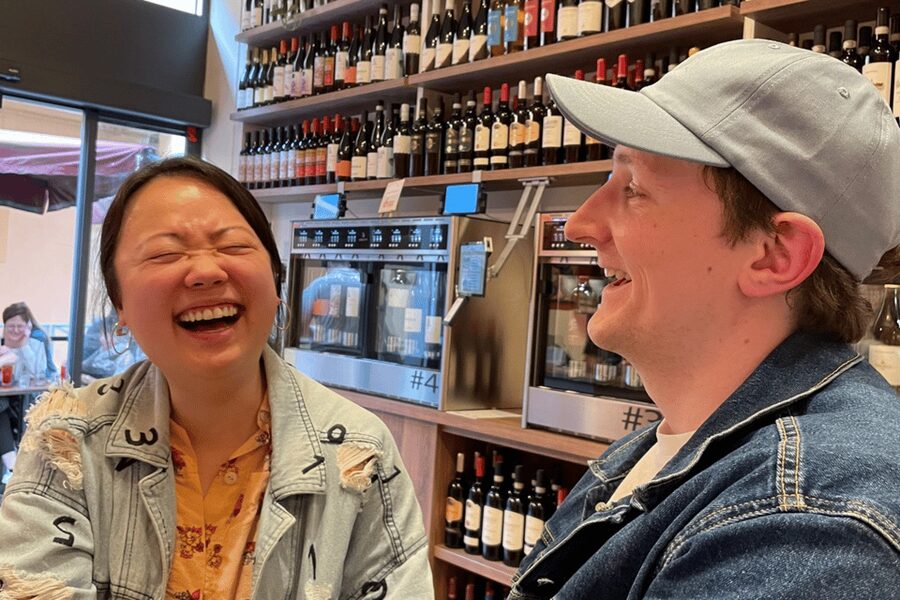
Next comes a 130-milliliter pour of Sangiovese In Purezza from La Casetta winery. This is the largest serving of the three, giving you more time with the wine and more opportunity to compare it with the local meats and cheeses.
Sangiovese is a familiar Italian name, but its character changes from place to place. The useful lesson here is not simply learning the grape’s name. It is seeing how a regional bottle behaves with Bologna’s salty, rich foods.
The phrase In Purezza signals a wine made from Sangiovese alone. Your host uses the glass to explain the wine’s traits and suggest pairings. The food is not an afterthought. It acts as a testing tool, allowing you to decide which combination suits your own taste.
This is also the point where the game can become more interesting. Once you have tried a white and a red, the questions can help you compare color, aroma, body, and finish. You may find that you notice more after the second glass because you now have a reference point.
More Wine Tasting Tours in Italy
- Florence: Chianti Wineries Tour with Wine Tasting
★ 4.5 · 10,071 reviews - Small-Group Wine Tasting Experience in the Tuscan Countryside
★ 5.0 · 7,392 reviews - Rome: Tuscany & Montepulciano Day Trip with Lunch & Wine Tasting
★ 4.5 · 5,232 reviews - SMALL-GROUP Wine Safaris: Tuscan Wine Tasting Tours from Florence
★ 5.0 · 5,088 reviews
Sangiovese Appassimento and the effect of drying grapes
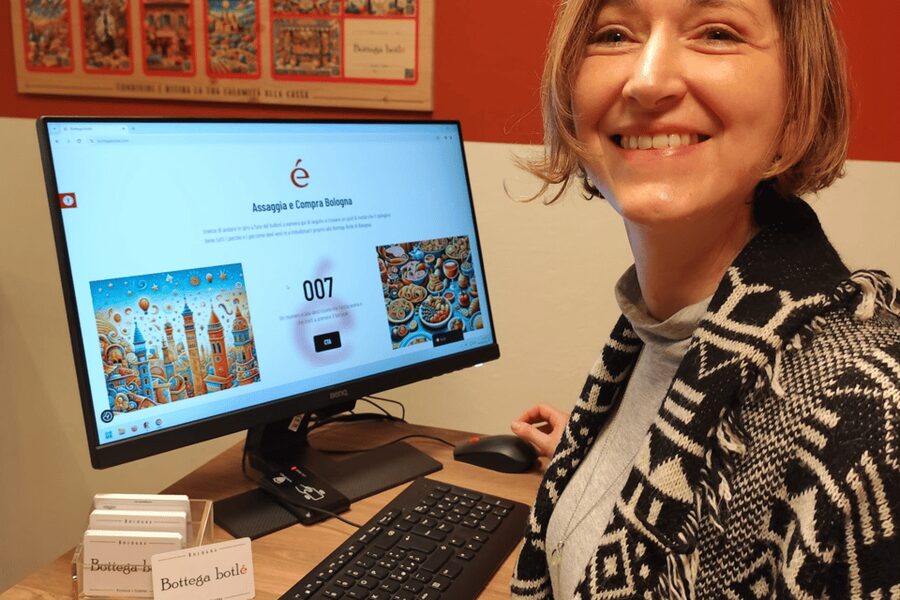
The third wine is a 70-milliliter glass of Sangiovese Appassimento from Santodeno winery. Appassimento refers to a process in which grapes are dried before fermentation, concentrating their sugars and flavors.
You do not need a technical wine background to appreciate the contrast. The host explains how the wine’s production affects what you smell and taste, then pairs it with local food so you can see the difference for yourself.
This is a strong part of the tasting because it puts two Sangiovese wines side by side in the same session. Instead of treating Sangiovese as one fixed style, you get to consider how winemaking choices change the result.
The smaller pour is sensible. By the time you reach the third wine, you have tasted a range of food and already had a full glass of the second wine. It keeps the activity manageable while still giving you enough to make a clear comparison.
The food pairings are the real classroom
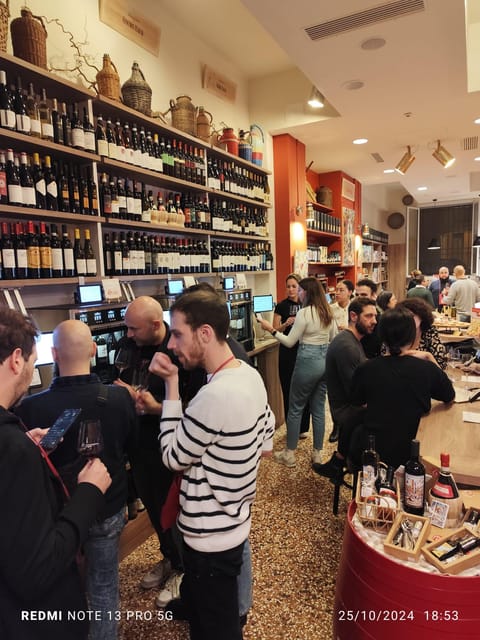
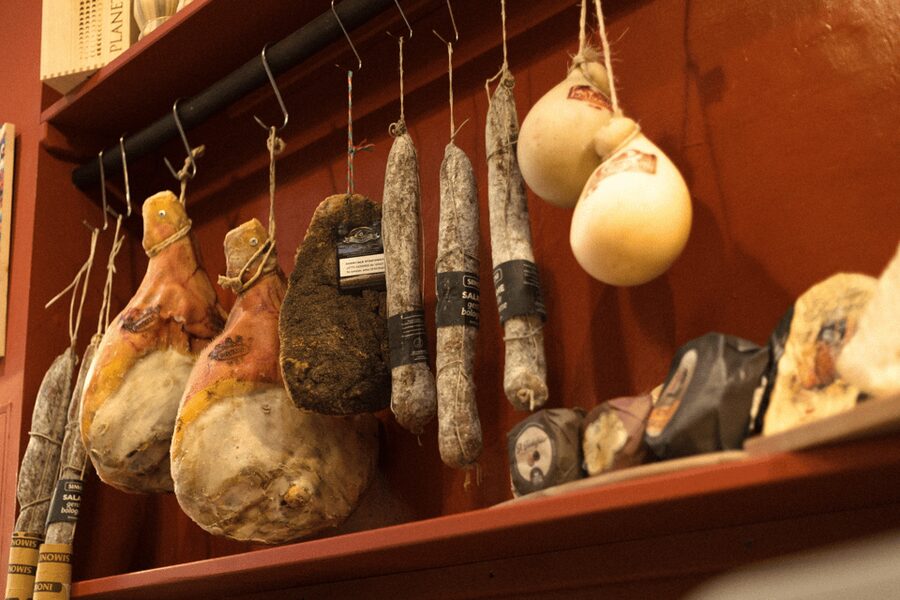
The tasting includes more than a token slice of cheese. You can sample several products linked with Bologna and Emilia-Romagna, including mortadella, prosciutto, Parmigiano, balsamic vinegar, local cheese, and olive oil.
The olive oil portion adds variety. Coratina, Peranzana, and Ogliarola are different olive cultivars, and sampling them side by side gives you another lesson in how ingredients can vary even when they all fall under the same broad category. If you usually treat olive oil as background seasoning, this is a chance to pay closer attention.
The balsamic vinegar is another highlight. A long-aged balsamic can be markedly different from an inexpensive everyday vinegar, and the tasting includes Modena IGP balsamic. One of the featured tastings has been described as more than 10 years old, though the exact product available can vary. Ask about its age if that detail matters to you.
The hosts explain how each item is made and how it changes the wine. That is more useful than a simple list of regional products. You leave with a better sense of how to build a plate at home and how to choose a wine that will not fight with it.
How the Sommelier Game works
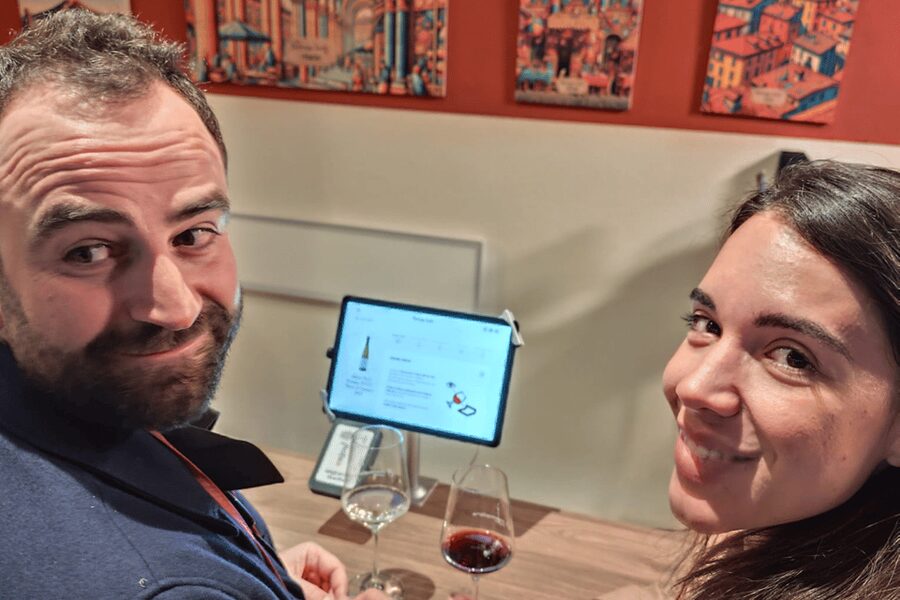
The game is played on a tablet during the tasting. It uses short questions to test your attention to the wine’s appearance, smell, and taste. You can challenge yourself or compete with friends until the final question.
The game is not designed only for wine experts. The questions are accessible, and the explanations give beginners enough information to understand what they are being asked to notice. If you already know wine, you may enjoy the competitive side more than the basic teaching.
I would treat the game as a learning aid, not a formal exam. The point is to make you slow down. Look at the wine before drinking it. Smell it. Think about texture. Taste it with food. Then make a choice.
You can also continue with more wines after the main session by using the venue’s tasting setup. An additional purchase may be needed, but the option is useful if you want to stay longer rather than leave as soon as the included pours are finished.
Timing, group size, and atmosphere
The booking information describes the activity as lasting one day for scheduling purposes, but the actual tasting is commonly reported as about one hour to 90 minutes. Plan around the shorter format if you have a tight Bologna itinerary, while allowing extra time if you want to continue trying products afterward.
The group limit is 10 people. That is small enough for direct conversation with the host and large enough to create a social atmosphere. Solo visitors can take part without feeling stranded, while couples and friends have enough space to play together.
Because the tasting is held in a wine bar, the setting can change with the time of day. A quieter daytime visit may feel more focused. An evening session can have more activity around you and less privacy. This is not a flaw if you like an open, social room, but it is worth knowing if you want a private lesson.
The experience is wheelchair accessible, and the hosts speak Italian and English. Cancellation is free up to 24 hours before the activity, and you can reserve without paying immediately if that option is offered at booking.
Is $34 a good price?
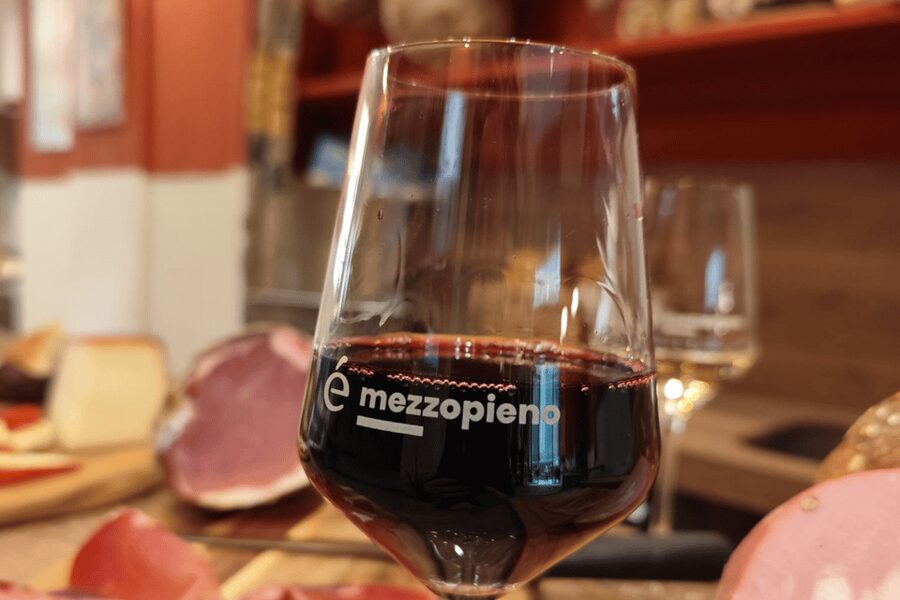
At $34 per person, the value is easy to understand. You receive three wine pours, a broad selection of local food, guided explanations, a tablet game, and a souvenir magnet. The activity also saves you from ordering several unfamiliar bottles or dishes separately just to compare them.
The largest pour is 130 milliliters, with the other two at 70 milliliters each. So this is not a bar crawl or a long wine flight. It is a compact educational tasting with enough food to make it feel like more than a drink sample.
I would compare it with the cost of a casual Bologna meal plus a few glasses of wine. The advantage here is structure. Someone explains the products, gives you pairings, and helps you notice what you are tasting. For first-time visitors, that guidance is likely worth more than simply buying regional products at random.
The value is strongest for people who enjoy food education and interaction. If you want a large meal, a vineyard visit, or a quiet private tasting, this is not the right purchase.
Who should book it?
I would recommend it to first-time visitors who want a quick introduction to Bologna’s food culture without giving up half a day. It also suits couples who enjoy a little competition, solo visitors looking for an easy social activity, and anyone who wants practical help choosing Italian wine.
It is a good match for people who say they do not understand wine. The game gives you a reason to pay attention, while the hosts explain the terms in a relaxed setting. You do not need to arrive with tasting experience.
Food lovers will appreciate the chance to compare two ages of Parmigiano, taste Modena balsamic, and sample several olive cultivars. The activity also suits travelers considering a more expensive food trip outside Bologna. It offers a focused local introduction without the added transport and higher cost.
I would hesitate only if you dislike group activities, prefer complete privacy, or want a full meal. The evening wine-bar setting can be lively, and the tasting is designed around participation rather than quiet contemplation.
Should you book the Bottega botlé tasting?
Yes, if you want an affordable and useful introduction to Emilia-Romagna wine and food. The best feature is the combination of serious regional products and an approachable game. You learn why a wine works with mortadella, Parmigiano, balsamic vinegar, or oil, then put that lesson into practice.
Book it earlier in the day if you want a calmer setting, and avoid a heavy lunch beforehand. If you are still having fun at the end, stay on for additional tastings. For $34, this is one of the more practical ways to understand Bologna’s table without turning your holiday into a formal wine course.
FAQ
How much does the Bologna food and wine tasting cost?
The experience costs $34 per person.
Which wines are included?
You receive a glass of Pignoletto Fermo from La Vallona winery, Sangiovese In Purezza from La Casetta winery, and Sangiovese Appassimento from Santodeno winery.
What food is included?
The tasting includes prosciutto crudo, Mortadella Bologna, Parmigiano Reggiano aged 12 or 24 months, Modena IGP balsamic vinegar, local cheese and food, and monocultivar olive oils from Coratina, Peranzana, and Ogliarola olives.
How long does the tasting last?
The scheduled duration is listed as one day for availability purposes, while the tasting itself commonly lasts about one hour to 90 minutes.
Is the activity suitable for people who do not know much about wine?
Yes. The Sommelier Game uses a tablet and short questions about the wine’s appearance, smell, taste, and characteristics. The hosts explain the answers and guide you through the pairings.
How many people are in the group?
The activity is limited to 10 participants. It is wheelchair accessible, and hosting is available in Italian and English.
More Food Tours in Italy
- Winner 2025 Florence Sunset Food & Wine Tour by Eating Europe
★ 5.0 · 5,015 reviews - Eat Like a Local: Venice 3-Hour Small-Group Food Tasting Tour
★ 5.0 · 3,137 reviews - Sorrento Farm and Food Experience including Olive Oil, Limoncello, Wine tasting
★ 5.0 · 2,524 reviews - Venice Like a Local: Food, Wine & Spritz Tour with Traghetto Ride
★ 5.0 · 1,858 reviews
Freshly poured around Italy
- Polignano a Mare: Private Cruise with Champagne★ 4.8 · 66 reviews
- Polignano: Coastline Tour With Prosecco And Taralli & Swim★ 4.7 · 103 reviews
- Rome: Pompeii Tour with Wine and Lunch by High Speed Train★ 4.8 · 485 reviews
- Polignano a Mare: Boat Cruise to Scenic Caves with Prosecco★ 4.7 · 550 reviews
- Polignano a Mare Boat Tour with Prosecco and Taralli★ 4.9 · 334 reviews
- Polignano a Mare: Boat Tour with Prosecco and Snacks★ 4.8 · 282 reviews
- Pisa: Cathedral Guided Tour and Tower tickets & wine tasting★ 4.8 · 78 reviews
- Piedmont: Winery Tour, Taste Barolo, Barbaresco & Local Food★ 4.6 · 61 reviews
Food & Wine Pairing Tours, side by side.
Lisbon Small-Group Portuguese Food and Wine Tour
Read our review →
Montmartre Hill French Gourmet Food and Wine Tasting Walking Tour
Read our review →
From Barcelona: Montserrat Half-Day Wine and Tapas Trip
Read our review →
Rome by Night – Ebike Small Group Tour – Food and Wine (Option)
Read our review →
From Florence: Chianti Tour with Two Wine and Food Tastings
Read our review →
Rome: E-Bike Night Tour with Food and Wine Tasting
Read our review →
Eat, Drink and Repeat: Wine and Food Tasting Tour in Venice
Read our review →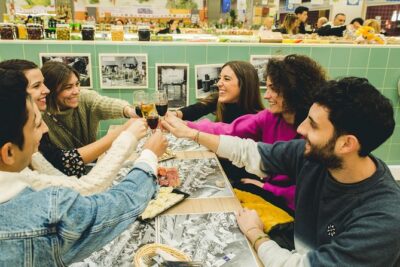
Authentic Food and Wine Tour in Porto by Food Lover Tour
Read our review →Lists this tasting sits in