
Review · BORDEAUX
Bordeaux: Wine and Trade Museum Entry Ticket & Wine Tasting
Bordeaux’s Wine and Trade Museum gives you something many wine visits skip: the story of the merchants, barrels, cellars, and trade that helped make Bordeaux famous. You explore at your own pace, then finish with a two-wine tasting and a clear introduction to grape varieties, AOC labels, and terroir.
I like the audio guide in several languages, especially if you want to set your own speed. I also like the setting: two vaulted cellars dating to around 1720, where old barrel-aging methods feel more tangible than they would in a modern tasting room.
The main consideration is that this is not a full guided museum tour. Most of the visit is self-guided, and the exact time of the tasting can vary with availability. One recent account mentions three wines rather than the advertised two, but you should book expecting two.
Key points to know before you book
- Two historic vaulted cellars: See traditional barrel storage and learn about the work of Bordeaux coopers.
- Tasting with local sweets: The wines are paired with raisins dorés and traditional canelés de Bordeaux.
- Self-guided museum visit: Choose a paper guide or an audio guide in one of several languages.
- Small group setting: The tasting group is limited to nine people, making questions easier.
- A useful Bordeaux primer: The vineyard presentation explains grape varieties, AOC, terroir, and regional classifications.
- Good value at $14: The ticket combines museum entry, the presentation, and wine tasting at a modest price.
Entering the former royal broker’s residence
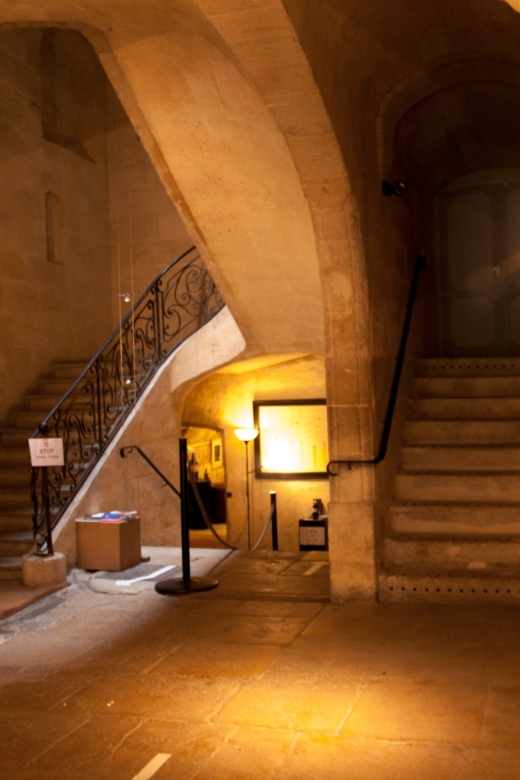
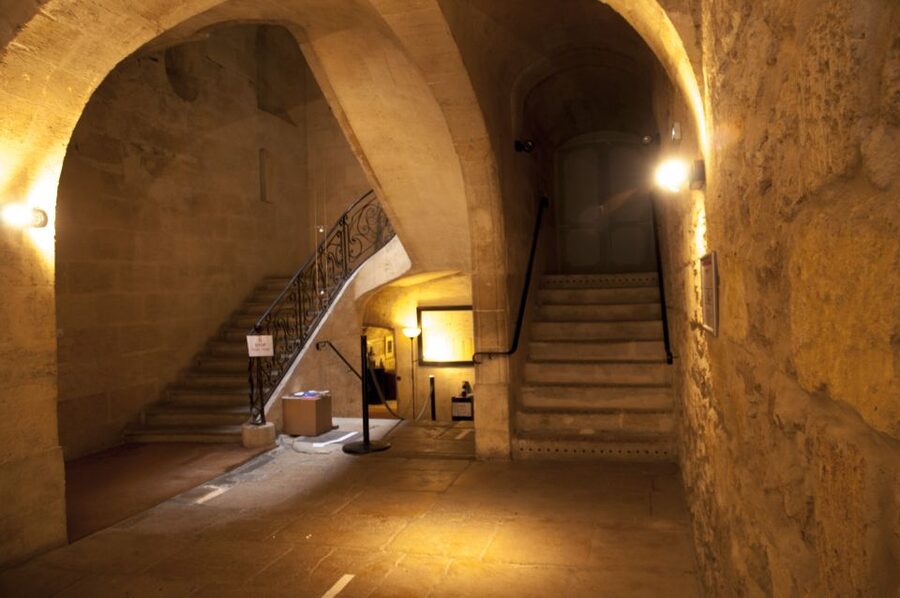
Your visit begins at the Bordeaux Wine and Trade Museum, housed in the former residence of Louis XV’s royal broker. That detail matters because the museum is not simply a room filled with bottles and labels. The building connects Bordeaux wine with the merchants who bought, stored, shipped, and sold it.
You start with the museum entry and can choose a paper guide or an audio guide. The audio option is available in French, Portuguese, Spanish, Russian, Korean, Chinese, Japanese, Italian, English, German, and Dutch. If you prefer to pause over an object or move quickly through a display, the self-guided format gives you that freedom.
The museum traces more than three centuries of Bordeaux wine and trade. You get context for the city’s international reputation, rather than only a lesson in tasting notes. That makes this a useful first stop if you are new to Bordeaux wine and want to understand why the region matters before visiting individual estates.
Because there is no full-time guide leading you from room to room, you will need to read or listen actively. That is a plus for independent visitors, but it may feel less lively than a traditional guided tour. The experience works best if you enjoy taking your time and choosing what interests you.
More Wine Tasting Tours in Bordeaux
- Bordeaux: Cité du Vin Entry Ticket and Wine Tasting
★ 4.6 · 3,885 reviews - From Bordeaux: Afternoon Saint-Emilion Wine Tasting & snack
★ 4.8 · 1,581 reviews - Medoc or Saint Emilion Wine Tasting and Chateau from Bordeaux
★ 5.0 · 1,415 reviews
Two vaulted cellars dating to about 1720
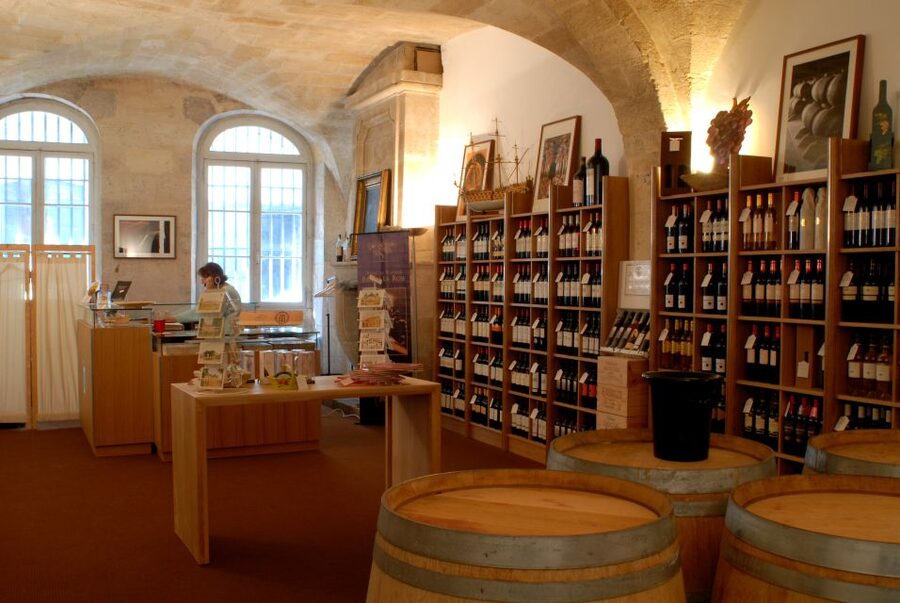
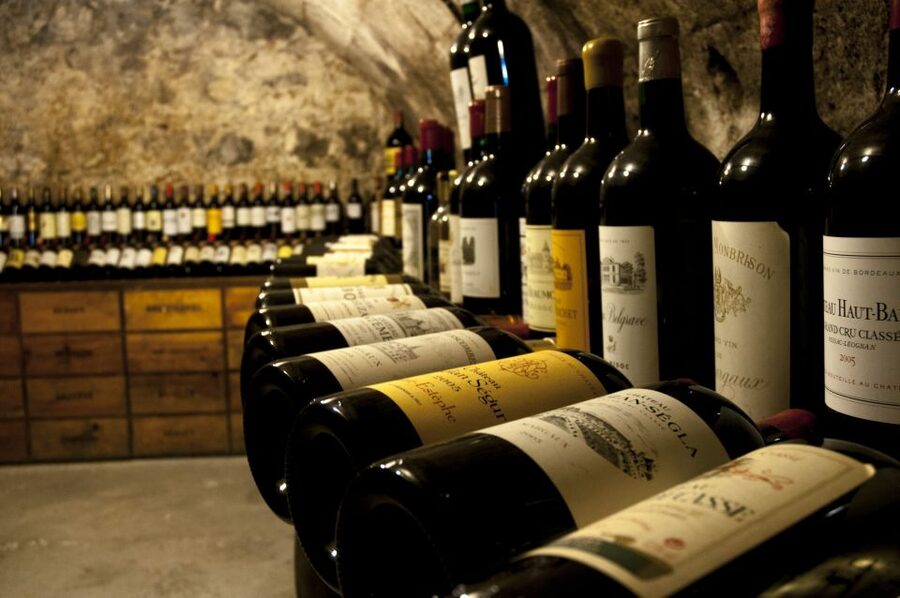
The most atmospheric part of the visit is the pair of historic vaulted cellars. They date to around 1720 and show how wine merchants worked in the 19th century, when barrels were central to storage and aging.
You can see how traditional coopers made and maintained barrels, and how wine was kept while it developed. The cellars give the museum a physical sense of place. A display about barrel aging can feel abstract, but standing among old vaulted spaces makes the process easier to picture.
I would allow extra time here rather than rushing toward the tasting. Look closely at the cellar structure and the barrel-making details. This section helps explain why wood, storage conditions, and patience have long mattered in Bordeaux production.
The cellars are historic, so do not expect a polished modern tasting room or an estate tour among working vineyards. You are learning about traditional merchant practices in an urban museum. If your main goal is to walk through current vineyards or see a winery in production, this experience will not replace a visit outside Bordeaux.
The Bordeaux vineyard presentation
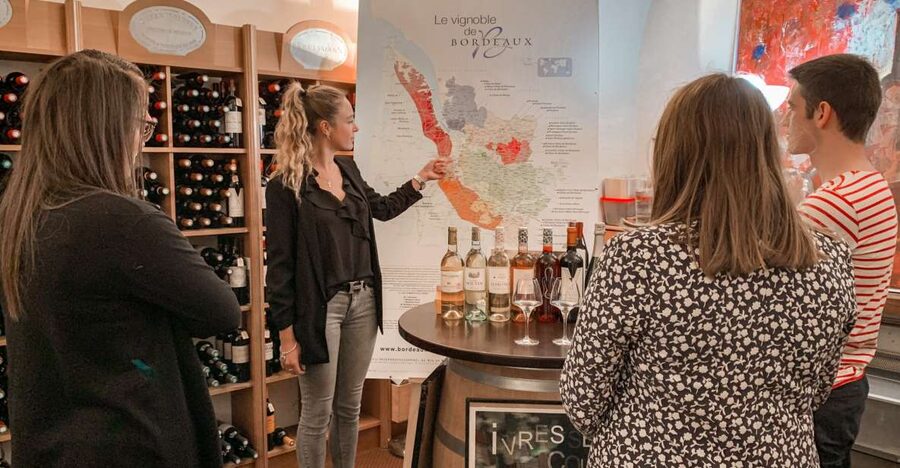
At the end of the museum visit, you join a presentation about the Bordeaux vineyards. This is where the experience moves from museum history to practical wine knowledge.
The presentation covers grape varieties, appellations d’origine contrôlée, or AOC, terroir, and regional classifications. These terms can sound like wine-school jargon, but they help you read a Bordeaux label and understand why two wines from the same broad region can taste different.
The explanation of terroir is especially useful. It connects the wine to its environment, including the conditions that affect how grapes grow and how a finished wine tastes. You also hear more about the local grape varieties, giving you a better base for the tasting that follows.
This part is presented rather than handled as a long walking tour. That keeps the experience focused, but it also means the quality of your visit depends partly on the host and on how much you choose to ask. The small group, capped at nine participants, should make it easier to raise a question than in a crowded tasting room.
The staff have received strong praise for their professionalism, and the tasting guide has been singled out for making the experience enjoyable. No individual guide names are provided, so the host may vary. Language support is broad, which is helpful if English is not your first language.
Tasting two Bordeaux wines with local treats
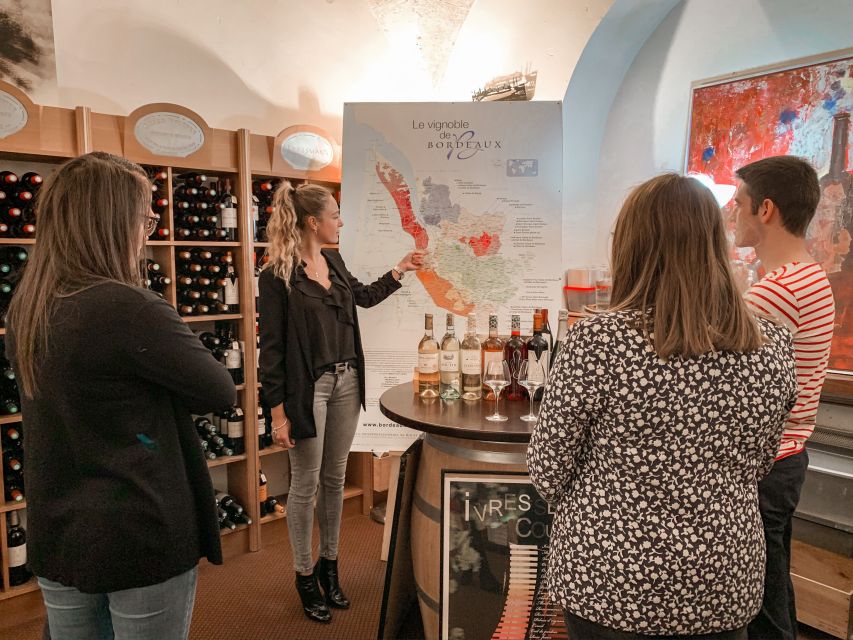
The tasting is the reward at the end of the visit. You taste two locally selected wines in a guided session linked to the vineyard presentation. Since you have just heard about grapes, AOC rules, and terroir, you can connect the vocabulary to what is in your glass.
The wines are paired with raisins dorés, chocolate-coated raisins that add a sweet contrast. Traditional canelés de Bordeaux are also part of the tasting setup described for the experience. These small pastries have a firm, dark exterior and a soft center, and they give you a local food reference rather than a generic plate of crackers.
One useful point: the included details specifically promise raisins dorés, while the full tasting description also mentions canelés. The supplied information is not perfectly consistent about the snacks, so I would think of the tasting as including local sweet treats rather than expecting a large food pairing. This is a wine tasting, not a meal.
One account describes receiving three wines, but the advertised format is two. Plan on two glasses and treat any additional pour as a possible bonus, not part of the guaranteed experience.
The tasting has been especially well received, with strong praise for both the wines and the guide. That makes sense for beginners: you get enough wine to compare, but not so much that the session becomes confusing. It also suits experienced wine drinkers who want a short introduction to Bordeaux rather than a long technical tasting.
More Wine Tasting Tours in France
- Saint Emilion Day Trip with Sightseeing Tour & Wine Tastings from Bordeaux
★ 5.0 · 1,120 reviews - Saint Emilion Half-Day Trip with Wine Tasting & Winery Visit from Bordeaux
★ 4.5 · 1,034 reviews - From Bordeaux: Half-Day Saint-Émilion Tour and Wine Tasting
★ 4.7 · 699 reviews - Bordeaux: Vineyards Wine Tasting Half-Day Trip
★ 4.2 · 470 reviews
What $14 gets you
At $14 per person, this is one of the more affordable ways to add structured wine content to a Bordeaux visit. The price includes museum entry, a paper guidebook, access to the vineyard presentation, and a guided tasting of two local wines. Raisins dorés are also listed as included.
The value is strongest if you want several things in one stop. You get history, a historic interior, an introduction to Bordeaux wine terms, and a tasting. Paying separately for a museum visit and a wine tasting could easily make the outing less convenient, even if the total price varies elsewhere.
The price is less compelling if you want a full estate visit, a large meal, or a long tasting with many wines. This is a compact city experience with an educational focus. You are paying for an accessible introduction, not an all-day vineyard excursion.
The ticket is valid for one day, with available starting times shown when you check. The experience begins at the museum itself, so there is no included transportation or transfer to a vineyard. That makes planning simple if you are already exploring central Bordeaux, but you need to make your own way to the meeting point.
Who will get the most from this visit
I would recommend this experience to first-time Bordeaux visitors who want a clear starting point for the region’s wines. It gives you basic vocabulary before you begin ordering bottles in restaurants or planning visits to estates.
It also suits couples and small groups who prefer a quiet museum stop over a full coach excursion. With no more than nine participants in the small group, the tasting should feel more personal than a large commercial wine event.
The broad language options make it practical for international visitors. You can use a paper guide or audio guide in one of many languages, then take part in the presentation and tasting with host support in French, English, Spanish, Portuguese, Italian, German, Dutch, Russian, Korean, Chinese, or Japanese.
Families should consider the balance of the visit. The museum history and cellars can interest older children, but the main payoff is wine tasting, so this is naturally better suited to adults.
Wine enthusiasts looking for technical detail may find the presentation introductory. That is not a weakness if you want a foundation, but serious Bordeaux collectors may prefer a more specialized estate visit with a broader flight of wines.
Small details that improve the experience
Give yourself time for the museum before the tasting. The point of the visit is not simply to collect two glasses of wine. The cellars, trade history, and vineyard presentation explain what you are tasting.
Use the audio guide if you want a fuller explanation without following a group leader. Use the paper guide if you prefer to read at your own speed or share information with a companion.
Keep your expectations realistic about food. The local sweets are a pleasant pairing, but they are not lunch. Have a meal before or after if you need something substantial.
Book with some flexibility if your schedule allows. Free cancellation is available up to 24 hours in advance for a full refund, and you can reserve now and pay later. Those terms are useful in a city where weather, train schedules, and restaurant plans can shift.
The experience has a 4.4 rating from 121 reviews, with repeated praise for the audio guide, staff professionalism, historical explanation, and tasting. That pattern suggests the strongest parts are the museum format and the final wine session, rather than a dramatic vineyard outing.
Should you book the Bordeaux Wine and Trade Museum tasting?
Book it if you want an inexpensive, well-organized introduction to Bordeaux wine in the city. The combination of 18th-century vaulted cellars, a multilingual self-guided visit, and a small tasting makes $14 good value.
Skip it if you are looking for a full-day vineyard tour, a large food pairing, or a deep technical study of several Bordeaux estates. For everyone else, this is a sensible way to spend part of a day, especially early in your Bordeaux stay when the terms on French wine labels still feel unfamiliar.
FAQ
What is included in the Bordeaux Wine and Trade Museum experience?
The ticket includes museum entry, a paper guidebook, the Bordeaux vineyard presentation, a guided tasting of two local wines, and raisins dorés.
How many wines will I taste?
The experience is advertised with a guided tasting of two local wines. One account mentions three wines, but you should book expecting two.
Is the museum tour guided?
The museum visit is self-guided. You can use a paper guide or an audio guide. The vineyard presentation and wine tasting are guided.
What food is served with the wine?
The tasting includes raisins dorés, which are chocolate-coated raisins. The tasting description also mentions traditional canelés de Bordeaux. The food is a small pairing, not a full meal.
What languages are available?
Guide and host support is available in French, Portuguese, Spanish, Russian, Korean, Chinese, Japanese, Italian, English, German, and Dutch. Paper and audio guide options are available in several languages.
How large is the tasting group?
The experience is offered as a small group with a maximum of nine participants.
More Museum Visits in Bordeaux
- NYC: Empire State Building Tickets – Observatory & Museum
★ 4.7 · 25,757 reviews - Barcelona: FC Barcelona Museum “Barça Immersive Tour” Ticket
★ 4.4 · 10,944 reviews - Porto: Cálem Cellar Tour, Interactive Museum & Wine Tasting
★ 4.5 · 4,113 reviews - Dublin Irish Whiskey Museum and Gallery Guided Tour with Tasting
★ 5.0 · 3,078 reviews
Freshly poured around Bordeaux
- From Bordeaux: Essential Morning Tour with Wine Tasting★ 4.8 · 55 reviews
- From Bordeaux: Half-Day Saint-Émilion Tour and Wine Tasting★ 4.7 · 699 reviews
- Guided Bordeaux Wine Tasting Class with 6 Wines and pairings★ 4.9 · 181 reviews
- From Bordeaux: Saint-Émilion Half-Day Tour with Wine Tasting★ 4.9 · 389 reviews
- From Bordeaux: Half-Day Saint-Emilion Wine Tour★ 4.8 · 257 reviews
- From Bordeaux: Full-Day Medoc Wine Tour★ 4.8 · 119 reviews
- From Bordeaux: Medoc Half-Day Wine Tour★ 4.6 · 280 reviews
- From Bordeaux: Medoc Wineries Tour with Tastings★ 4.6 · 182 reviews
Wine Tasting Tours, side by side.
From Porto: Douro Valley w/ Boat Tour, Wine Tasting & Lunch
Read our review →
Complete Douro Valley Wine Tour with Lunch, Wine Tastings and River Cruise
Read our review →
Florence: Chianti Wineries Tour with Wine Tasting
Read our review →
From Split: Krka Waterfalls, Food & Wine Tasting Tour
Read our review →
Small-Group Wine Tasting Experience in the Tuscan Countryside
Read our review →
Montserrat & Cogwheel Train, Gourmet Wine Tasting & Tapas/Lunch
Read our review →
Rome: Tuscany & Montepulciano Day Trip with Lunch & Wine Tasting
Read our review →
SMALL-GROUP Wine Safaris: Tuscan Wine Tasting Tours from Florence
Read our review →Lists this tasting sits in