
Review · MALAGA
Málaga: Spanish Cooking Workshop with Paella and Sangria
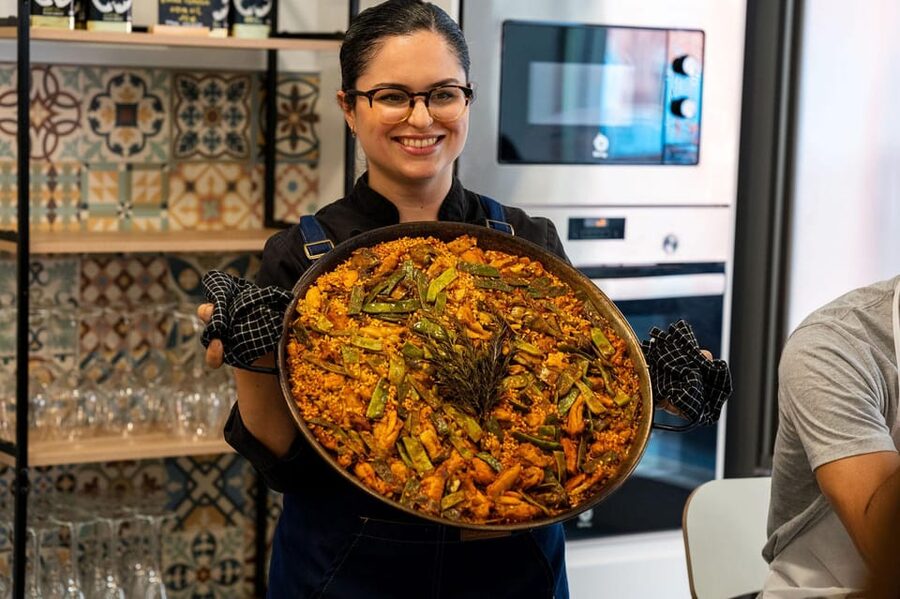
The best part of this Málaga class is that paella is only one piece of the meal. You also prepare ajoblanco, a chilled almond soup, remojón malagueño salad, sangria, and a surprise dessert, then sit down and eat what you made. Chef Laura and Chef Diego add the local context that turns a recipe lesson into a look at Andalusian food.
I like the central location, five minutes from Atarazanas Market, and the comfortable kitchen with high stools that have backs. I also like the small-group, hands-on format: you chop, stir, season, and ask questions instead of watching a chef work from the sidelines. The main consideration is the three-hour length and the minimum of four participants, so this suits people who want a social meal and cooking lesson, not a quick tasting.
Key points at a glance
- Three-hour meal from scratch: Prepare paella, ajoblanco, remojón malagueño, sangria, and a surprise dessert.
- Two very different instructors: Laura brings Le Cordon Bleu training and paella expertise, while Diego focuses on Málaga and Andalusian cooking.
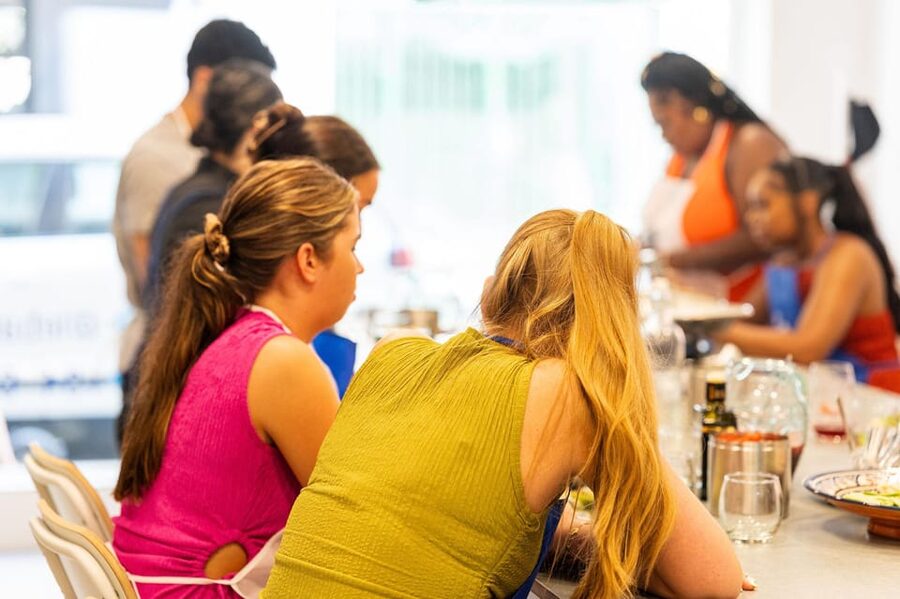
- A genuinely participatory class: You help prepare the dishes rather than simply watching demonstrations.
- Excellent central setting: The kitchen is in Málaga’s historic center, about five minutes from Atarazanas Market.
- Useful local advice: Your chefs can suggest markets, shops, restaurants, bars, and places to visit around Málaga and Andalusia.
- Good practical value: At $78 per person, you receive three hours of instruction, a full shared meal, and included sangria.
A Spanish meal, not just a paella lesson
This class gives you a more useful picture of Málaga’s food than a session built around paella alone. Paella is the headline dish, but the menu moves through several parts of Andalusian cooking.
You begin with ajoblanco, a cold almond soup strongly linked with southern Spain. The dish is a good lesson in how simple ingredients can carry a lot of flavor. Almonds, bread, garlic, olive oil, and other basic items become a smooth, cool starter. Several participants specifically singled out the soup as a favorite, so do not treat it as a warm-up before the main event.
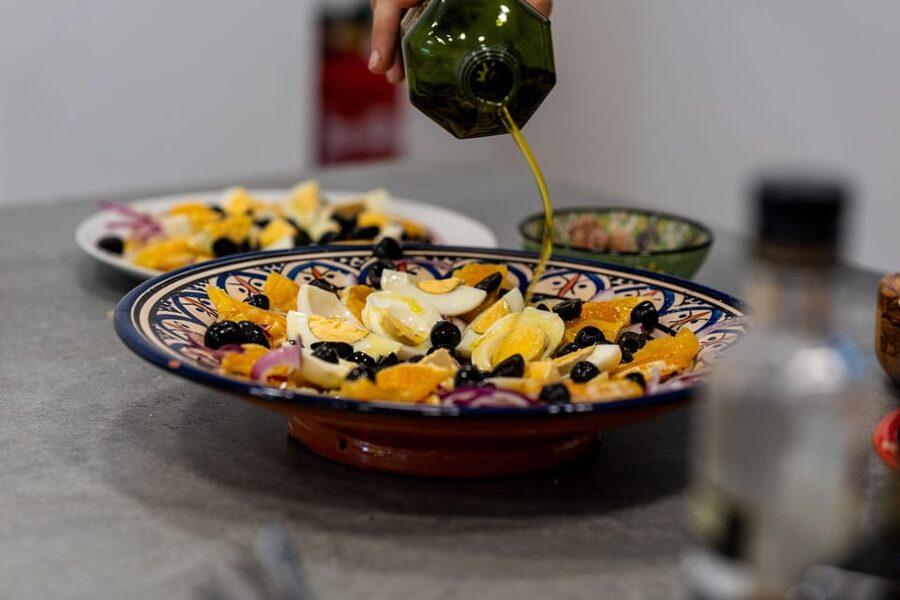
The second side of the meal is remojón malagueño, a traditional Málaga salad. This gives you a local dish that you are less likely to find on a standard Spanish restaurant menu outside the region. It also shows how Málaga’s food differs from the rice-centered dishes most visitors expect.
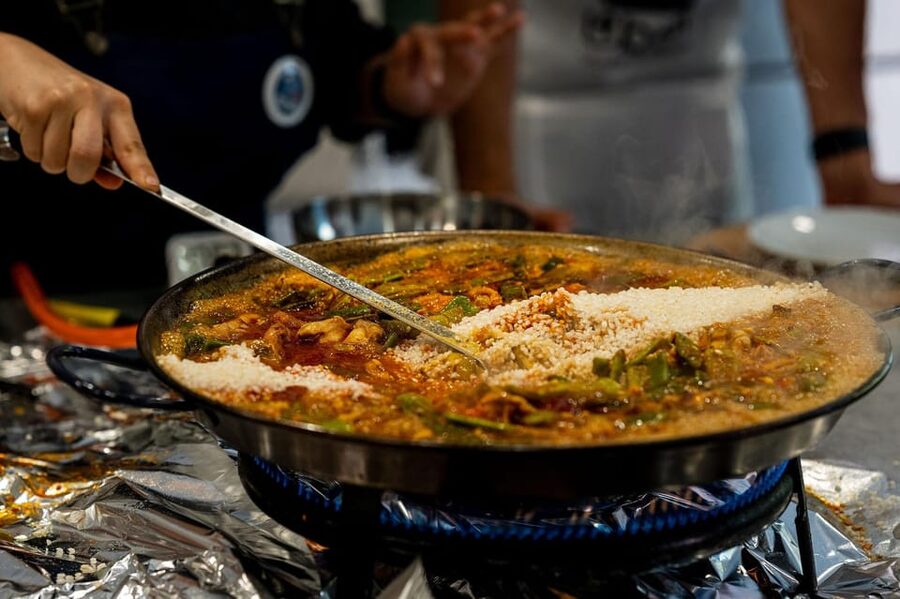
Then comes paella, prepared with guidance from the chefs. You learn about the dish’s origins, the role of the ingredients, and the small decisions that affect the rice. The useful part is not simply seeing the finished pan. You work through the preparation and hear tips about getting the rice right, a point that matters when you try to recreate the meal at home.
A surprise dessert rounds out the menu. The exact dessert is not fixed in the information provided, which is part of the fun, but you should not book this expecting only a single main course and a drink. This is a full cooking session followed by a shared meal.
More Cooking Classes in Spain:
- Barcelona Paella Cooking Class with Market Visit, Tapas & Sangria
★ 5.0 · 2,531 reviews - Spanish Cooking Class Paella Tapas and Sangria in Madrid
★ 5.0 · 1,340 reviews - Paella Cooking Class, Wine Tasting & Central Market in Valencia
★ 5.0 · 1,150 reviews
Laura and Diego bring different strengths
Your instructor may be Laura or Diego, and both bring a clear connection to Spanish cooking.
Laura studied at Le Cordon Bleu in London and has worked in Michelin-starred restaurants. She was trained by a Valencian chef who specializes in paella, so her instruction focuses on both technique and tradition. She explains the background of the dishes, talks through the ingredients, and uses simple comparisons to make cooking steps easier to follow.
Laura also spends time on the wider food culture. You can ask her about markets, local shops, restaurants, and places to visit in Málaga. Her English is described as very good, which helps if you want to ask detailed questions rather than simply follow a recipe.
Diego grew up and trained in Málaga after beginning his culinary path at age nine. His work has included traditional Andalusian kitchens and high-end restaurants in the city. He specializes in Málaga-style cooking, Andalusian dishes, and desserts.
His teaching style leans toward warmth and humor. He explains the food while telling stories about local customs and the origins of different dishes. If you enjoy a relaxed instructor who keeps the room laughing while still giving clear directions, Diego may be your ideal teacher.
Other staff may help with the sangria or the practical parts of the class. The important point is that the class is led in English and designed around participation, questions, and conversation.
What the three hours feel like
The class takes place in a modern, comfortable kitchen in Málaga’s historic center. That location is a real advantage. You are about five minutes from Atarazanas Market, so the class fits neatly into a day of exploring the old center, shopping for food, or visiting the market earlier in the day.
The exact start time varies, so you need to check availability when booking. The total duration is three hours. That allows time for instruction, preparation, cooking, eating, and conversation without forcing the meal into a rushed schedule.
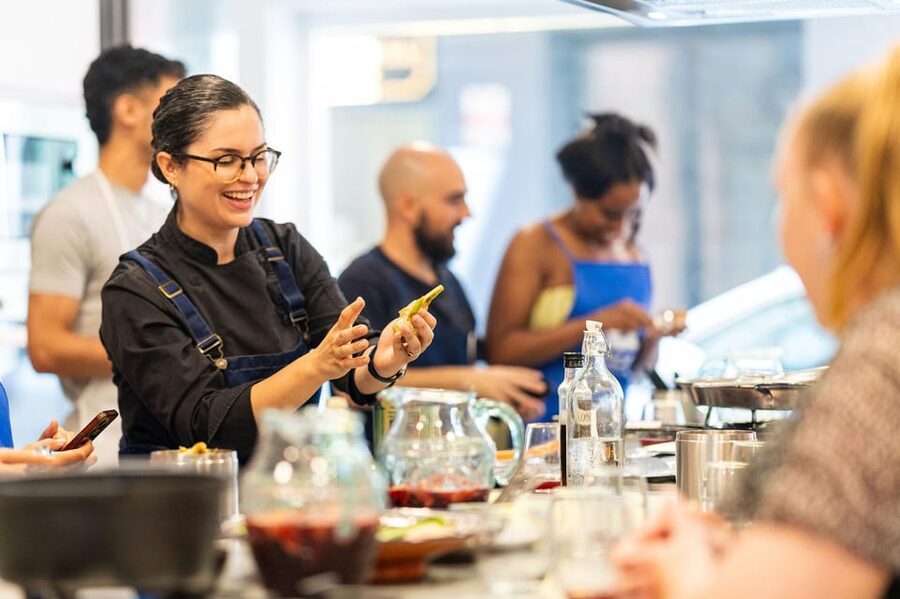
The class begins with introductions and an explanation of the dishes. You learn what you are making and why the recipes matter locally. The chefs then guide you through the preparation, dividing tasks among the people in the room.
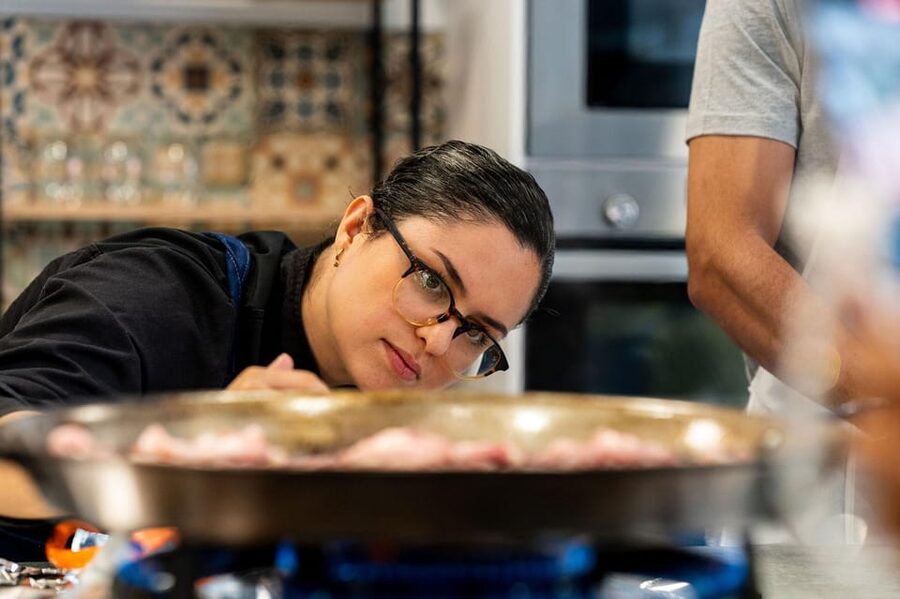
This is not a demonstration where you sit quietly and take notes. You should expect to handle ingredients, prepare components, and take part in cooking the dishes. The pace is described as relaxed, but you still need to be willing to stand and work at a counter for parts of the class.
The kitchen has high stools with backs. That detail matters if you have concerns about standing for several hours. You can sit when needed, although this remains an active cooking experience rather than a seated lecture.
As the food comes together, the chefs explain techniques and answer questions. The class then shifts into a shared meal. You eat the dishes prepared during the session, along with sangria. Recipes may be sent afterward, giving you a better chance of reproducing the meal at home.
Paella lessons you can actually use
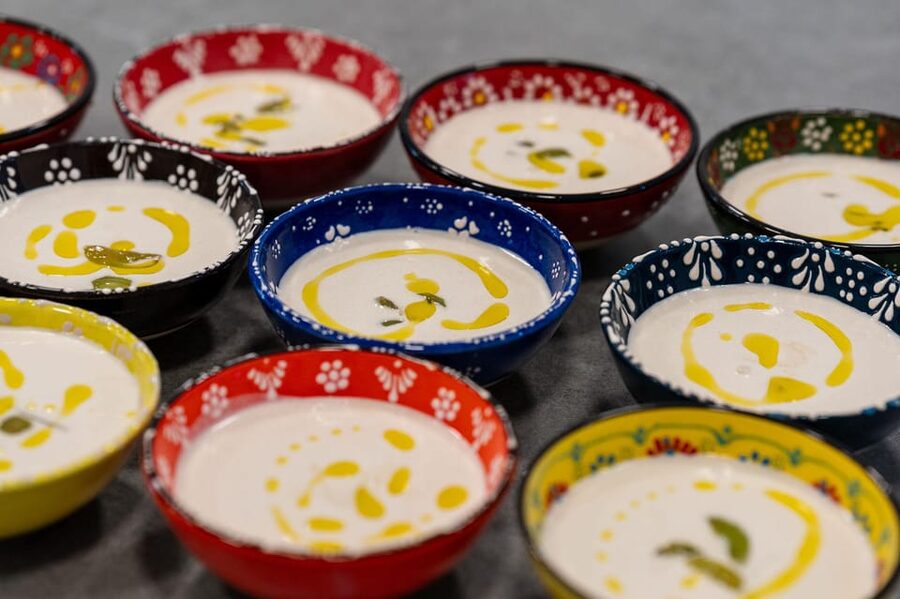
Paella is easy to recognize and surprisingly easy to get wrong. The rice can become wet, dry, undercooked, or overworked. A good class should explain not only what to add, but also why each step matters.
Here, the chefs focus on the origins of paella and the details behind the cooking process. You hear practical advice about the rice, the ingredients, and the techniques that help produce a proper result. The point is not to turn you into a restaurant chef in one afternoon. It is to give you enough understanding to stop guessing when you make paella at home.
The hands-on setup makes a difference. When you prepare ingredients yourself, you see their size, texture, and timing. You also have the chance to ask why a step is done in a certain order. This is more useful than taking a photograph of a finished pan.
The class also places paella in a wider Spanish setting. You learn that the dish has a story and regional connections, rather than being a generic symbol of Spain. Laura’s Valencian paella training adds one perspective, while Diego’s Andalusian background gives the class a Málaga connection.
One honest limitation: the recipe may not match the paella you order elsewhere in Spain. Spanish cooking changes from region to region, and restaurants use their own methods. Treat the class as a lesson in a particular approach, not the final word on every Spanish rice dish.
More Workshops and Classes in Spain:
- Madrid: Paella and Sangria Workshop in the City Center
★ 4.9 · 1,264 reviews - Barcelona: Cocktail Master Class by Mixologist with Tapas
★ 4.7 · 959 reviews - Barcelona: Cocktail Making Class with Tapas
★ 4.7 · 310 reviews - Valencian Paella Cooking Class, Tapas & Sangria – Evening
★ 5.0 · 303 reviews
A closer look at Málaga through food
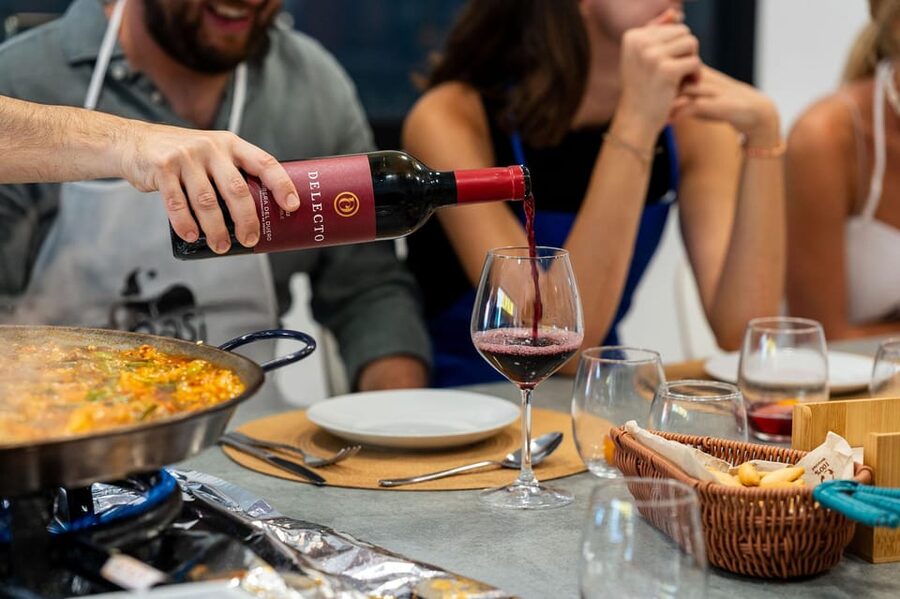
A cooking class can be a useful way to understand a city because food shows how climate, local products, and daily habits fit together. This session gives you more than a list of recipes.
Ajoblanco points to the importance of almonds, olive oil, garlic, and cool soups in southern Spain. Remojón malagueño connects the meal directly to Málaga. Paella adds a wider Spanish reference point, while the dessert and sangria keep the experience social.
The chefs also discuss Andalusian culture and the background of the dishes. You can ask about local ingredients, where to shop, and where to eat during the rest of your stay. Several participants used the cooking class to get advice for later meals, including recommendations for paella in Valencia.
That kind of conversation is one of the better reasons to take the class early in your Málaga visit. You can use the advice afterward instead of waiting until your last night in town.
Sangria adds the social touch
Sangria is included as part of the meal, and the chefs explain how it is prepared. This gives you a simple drink lesson alongside the cooking.
The sangria is not meant to replace the food instruction. It helps set a friendly tone while the group works through the menu. The class brings together people from different countries, and the shared preparation gives you an easy way to talk without forcing conversation.
Alcohol and drugs are not allowed outside the included food-and-drink experience. If you do not drink alcohol, ask about the available arrangements before booking. The provided details confirm that sangria is part of the experience, but they do not specify a separate nonalcoholic menu.
Group size, comfort, and accessibility
The class requires at least four participants. The group can be around ten people, which is large enough for a social atmosphere but still small enough for the chef to answer individual questions.
Group size affects the experience. With fewer people, you are likely to get more direct time with the chef and easier access to the work area. With a fuller group, the class becomes more like a communal dinner party. Neither is automatically better, but you should know that this is designed as a shared activity rather than a private lesson by default.
The classes take place in modern kitchens described as comfortable. High stools with backs are available, which is helpful for older participants or anyone who cannot stand continuously.
The activity is wheelchair accessible. If you have a particular mobility need or require a specific food adaptation, contact the provider in advance rather than relying on a general accessibility label.
Vegetarian and vegan options are available with advance notice. Food allergies and intolerances can also be accommodated. Give clear details when you reserve, since the menu involves several dishes and the kitchen needs time to plan substitutions.
Is $78 a fair price?
At $78 per person, this is not the cheapest way to eat in Málaga. You can find a restaurant meal for less, especially if you choose a simple local menu. That comparison misses the point, though.
Your fee covers three hours of instruction, active cooking, several dishes, dessert, sangria, and a meal in a central kitchen. You also receive cooking techniques, cultural background, and local suggestions that can shape the rest of your visit. If you would otherwise book a paid food tour and a meal separately, the price becomes easier to justify.
The value is strongest for people who will cook again at home. You leave with a better understanding of paella, a set of recipes or recipe guidance, and confidence built through practice. If you rarely cook and mainly want to eat, a standard food tour may offer more variety with less work.
Families, couples, solo visitors, and small groups can all fit the format. Solo participants may find the class especially useful because the shared tasks create a natural social setting. Families should remember that the class requires active participation and may be less appealing to young children who want a quick meal rather than a three-hour activity.
Practical booking advice for Málaga
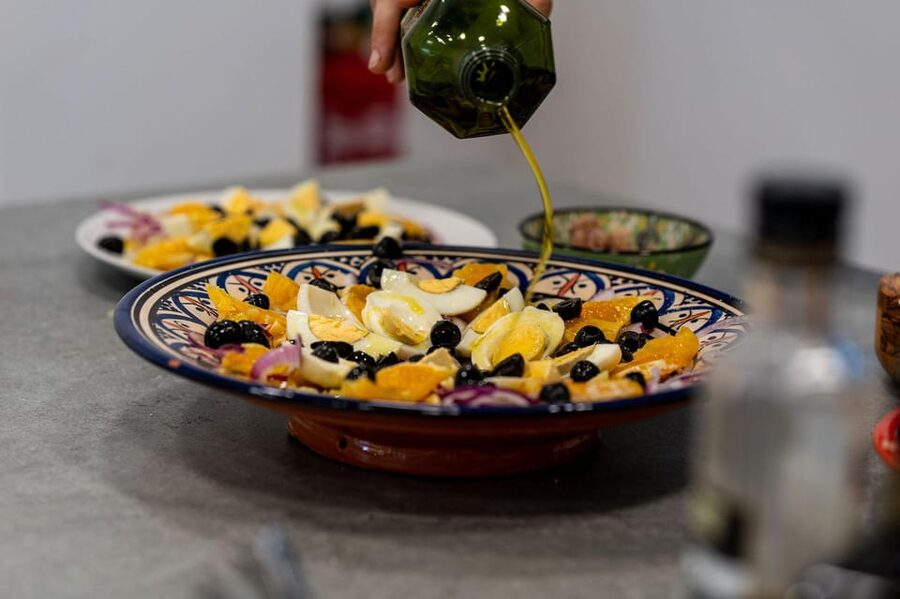
The kitchen is in the historic center, close to Atarazanas Market. Plan to arrive in the central area with enough time to find the entrance, since the provided details do not give a specific meeting point or street address.
I would book this for the first or second day of your Málaga stay if local food is a priority. That gives you time to use the chefs’ recommendations for markets, restaurants, bars, and places to visit.
The activity is conducted in English. If your group includes people who are not comfortable following English cooking instructions, keep that in mind before reserving.
You can cancel up to 24 hours before the activity for a full refund, and you can reserve now and pay later. Those terms are useful if your Málaga plans are still shifting, but you should still confirm the start time and dietary arrangements before finalizing the booking.
Who should take this class?
I would choose this experience if you want more than a photo of paella. It suits you if you enjoy cooking, asking questions, meeting people from different countries, and eating a meal you helped prepare.
It is also a good rainy-day plan. The kitchen provides a warm indoor activity without giving up the local character of Málaga. You still learn about the city, its ingredients, and its food traditions.
You may want to skip it if you prefer a quick tasting, dislike group activities, or want a private chef-led lesson. The three-hour format asks for time and attention. You will be preparing food, not simply being served.
The class is also a strong choice for older participants who worry about standing for long periods, thanks to the high stools with backs. Just remember that the activity remains hands-on, so full comfort depends on your personal mobility.
Should you book the Málaga cooking workshop?
Book it if you want a practical introduction to Andalusian food, a proper paella lesson, and a social meal in the center of Málaga. The combination of ajoblanco, remojón malagueño, paella, dessert, and sangria gives you more range than a class focused on one dish.
I especially like the chance to learn from both Laura and Diego, whose backgrounds bring different angles to Spanish cooking. At $78, the value is solid for anyone who will use the recipes and local advice after the class.
Skip it only if cooking feels like work on vacation or if you want a short food stop. For everyone else, this is a well-balanced way to spend three hours, eat generously, and leave Málaga with skills you can use at home.
FAQ
How long does the Málaga cooking workshop last?
The workshop lasts three hours. The time includes instruction, hands-on preparation, cooking, and eating the meal together.
What dishes will I prepare?
You will prepare ajoblanco, paella, and remojón malagueño, a typical Málaga salad. The experience also includes a surprise dessert and sangria.
Who teaches the cooking class?
The class is taught by Laura and Diego. Laura trained at Le Cordon Bleu in London and has paella training from a Valencian chef. Diego was raised and trained in Málaga and specializes in Málaga-style and Andalusian cooking.
Is the class taught in English?
Yes. The live tour guide language is English.
Can the menu accommodate dietary needs?
Vegetarian and vegan options are available with advance notice. The kitchen can also adapt the menu for food allergies and intolerances if you provide the information ahead of time.
Is the cooking workshop wheelchair accessible?
Yes, the activity is listed as wheelchair accessible. Contact the provider in advance if you need to confirm a particular arrangement for your group.
Freshly poured around Spain
- Picasso Museum and Walking Tour Plus Wine Tasting Upgrade★ 4.3 · 111 reviews
- Personalised Traditional Madrid Night Tapas and Drinks Tour★ 5.0 · 95 reviews
- Penedès: Discovery Tour with Cava Tasting★ 4.6 · 76 reviews
- Palamós: Sunset Boat Tour with Glass of Cava★ 4.2 · 74 reviews
- Ibiza: Secret Coves Guided Boat Tour with Open Bar and Tapas★ 4.7 · 70 reviews
- Barcelona: Montserrat Tour with Lunch & Wine Tasting Option★ 4.6 · 286 reviews
- Barcelona: Montserrat with Winery Visit and Farmhouse Lunch★ 4.7 · 178 reviews
- Manilva: Nilva Vineyard, Wine Tasting & Tapas Guided Tour★ 4.9 · 156 reviews
Malaga Drinks Tours, side by side.

Malaga: Wine and Tapas Tour with Tastings and Drinks
Read our review →
Málaga: Traditional Andalusian Tapas and Wine Tour
Read our review →
Malaga: White Village, Vineyard, and Wine Tasting Wine Tour
Read our review →
Lists this tasting sits in