
Review · PORTO
Porto: What is Fado? Commented Live Concert with Port Wine
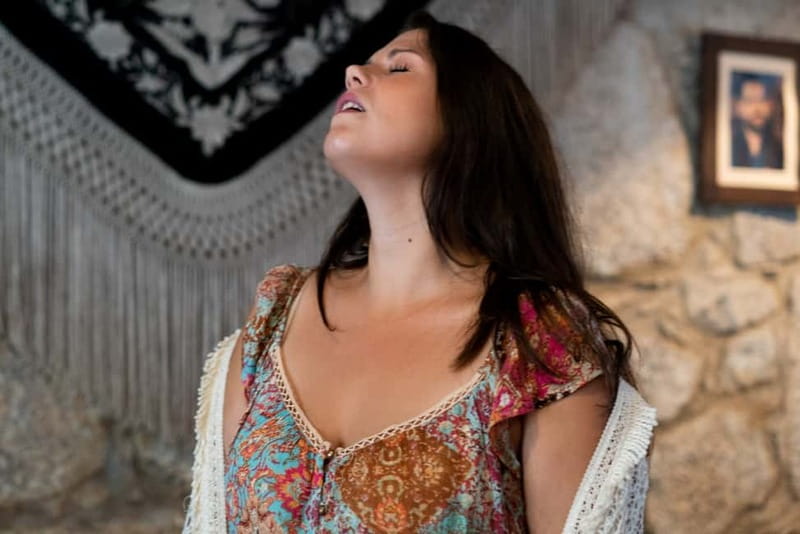
Fado na Baixa does more than place singers on a small stage. It explains why this music matters to Portugal, then lets you hear the answer in live voices, Portuguese guitar, and a glass of Tawny Port. The one-hour program moves from Lisbon’s traditional Fado to Coimbra’s student songs, Amália Rodrigues, and modern forms that keep the music alive.
I like the clear mix of short films and live music, which gives you just enough context without turning the evening into a lecture. I also like the contrast between the female and male singers, especially when the former Coimbra student performs the university style. The main drawback is simple: if you want a full evening of uninterrupted songs, the commentary and videos will reduce the amount of music.
Key points at a glance
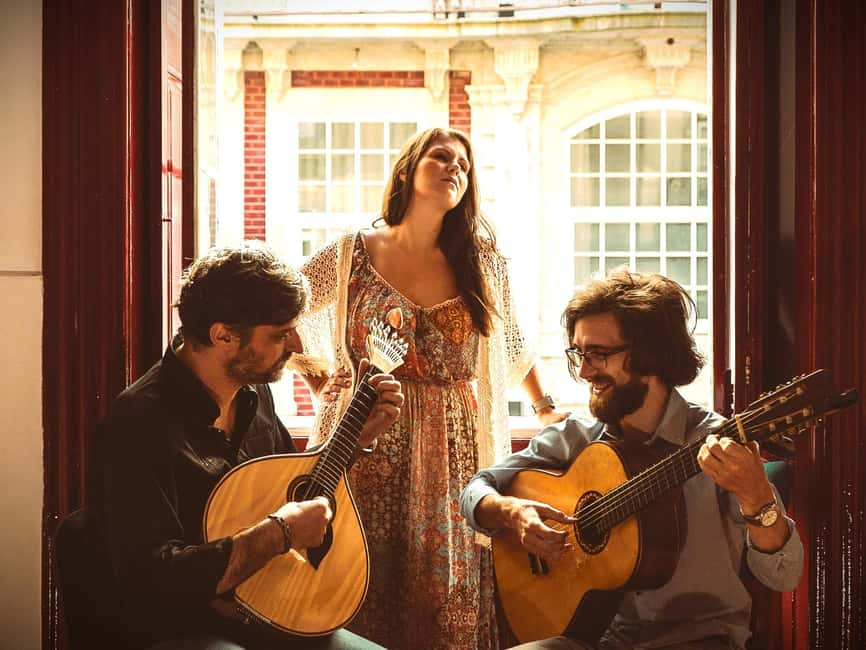
- Hear four performers in an intimate auditorium: Two singers and two musicians present several forms of Fado rather than one repeated style.
- Compare Lisbon and Coimbra Fado: You hear the polished, intense Lisbon tradition alongside Coimbra’s male student singing.
- Learn through your own language: Audio support and commentary are available in Portuguese, English, Spanish, and French.
- Taste Tawny Port during the music: The wine is part of the cultural pairing, not an add-on after the show.
- See where Amália Rodrigues fits: A dedicated segment explains how Portugal’s most famous Fado singer changed the genre.
- Spend only an hour in central Ribeira: The auditorium at Rua de São João 99 is near the Douro River and works well before dinner or after sightseeing.
Why Fado makes more sense after this one-hour show
Fado can be hard to grasp if you only hear a few songs in a restaurant. The melodies may sound mournful, the Portuguese lyrics may pass quickly, and the Portuguese guitar can seem like an unusual decoration rather than one of the music’s main voices.
This program gives you a listening guide. Personal testimonials appear in several languages, while short films explain the music’s origins, traditions, instruments, and changes over time. You are not expected to know Portuguese or arrive with a background in music.
That matters because Fado is not simply sad singing. It carries ideas of longing, fate, absence, love, work, memory, and saudade, a Portuguese feeling of missing someone or something. The show uses explanation and performance together, so you can notice how the words, voice, and instruments work as one.
The format is especially useful for first-time listeners. You hear a song, learn what to listen for, and then hear another style with a different mood and setting. It gives the evening shape without asking you to sit through a long history lesson.
More Port Wine Cellar Tours in Porto
- Porto: Live Fado Show with Glass of Port Wine
★ 4.8 · 6,498 reviews - Porto: Bridges Cruise & Sunset & Port Wine Cellar Option
★ 4.2 · 4,180 reviews - Porto: Fado & Port Wine in Traditional Portuguese Music Shop
★ 4.8 · 2,906 reviews
Entering Fado na Baixa in Porto’s Ribeira
The performance takes place at Fado na Baixa, at Rua de São João 99, 4050-553 Porto. It is in the heart of Ribeira, near the Douro River, inside a licensed auditorium in a 19th-century building.
The setting suits the music. This is not a large concert hall with a distant stage. The auditorium is described as cozy and intimate, which lets the singers and instruments carry the room without needing heavy production. A compact space also makes the Portuguese guitar easier to appreciate, since its bright, ringing sound is central to the performance.
The building has an older feel, and one practical note is worth knowing. The chairs have been described as vintage and adequate for the one-hour program, though not especially modern. For most people, the short running time makes this a minor concern. If comfortable seating is a high priority, it is something to keep in mind.
The venue is wheelchair accessible. Hosts or greeters can assist in Portuguese, Spanish, English, or French, and the audio guide is available in those four languages. Check the available starting time when booking, since the schedule can vary.
The opening: traditional Lisbon Fado
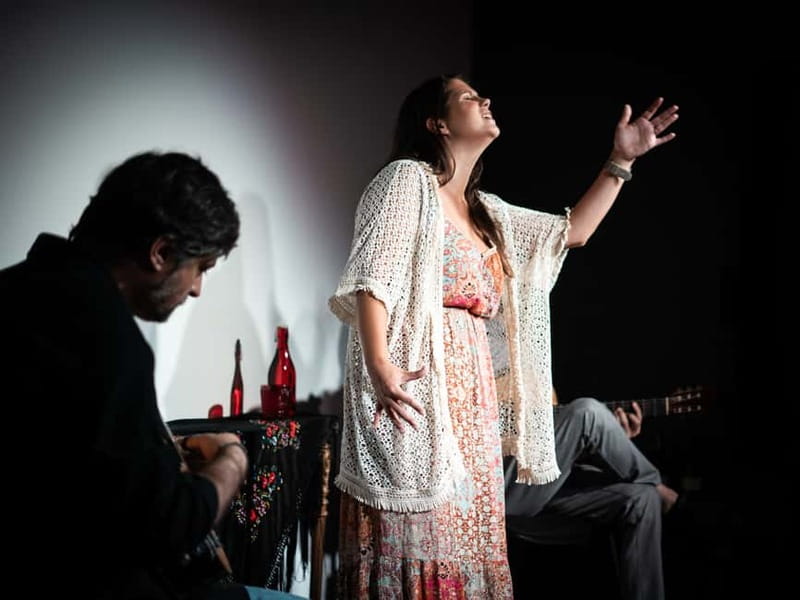
The first musical section introduces traditional Lisbon Fado. Lisbon is where the genre began and where its most widely marketed form developed. This style is often intense, direct, and built around the singer’s emotional delivery.
You will hear both male and female voices during the program. That contrast is useful. A woman’s interpretation and a man’s interpretation can give the same musical tradition different weight, tone, and character.
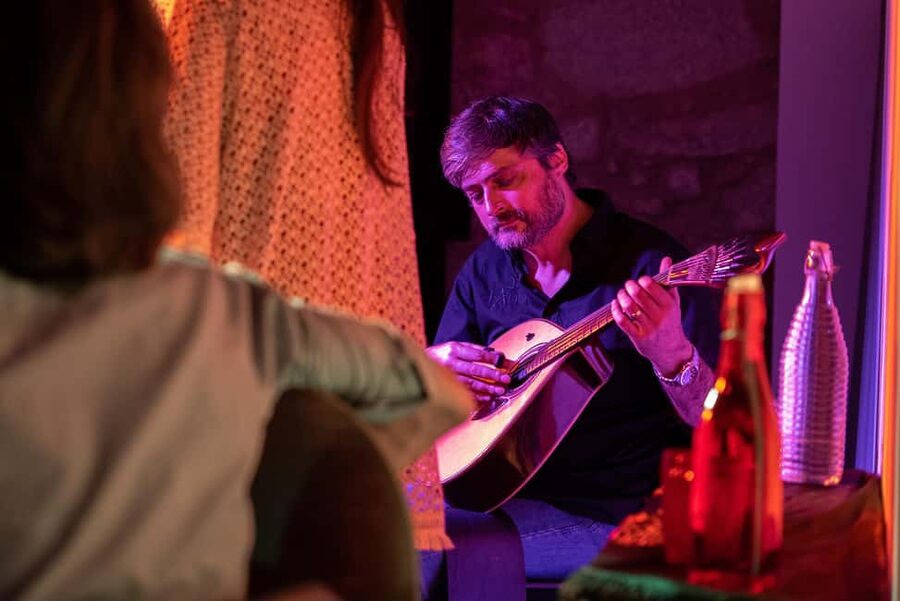
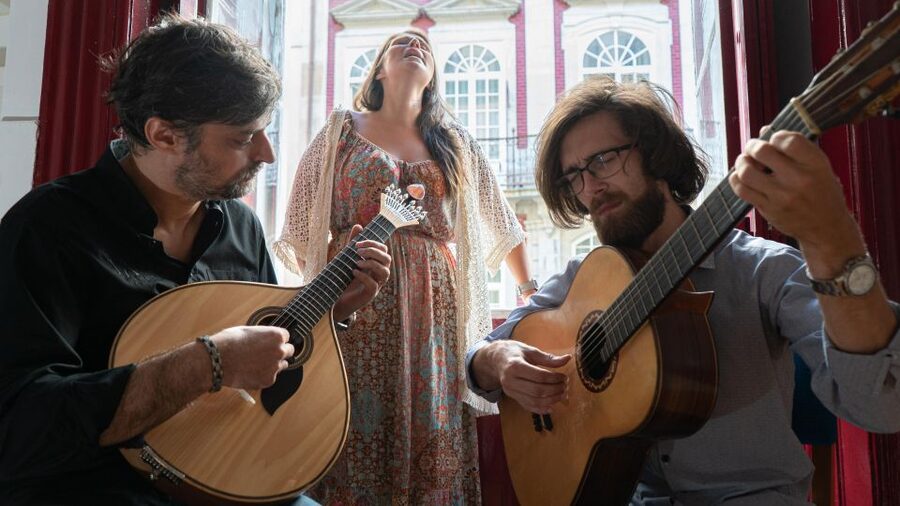
The music is supported by a classical guitar and the Portuguese guitar, whose small, rounded body and distinctive tuning produce a bright, almost silvery sound. One musician, Mário Henriques, has been singled out for his Portuguese guitar playing, while Rato is also identified as an accomplished player. The instrument’s skillful patterns can be as absorbing as the singing.
This opening section is a good introduction because it presents Fado as a living performance, not a museum piece. You hear the tradition in the form most visitors expect, then the show begins to widen the picture.
A glass of Tawny Port and the Portuguese guitar
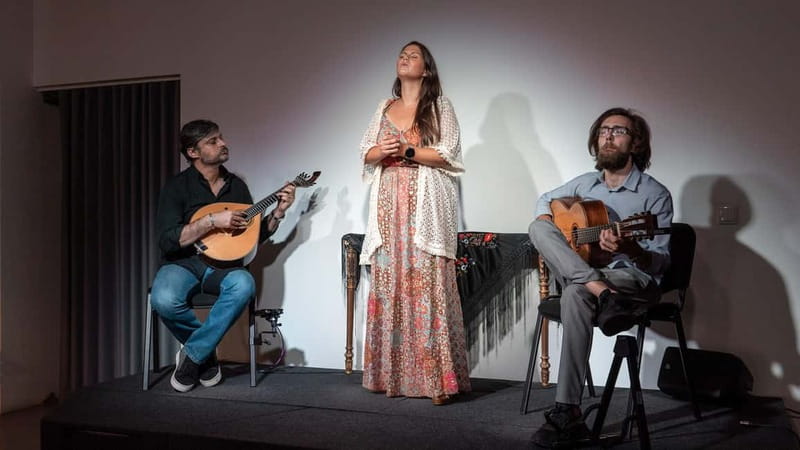
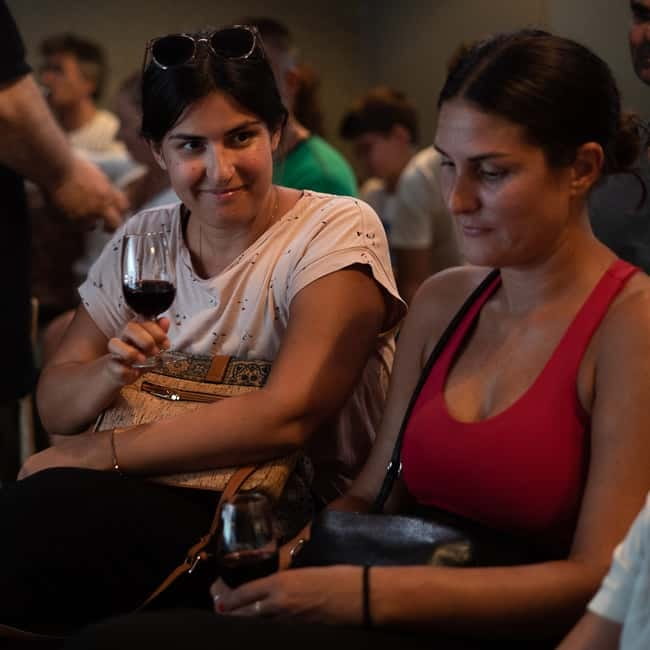
The Port arrives as part of the performance, with a glass of Tawny Port included in the ticket. The pairing is natural: Fado and Port are two well-known parts of Portuguese culture, and the drink gives you a small tasting moment without adding a separate winery visit.
Tawny Port is generally smoother and nuttier in character than young ruby Port, though the specific bottle and serving details are not given. You can sip it while watching the musicians and listening for the difference between the classical guitar and the Portuguese guitar.
This part works best when you treat the Port as a cultural touch, not the main reason to book. The serving is a modest glass, and the focus remains on the music. If you do not drink alcohol, the experience information does not confirm a nonalcoholic substitute, so check before booking if that matters to you.
The program also gives special attention to the playing techniques of Lisbon and Coimbra. You may not leave able to identify every technical detail, but you will have a clearer ear for the instrument and a better sense of why Portuguese guitar players receive so much attention.
Same town, a different pour:
- From Porto: Douro Valley w/ Boat Tour, Wine Tasting & Lunch
★ 4.7 · 19,061 reviews - Complete Douro Valley Wine Tour with Lunch, Wine Tastings and River Cruise
★ 5.0 · 12,920 reviews - Porto: Douro Valley with Winery Lunch, Tastings & Cruise
★ 4.7 · 7,002 reviews - Authentic Small Group Douro Wine Tour with Lunch & River Cruise
★ 5.0 · 4,775 reviews
Coimbra Fado and the sound of Portuguese students
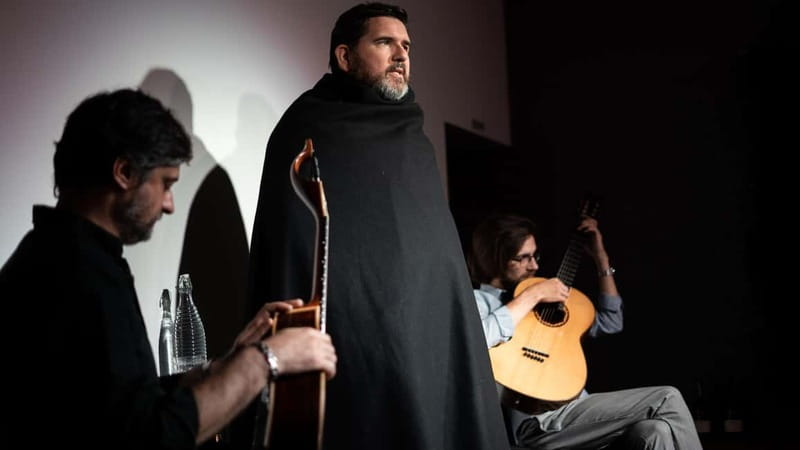
The Coimbra section is the most distinctive part of the evening. Coimbra Fado is tied to the city’s university tradition and is sung live by a male performer who was a student at Coimbra University. That connection matters because the style is not simply Lisbon Fado performed in another city.
Coimbra songs are closely linked with student life, university memory, farewell, and the passage from youth into adult life. The performer’s own connection to the university gives the segment personal weight. You hear not only a genre but also a tradition carried by former students.
This is where the program becomes especially valuable for visitors who might otherwise assume all Fado sounds alike. The male voice, the subject matter, and the performance tradition create a clear change from the earlier Lisbon material.
One song mentioned in connection with the show is Balada de Despedida, a Coimbra farewell song. It can be a powerful moment, especially if you have a personal connection with university life, leaving home, or old friendships. The performance also includes a small interactive element, with the audience guided to sing along during parts of selected songs.
The sing-along is not a long audience participation exercise. It is a brief way to make the room feel involved and to show how these songs function as shared cultural memories rather than private stage pieces.
Amália Rodrigues, the queen of Fado
A later section focuses on Amália Rodrigues, widely known as the queen of Portuguese Fado. The program explains how she transformed traditional Fado and helped take it to a much larger audience.
This is an important piece of the story because Fado did not remain fixed in its earliest form. Amália’s interpretation helped make the music recognizable around the world, while still drawing from traditional styles. The show uses film and commentary to place her influence within the broader development of the genre.
You do not need to be an Amália fan to value this section. It gives you a useful reference point. After hearing the earlier traditional material, you can understand why her voice, phrasing, and public profile mattered so much.
The short films are woven between performances rather than shown as one long documentary. That keeps the program moving. Still, the balance will not suit everyone. If your ideal Fado night means sitting quietly while singers perform for an hour, you may find the educational material slightly too prominent. If you want to know what you are hearing, the structure is a major benefit.
How Fado survives in modern Portugal

The final part looks at the music beyond its traditional forms. Fado continues through new poetry, blends with other musical styles, and respects older methods while allowing performers to bring their own voice.
That ending helps prevent a common misunderstanding. Fado is not only an old sound preserved for visitors. It remains a working form of Portuguese expression, shaped by new singers and changing ideas while keeping familiar instruments and themes.
I like this approach because it gives the show a forward-looking finish. You hear where Fado came from, meet some of its major forms, and then see how it can continue without losing its identity.
The program does not claim to cover every regional style or every major performer. It is an introduction, not a complete survey of Portuguese music. In one hour, that is a sensible choice. The material gives you enough background to recognize differences and ask better questions when you later hear Fado elsewhere in Portugal.
What the performers and production do well
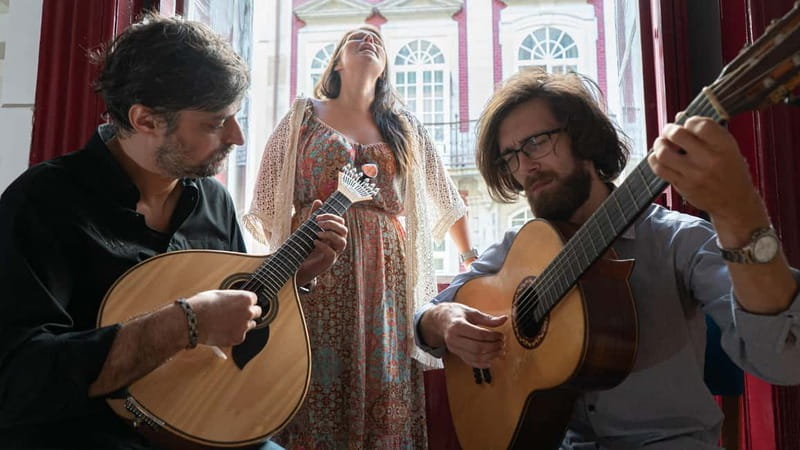
The strongest part of the experience is the musical quality. Two singers and two instrumentalists create a small ensemble, but the sound is not thin. The voices provide contrast, and the Portuguese guitar gives the performance its unmistakable local character.
The singers are presented as both male and female performers, with the Coimbra portion led by a male former student. That variety keeps the program from settling into one vocal style. The musicianship also receives particular attention, especially the Portuguese guitar playing.
The production has a friendly, interactive side. The audience may be invited to sing along for parts of a few songs, and the hosts welcome people warmly. One practical example shows the value of that personal approach: when a couple had trouble arriving, staff helped arrange an alternative show. That kind of flexibility is useful in Porto, where steep streets, confusing addresses, and busy evenings can complicate plans.
The tone stays approachable. You can enjoy the concert without understanding every historical point, but the explanation is strong enough for someone who knows nothing about Fado.
Is $18 good value for Porto?
At $18 per person, this is one of the easier cultural activities to fit into a Porto budget. The price includes the live performance, multimedia material, audio guide, and a glass of Port. You are paying for a complete one-hour program in a central venue, not only a drink and a short musical set.
The value is strongest for first-time visitors. A restaurant performance may give you more food and a longer evening, but it may not explain the difference between Lisbon and Coimbra Fado or show how the genre changed through Amália Rodrigues and later artists.
The value is less clear if you already know Fado well or plan to attend several concerts. In that case, the educational sections may repeat material you have already heard, and you might prefer a longer, music-only performance.
For most people, though, the combination of live music, cultural context, and Port wine makes the ticket fair. The one-hour length is also practical. You can schedule it after a day of sightseeing, before dinner, or as a compact evening activity when you do not want another long tour.
Who should book this experience?
I would recommend it to anyone who wants a clear first introduction to Fado. It works particularly well for couples, families with older children, solo visitors, and anyone who enjoys music but does not speak Portuguese.
It also suits you if you prefer a cultural activity with a firm end time. One hour is long enough to feel worthwhile and short enough to fit around dinner or an evening walk along the Douro.
The show may be less suitable if you want only uninterrupted songs, a large-scale concert, or a late-night Fado house with a full meal. It is also not designed as a detailed musicology course. Think of it as a guided performance that gives you the basic map before you listen more widely.
The multilingual support makes the program accessible to international audiences. Audio assistance is offered in English, French, Spanish, and Portuguese, while staff can greet you in those languages.
Practical details before you book
The auditorium is at Rua de São João 99 in Ribeira, close to the Douro River. Use the full address rather than relying only on the name, since the Ribeira area has many small streets and performance venues.
The ticket includes free cancellation up to 24 hours before the activity, and you can reserve now and pay later. Starting times vary, so check availability for your date.
Plan on one hour. The timing is a strength, but it also sets a limit. You will hear the main Fado traditions and receive useful context, yet you will not hear a complete concert-length selection from every style.
If you do not drink alcohol, ask about the serving before booking because the standard inclusion is Tawny Port and a nonalcoholic replacement is not confirmed. The venue is wheelchair accessible, and the audio guide supports four languages.
Should you book Fado na Baixa?
Book it if you want to understand Fado before judging it. The strongest reasons are the clear explanation, the contrast between Lisbon and Coimbra styles, the live Portuguese guitar, and the intimate room. At $18, it offers a practical introduction with a small Port tasting included.
Skip it only if your priority is a longer music-only concert or if you already know the main Fado traditions well. For most first-time visitors to Porto, this is a thoughtful way to spend an hour and hear why Fado remains such an important part of Portuguese life.
FAQ
Where does the Fado na Baixa concert take place?
It takes place at the Fado na Baixa auditorium at Rua de São João 99, 4050-553 Porto, in the Ribeira area near the Douro River.
How long does the experience last?
The performance lasts one hour.
What is included in the ticket?
The ticket includes the live performance, multimedia content, an audio guide, and one glass of Tawny Port.
Which languages are available?
The audio guide is available in English, French, Spanish, and Portuguese. Hosts or greeters can speak Portuguese, Spanish, English, and French.
Is the venue wheelchair accessible?
Yes, the activity is listed as wheelchair accessible.
Does the show include both Lisbon and Coimbra Fado?
Yes. The program presents traditional Lisbon Fado and Coimbra Fado, including the Coimbra tradition associated with Portuguese university students.
Can I cancel the booking?
Yes. You can cancel up to 24 hours in advance for a full refund. You can also reserve now and pay later.
More Live Music Nights in Porto
- Dubai: Sunset or Dinner Cruise with Live Music & Open Bar
★ 4.7 · 6,030 reviews - Key West Sunset Sail with Open Bar, Live Music and Hors D’oeuvres
★ 4.5 · 3,559 reviews - Dubai Marina Dinner Cruise with Live Music & Open Bar
★ 4.5 · 2,780 reviews - Budapest: Prosecco Dinner Cruise with Live Music
★ 4.4 · 1,336 reviews
Freshly poured around Porto
- Porto: Daytime or Sunset Douro River Cruise With Port Wine★ 4.7 · 714 reviews
- Porto: 6 Bridges Cruise & Port Wine with Sunset Option★ 5.0 · 997 reviews
- Porto: 6 Bridges Port Wine River Cruise with 4 Tastings★ 4.8 · 219 reviews
- Porto: Douro Cruise, 6 Bridges & 4 Port Wines (Max 7)★ 5.0 · 69 reviews
- Porto: 3 or 5 Port Wine Tasting with Pairings★ 4.9 · 152 reviews
- Porto Half-Day Tour and Wine Tasting★ 4.4 · 67 reviews
- From Porto: Douro Valley Wine Tour with Lunch and Cruise★ 4.8 · 311 reviews
- From Porto: Douro River Cruise, Winery Visit & Lunch★ 3.7 · 103 reviews
Port Wine Cellar Tours, side by side.
Porto: Live Fado Show with Glass of Port Wine
Read our review →
Lisbon: Live Fado Show with Port Wine at Lisboa em Fado
Read our review →
Porto: Bridges Cruise & Sunset & Port Wine Cellar Option
Read our review →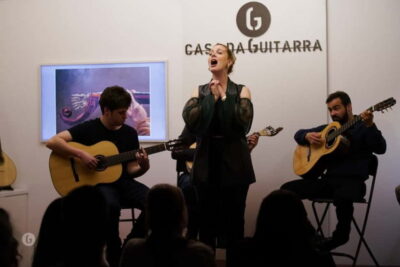
Porto: Fado & Port Wine in Traditional Portuguese Music Shop
Read our review →
Port Wine Lodges Tour Including 7 Port Wine Tastings (English)
Read our review →
Porto: Charming Sailboat Cruise with Port Wine,Sunset Option
Read our review →
Porto: Douro River Boat Cruise with Port Wine Tasting
Read our review →
Porto: Graham’s Port Lodge Tour with Premium Wine Tastings
Read our review →Lists this tasting sits in