
Review · FRANCE
Champagne: Champagne Tasting Class with Lunch
The best part of this Aÿ-Champagne experience is that it treats Champagne as a craft, not just a luxury label. At Le Clos Corbier, you visit old cellars, learn how the wine is made, and test your senses before sitting down to a generous regional lunch.
I like the small family-house setting and the hands-on format. The nose workshop, Champagne quiz, and blind tasting make the lesson stick. I also like that the meal brings in pâté en croûte, Langres cheese, pink biscuit cake, red Côteaux Champenois, and Ratafia. The main consideration is the bilingual presentation: if the session is given in both French and English, it may take longer than a single-language tour.
Key points to know before you book
- Three blind Champagne samples: Compare wines from small producers and put the tasting lesson to work.
- Cellars from the 1850s: See traditional underground spaces and an old-style press at Le Clos Corbier.
- Lunch is part of the experience: Expect homemade regional food, not a token snack plate.
- A real sensory lesson: Train your nose and palate with an aroma workshop before tasting.
- Three hours in Aÿ-Champagne: The visit ends in the early afternoon, leaving time for more sightseeing.
- A good fit for beginners: Guides including Emma, Charlotte, Marie, Amanda, and others explain the subject in clear English and French.
Why this family Champagne house feels different
Many Champagne visits are built around a famous name, polished rooms, and a carefully controlled brand message. Le Clos Corbier offers a more personal look at the wine country. You are visiting a family domain in Aÿ-Champagne, among the vineyards, with the production story placed ahead of marketing.
That difference matters. You get context about the grapes, the making of Champagne, and the work behind a bottle. The owner has sometimes joined the group to answer questions, adding a direct link to the people who run the house. The tone is relaxed, social, and welcoming rather than formal.
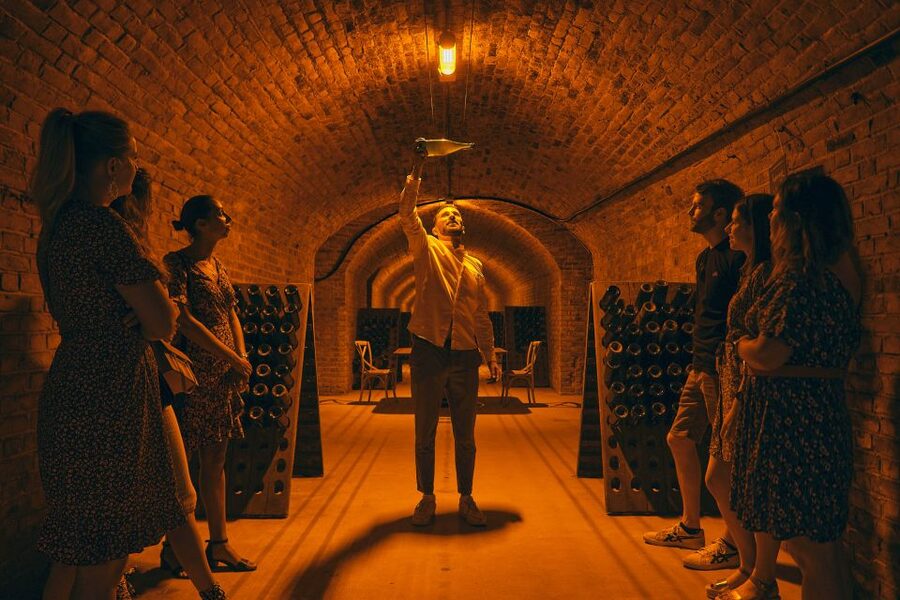
The setting also helps. There is a traditional press and cellars dug in the 1850s, so the history is not just explained with a slideshow. You can see the old working spaces and understand why cellars matter in Champagne production. Bring a jacket, since the cellar temperature averages about 10°C.
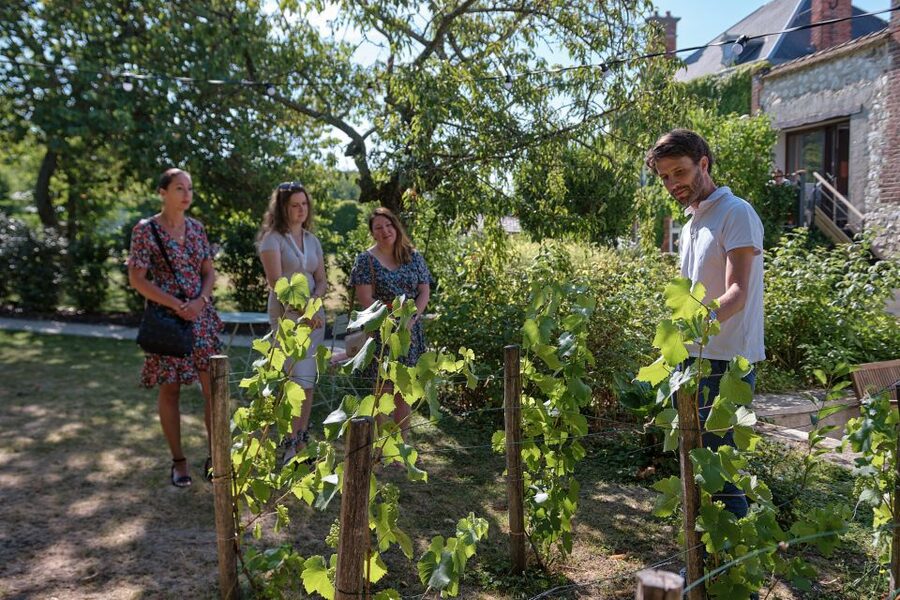
You should not expect a grand, famous Champagne brand or a vast underground attraction. This is a smaller house, and that is the point. One useful detail from the experience is that you may not be walking through a vineyard in the way you might expect. The property is in the Champagne vineyard area, but the tour centers on the house, cellar, tasting, and meal.
More Champagne Tours in France
- Paris: Moulin Rouge Cabaret Show Ticket with Champagne
★ 4.7 · 16,088 reviews - Paris: Paradis Latin Cabaret Show with Optional Champagne
★ 4.6 · 2,231 reviews - Paris 3-Courses Gourmet Dinner Seine River Cruise with Champagne
★ 4.0 · 1,659 reviews
Starting with a lesson, not a glass
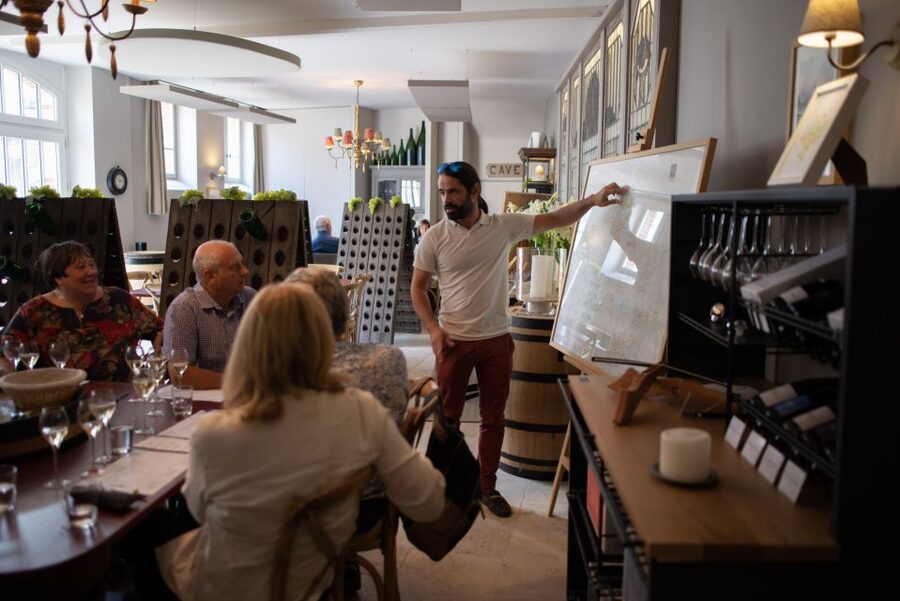
The first part is designed to give you a working vocabulary. Your guide explains Champagne grapes and production, then uses a quiz to check what you have picked up. The quiz keeps the information from becoming a long lecture, and it gives the group an easy way to start talking.
Guides vary by date. Emma has been singled out for making people feel at home and for answering questions in a clear, friendly way. Charlotte has led detailed tours of the family house and the Champagne-making process. Marie, Amanda, Estelle, Thomas, Alvaro, and others have also guided sessions, with English and French available.
The teaching style appears to be a major part of the experience. You do not need to arrive with wine knowledge. Beginners get an introduction to cultivation, grape varieties, cellar work, and production without being made to feel behind. If you already know Champagne, the value is more likely to come from the producer comparisons and the family-house perspective.
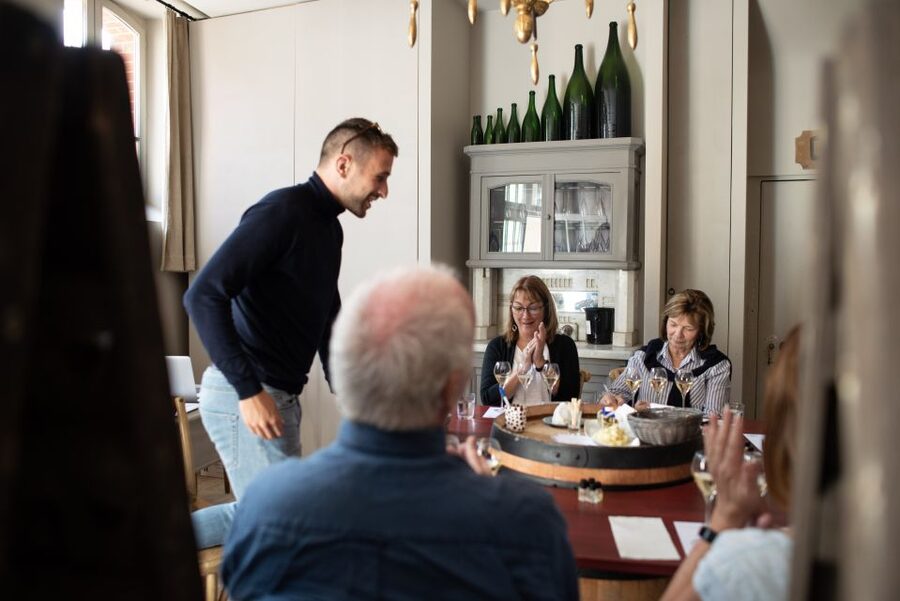
The quiz may end with a certificate, adding a playful finish to the class. Do not mistake that for a formal wine qualification. It is a souvenir and a bit of fun, but it gives the lesson a clear shape.
The nose workshop: learning to smell what you drink
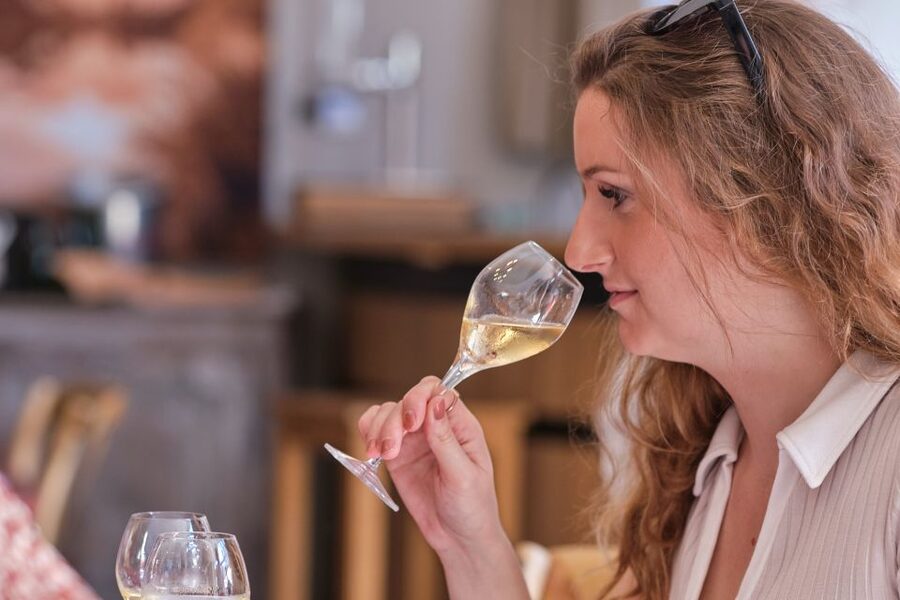
The olfactory workshop is one of the more useful features. You train your nose to identify aromas and flavors that can appear in Champagne. This is a simple idea, but it changes how you taste.
Most people drink Champagne quickly and focus on bubbles, sweetness, and whether they like it. Here, you slow down. You are encouraged to notice scents before tasting, then connect those impressions with what is in the glass. You may not suddenly become a professional taster, but you will leave with a better way to compare wines.
I like this part because it gives you a skill to use later. At a restaurant, shop, or another cellar, you can ask yourself what you smell and how the wine changes in your mouth. The workshop also suits couples and mixed groups, since everyone can offer an opinion without needing to be right.
The session is interactive rather than stiff. That helps explain why the experience works well for people who might normally find wine lessons intimidating. You learn by trying, guessing, and discussing.
Three Champagnes blind, with local snacks
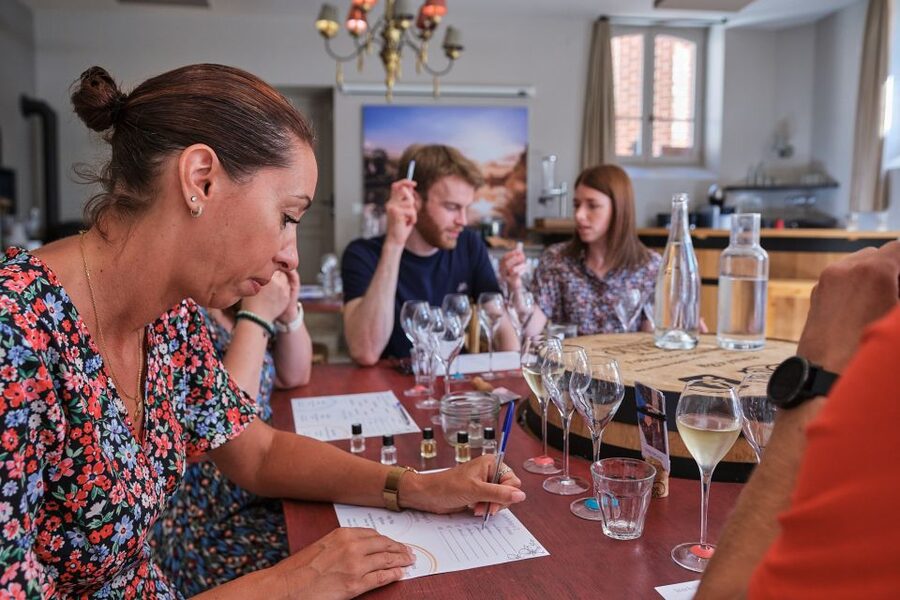
The central tasting puts three different Champagnes from small wineries in front of you without revealing their identities. You taste them blind, compare them, and try to work out what you are drinking.
This is where the earlier lesson becomes practical. You can pay attention to aroma, flavor, structure, and the way each Champagne feels. The point is not to prove that you have a perfect palate. It is to show how different bottles can taste and why price or reputation does not tell the whole story.
The blind format also removes some bias. If you know a famous label, you may expect to like it. Without the name, you judge what is in the glass. That makes the comparison more honest and often more fun.
Local snacks accompany the tasting. They give you something to eat before lunch and help turn the tasting into a social activity. The published details include six wine tastings overall, with the three blind Champagne samples at the center. Additional pours are served with lunch, including regional wines and spirits.
The exact flow can vary slightly. Some descriptions refer to five pours, while the experience includes six tastings in total. The important point is that this is more than a single welcome glass. You get enough samples to compare styles and continue tasting through the meal.
Same town, a different pour:
- Loire Valley Castles Day Trip from Paris with Complementary Wine
★ 4.5 · 3,907 reviews - Bordeaux: Cité du Vin Entry Ticket and Wine Tasting
★ 4.6 · 3,885 reviews - Bordeaux: River Garonne Cruise with Glass of Wine and Canelé
★ 4.5 · 3,630 reviews - Normandy D-Day Small-Group Day Trip with Omaha Beach, Cemetery & Cider Tasting
★ 5.0 · 2,786 reviews
A lunch built around Champagne country
Lunch is not an afterthought. It is a full regional meal with homemade specialties, served in the Champagne house after the class and tasting.
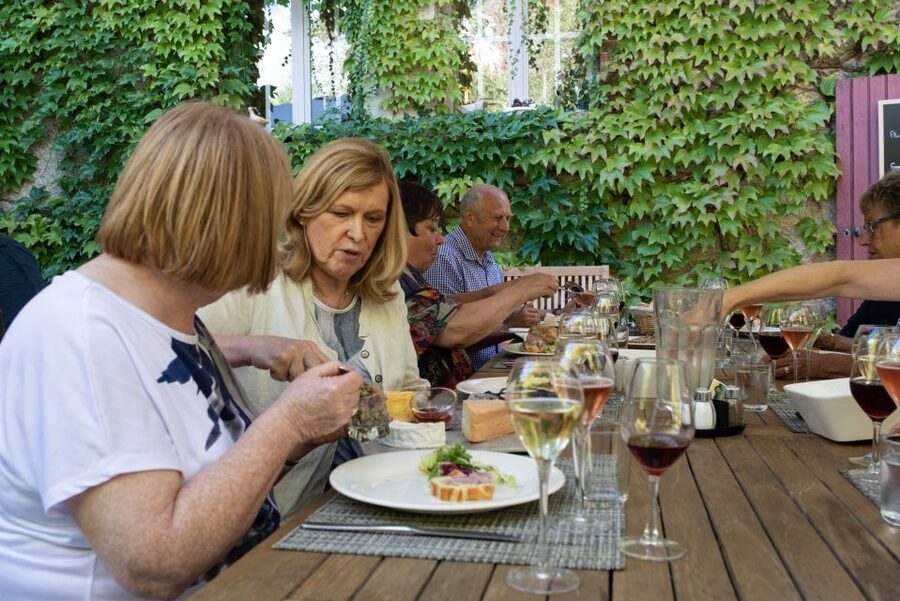
You might find pâté en croûte, a meat-filled pastry, Langres cheese, and pink biscuit cake. These foods give you a stronger sense of the region than a standard platter of generic bread and cheese. The meal is designed to pair with the wine, so the tasting continues at the table.
The portions are described as generous, which matters at a three-hour food-and-wine activity. You are not paying for a tasting followed by a tiny bite. Lunch forms a substantial part of the value, particularly if you would otherwise pay separately for a good regional meal.
The setting may be indoors or outside depending on conditions. A sunny lunch in the garden can be especially pleasant, but poor weather does not remove the main point of the activity. The meal, wine, and company remain central.
The menu can be adapted for allergies and specific diets. Tell the provider in advance so the kitchen can plan properly. The information supplied does not list every possible dietary option, so you should not assume that every request can be met without notice.
Beyond Champagne: Côteaux Champenois and Ratafia
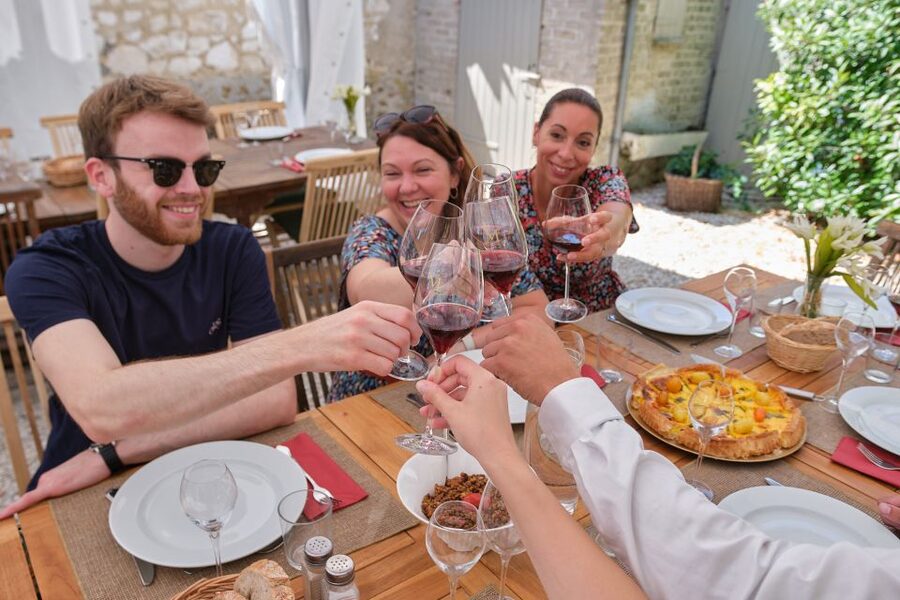
A useful touch is the chance to taste more than sparkling Champagne. The meal and later pours can include Côteaux Champenois, the local still red wine, and Ratafia, a regional liquor.
These additions widen your view of the area. Champagne is best known for sparkling wine, but the region also has still wine and a local after-dinner drink. Sampling them side by side helps you understand that the area has a broader drinking culture than its most famous export suggests.
Ratafia is served as a digestif, so expect it toward the end rather than at the start. The experience is still built around Champagne, but the extra drinks make the lunch feel like a complete French meal rather than a tasting exercise with food attached.
You should pace yourself. The advertised package includes several tastings, Champagne with lunch, red wine, and a digestif. The experience lasts three hours, and the final pours can add up. Eat the food, take your time, and do not feel obliged to finish every glass.
Time, location, and what to bring
The activity lasts three hours and finishes in the early afternoon. That makes it easy to fit into a day based in Epernay or the surrounding Champagne area, provided you arrange your own transport.
Transportation is not included. You need to reach Le Clos Corbier yourself and look for the sign, then ring the doorbell. The meeting instructions are simple, but do not assume a transfer from Epernay or Reims is part of the booking.
The host or greeter speaks English and French. If you are in a bilingual group, the guide may repeat parts of the presentation in both languages. That is considerate, but it can make the tour feel longer. If you want the shortest possible tasting, check the language arrangement when you book.
Bring a jacket for the cellar. At about 10°C, it will feel cool even on a warm day. Pets are not allowed, although assistance dogs are permitted. The venue is wheelchair accessible.
Children under 18 cannot drink alcohol. The supplied information does not say that children are generally encouraged to attend, so confirm the arrangements before booking a family group.
Is the $106 price fair?
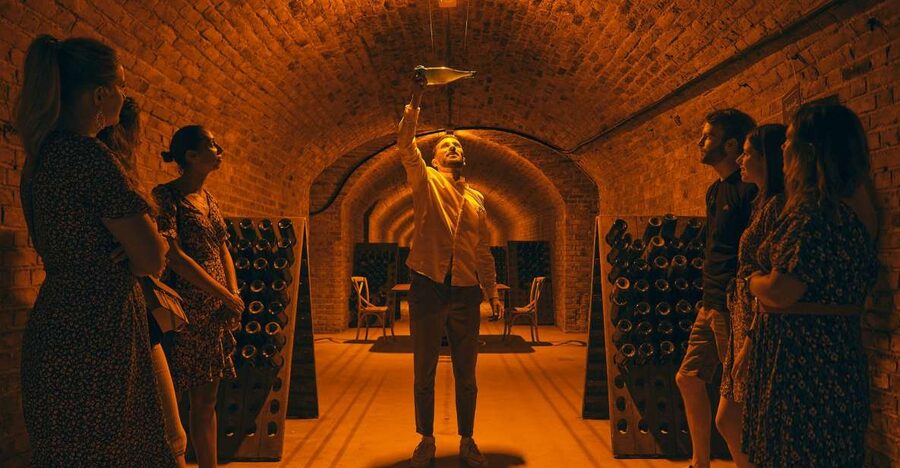
At $106 per person, this is not the cheapest way to drink Champagne. It is also not simply a tasting. The fee includes the guide, winery entry, cellar tour, six tastings, local snacks, and lunch.
I think the value is strongest if you want a half-day activity with food included. A separate cellar visit, tasting, and regional lunch could quickly approach the same cost, especially in a well-known wine destination. Here, the lesson and interactive activities give you something to do between pours.
The price is less attractive if you only want to sample Champagne or take photographs in a cellar. You are paying for instruction, food, and time with a guide. Someone who already has an expert palate and prefers a fast, private tasting may find the class format more than needed.
The small-house setting also gives the price a different kind of value. You are supporting a family domain and tasting wines from smaller producers rather than focusing only on major brands. That will appeal to you if meeting the people and understanding the work matters as much as the bottle.
Who should book this experience?
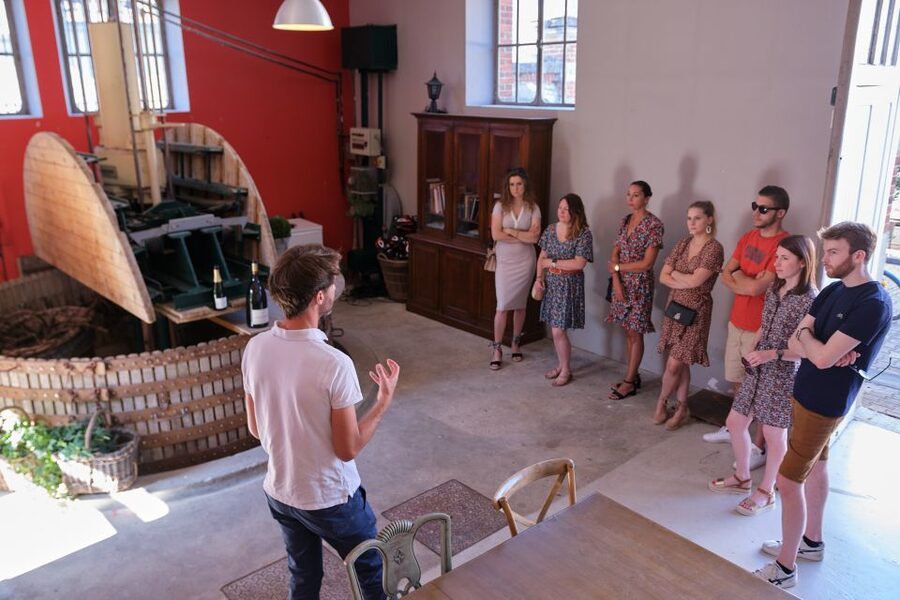
I would point beginners toward this tour first. The guides explain the basics, the nose workshop gives you a simple method, and the blind tasting makes the information active. You can arrive knowing almost nothing and still take part fully.
It also suits couples, friends, and solo visitors who enjoy a shared table. The quiz and guessing games make it easy to talk with the group, while the lunch gives the experience a relaxed social finish.
Wine lovers who have already visited large Champagne houses may find this especially worthwhile. The focus is smaller producers, family history, and the human side of production. It can fill in the details that a large commercial tour may skip.
I would be more cautious if you dislike group activities, cannot drink alcohol, or want a short visit with no meal. The format is social, and the food-and-wine pairing is a major part of the three hours. It is also not ideal for anyone expecting a major brand showroom.
Practical verdict: book it for the full experience
Book this Champagne tasting class if you want to understand what you are drinking, not just raise a glass in a famous region. The cellar visit, sensory workshop, blind comparison, regional lunch, and extra local drinks create a well-rounded morning.
The strongest reasons to choose it are the friendly bilingual guides, the generous meal, and the chance to meet a smaller Champagne producer. Emma, Charlotte, Marie, Amanda, and the other guides bring different personalities, but the format gives each one room to teach and engage.
Skip it if you only want a quick tasting or if you need transportation included. Otherwise, $106 buys a substantial three-hour introduction to Aÿ-Champagne, with enough food and instruction to make it feel like a real visit rather than a sales stop.
FAQ
How long does the Champagne tasting class last?
The experience lasts three hours and ends in the early afternoon.
Where does the activity take place?
It takes place at Le Clos Corbier in Aÿ-Champagne, in the Grand Est region of France. Look for the Clos Corbier sign and ring the doorbell.
How many wines are included?
Six wine tastings are included. The class features a blind comparison of three different Champagnes, followed by additional tastings connected with the meal, including Côteaux Champenois and Ratafia.
Is lunch included?
Yes. Lunch includes homemade regional specialties such as pâté en croûte, Langres cheese, and pink biscuit cake, served with Champagne and other regional drinks.
Can the lunch accommodate allergies or special diets?
Yes. The lunch can be adapted for allergies or specific diets. Make your needs known when arranging the experience.
What should I bring to the cellar?
Bring a jacket because the cellar temperature averages about 10°C. Pets are not allowed, although assistance dogs are permitted.
More Workshops and Classes in France
- Paris: French Wine Tasting Class with Sommelier
★ 4.8 · 550 reviews - Aÿ-Champagne: Champagne House Tour and Tasting Class
★ 4.9 · 209 reviews - Guided Bordeaux Wine Tasting Class with 6 Wines and pairings
★ 4.9 · 181 reviews - Dijon: Cheese and Burgundy Wine Tasting Workshop
★ 4.8 · 122 reviews
More Tastings with Lunch in France
- From Paris: Day Trip to Champagne with 8 Tastings & Lunch
★ 4.8 · 1,501 reviews - Paris: Wine and Cheese Lunch
★ 4.9 · 596 reviews - From Paris: Small-Group Champagne Tour with 3-Course Lunch
★ 4.8 · 304 reviews - Châteauneuf du Pape Wine Day Tasting Tour including Lunch from Avignon
★ 5.0 · 287 reviews
Freshly poured around France
- Pont-l’Évêque: DISTILLERIE PERE MAGLOIRE Entry with Tastings★ 4.5 · 72 reviews
- Montpellier: Pic Saint-Loup Wine Tour★ 4.9 · 290 reviews
- Passy-Grigny: Chocolate and Champagne Tasting Tour★ 4.8 · 284 reviews
- Paris: Tasting of 3 Wine and 3 Cheese★ 5.0 · 74 reviews
- Paris: Wine and Cheese Tasting★ 4.6 · 91 reviews
- Paris: Wine Tasting Experience with 6 Wines and Cheese Board★ 4.9 · 80 reviews
- Paris : Scenic Cruise on the Seine River with Champagne★ 4.0 · 81 reviews
- Paris: Moulin Rouge Dinner Show, Champagne, and Transport★ 4.6 · 368 reviews
Champagne Tours, side by side.
Paris: Moulin Rouge Cabaret Show Ticket with Champagne
Read our review →
Paris: Paradis Latin Cabaret Show with Optional Champagne
Read our review →
Premium Morning Snorkel Sail with Champagne Brunch
Read our review →
Paris 3-Courses Gourmet Dinner Seine River Cruise with Champagne
Read our review →
Top Private Cruises in Paris with French Champagne and surprises
Read our review →
From Paris: Day Trip to Champagne with 8 Tastings & Lunch
Read our review →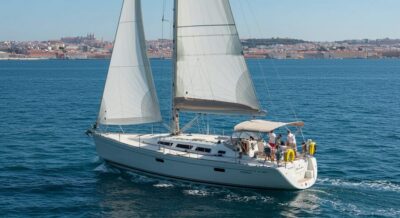
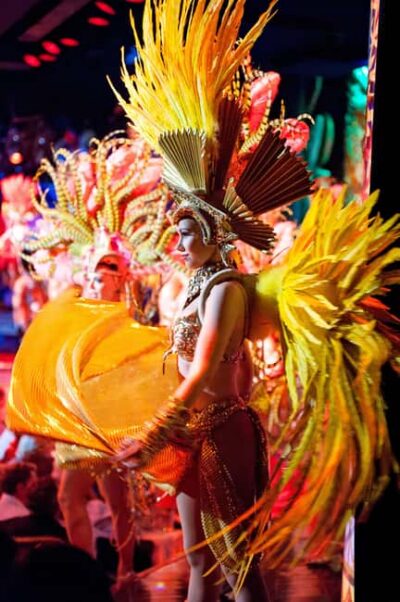
Paris: First Show Moulin Rouge with Champagne & Seine Cruise
Read our review →Lists this tasting sits in