
Review · ALICANTE
Alicante: Paella & Sangria Class with Tapas and Market Visit
Alicante’s best cooking lesson begins before you reach the kitchen. You walk through the Central Market, choose the ingredients for lunch, then carry that market knowledge into a working local restaurant. I like the direct link between shopping and cooking, and I like that you choose seafood, meat, or vegetarian paella instead of accepting one fixed dish. The only catch is that this is a social group activity, so it may feel less suitable if you want a quiet, private lesson.
I also like the way the class covers more than rice. You make sangria, sample Iberian ham, salted-fish tomato salad, local sausages, olives, and crisps, then sit down to eat. Guides called Federico, Fred, or Freddy are repeatedly praised for clear English, humor, patience, and getting strangers to work together.
Key points at a glance
- Market-first cooking: Choose paella ingredients inside Alicante’s Central Market and learn how local products are used.
- Three paella choices: Pick seafood, meat, or vegetarian paella, then receive the recipe for cooking it at home.
- A real restaurant kitchen: Prepare the food in a working local restaurant rather than a purpose-built tourist studio.
- More than a cooking class: Make sangria, taste several local tapas, and enjoy beer, soft drinks, and bottled water.
- Strong host-led experience: Federico, also called Fred or Freddy, guides the market visit and cooking session in English or Spanish.
- Good value for a half day: The $58 price includes a market visit, hands-on cooking, drinks, tapas, and a full meal over 3.5 hours.
Starting at Alicante’s Central Market
Meet at the market entrance, beside the metal Civil War memorial on the ground. Your guide wears a black T-shirt marked Paella&Sangria cooking Workshop Alicante, which makes the meeting point easy to spot.
The market visit is not a quick walk past food stalls. It gives the class its sense of place. Your guide takes you among the vendors to select the fresh ingredients needed for the paella and sangria, explaining Mediterranean products, Alicante food customs, and everyday shopping in the city.
This part matters because paella is not just a cooking formula. The rice, broth, sofrito, seafood, meat, and vegetables all depend on the ingredients chosen at the start. Seeing the produce before you cook helps connect the final dish with the food culture of the Valencian Community.
You should wear comfortable shoes. The market visit involves standing and walking, and the cooking session also keeps you on your feet at different points. The activity is listed as wheelchair accessible, though one past group had a mobility issue during the move from the market to the restaurant, so it is sensible to mention any access needs clearly when booking and stay with the group during the transfer.
The market is also where the guide’s personality begins to shape the experience. Federico, known as Fred or Freddy to many participants, has been praised for explaining why particular ingredients are selected rather than simply handing out shopping tasks. He also uses both English and Spanish, useful if your group includes people with different language needs.
More Market Visits in Spain:
- Barcelona Paella Cooking Class with Market Visit, Tapas & Sangria
★ 5.0 · 2,531 reviews - Paella Cooking Class, Wine Tasting & Central Market in Valencia
★ 5.0 · 1,150 reviews - Pike Place Market Tasting Tour
★ 5.0 · 1,696 reviews
Choosing seafood, meat, or vegetarian paella
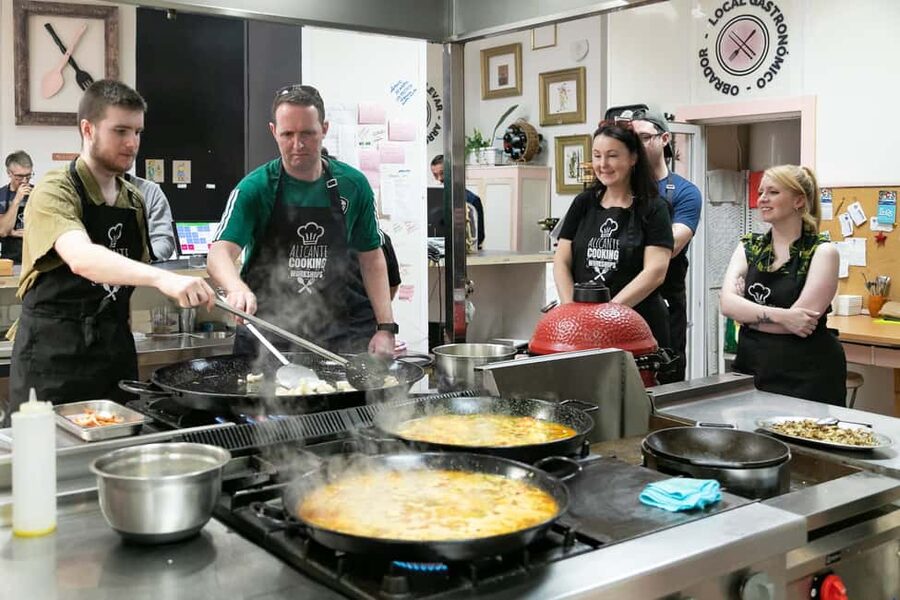
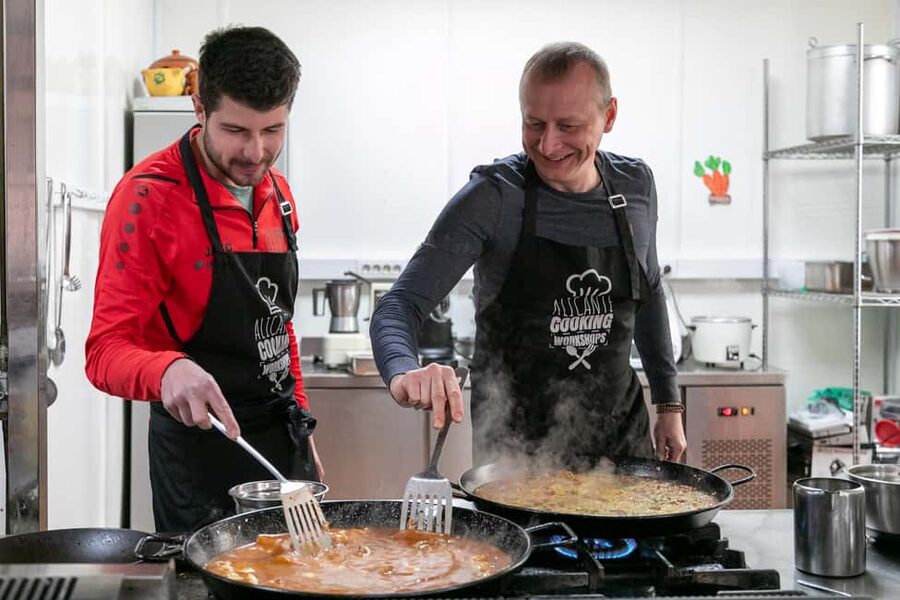
After shopping, you move to a real working kitchen inside a local restaurant. This is one of the strongest features of the activity. You are not cooking in a mock-up classroom made only for visitors. You prepare the meal in a place where local customers eat, with restaurant staff also described as friendly and accommodating.
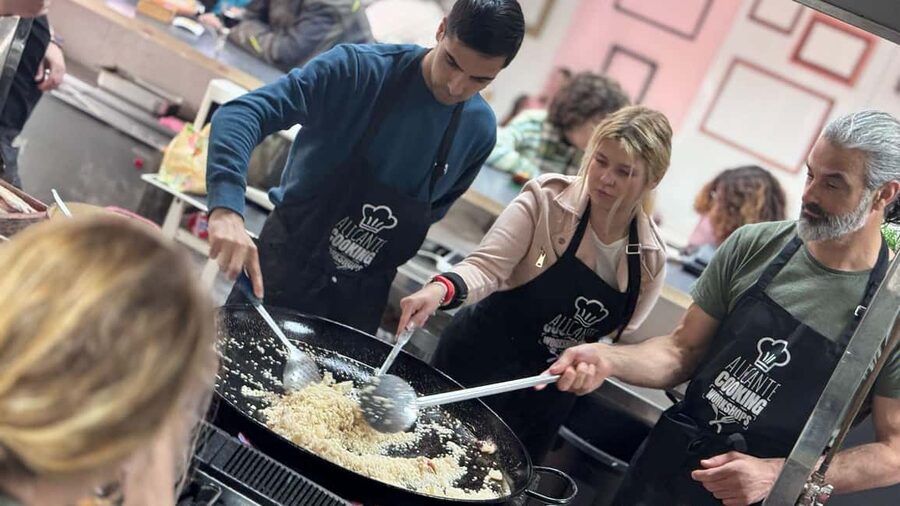
The chef guides you step by step. You help prepare the broth and Alicante’s signature salmorreta, a cooked sofrito that gives the rice its color and savory base. From there, you work toward the final golden rice.
Your choice of paella style is important. Seafood suits anyone hoping for a classic coastal flavor. Meat gives you a heartier route, while the vegetarian version lets you take part without seafood or meat. The details of the available ingredients can vary with the market and the day, but the three broad choices are clearly offered.
Do not expect to stand back and watch a chef perform. The point is participation. The guide explains the process, assigns tasks, answers questions, and encourages everyone to take part. Several people with professional or serious home-cooking experience still found useful tips in the session, especially around ingredient selection and technique.
At the same time, this is not an advanced culinary school. The emphasis is on understanding the dish, cooking it together, and having a good time. If you want detailed knife training, professional kitchen theory, or a private chef lesson, this class may feel too relaxed. If you want to learn a dish you can recreate at home, it hits the mark better.
Making sangria while the paella cooks
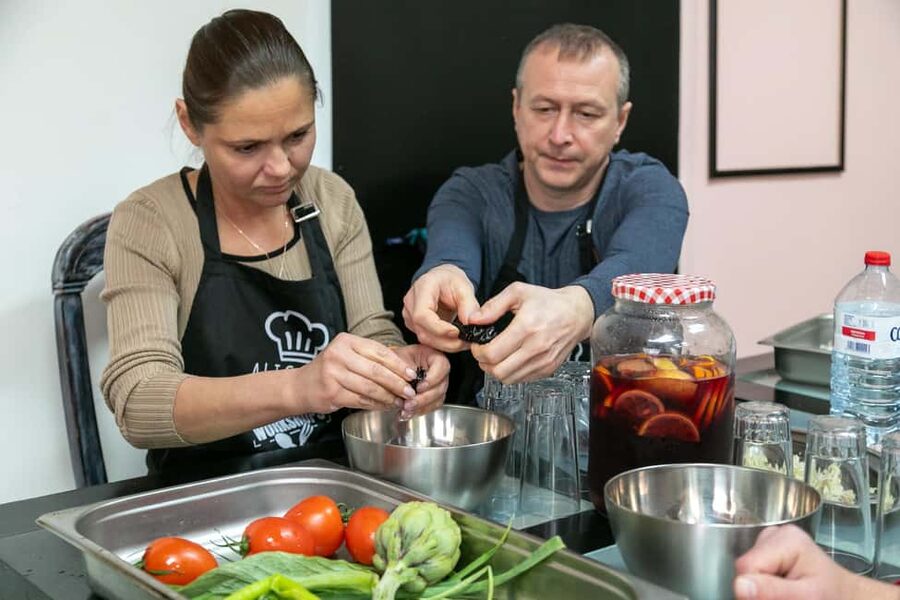
Paella takes time, so the cooking period becomes part of the meal rather than dead time. You make your own sangria while the rice cooks. An alcoholic version is available, but you can choose a nonalcoholic drink instead.
Beer and soft drinks are also included, along with bottled water. This makes the class easy for mixed groups, since not everyone has to drink sangria. The generous drinks service has been a recurring part of the positive feedback, but you should still tell the host what you prefer before the pouring begins.
The sangria adds a simple, hands-on task that breaks up the rice preparation. It also keeps the group talking while the paella develops. This is where the social side of the class becomes clear. Solo participants have been welcomed into the group, and the host works to get people from different countries cooking together rather than remaining in separate pairs.
The group format can be a strength or a weakness. If you enjoy meeting people and sharing a table, it adds warmth and often turns the meal into the kind of long lunch you remember. If you are booking for a special couple’s occasion and want close personal attention, a large group may feel less intimate. One session had 19 people after a large party joined, and participation still worked, but the experience can feel busier at that size.
Tapas before the main dish
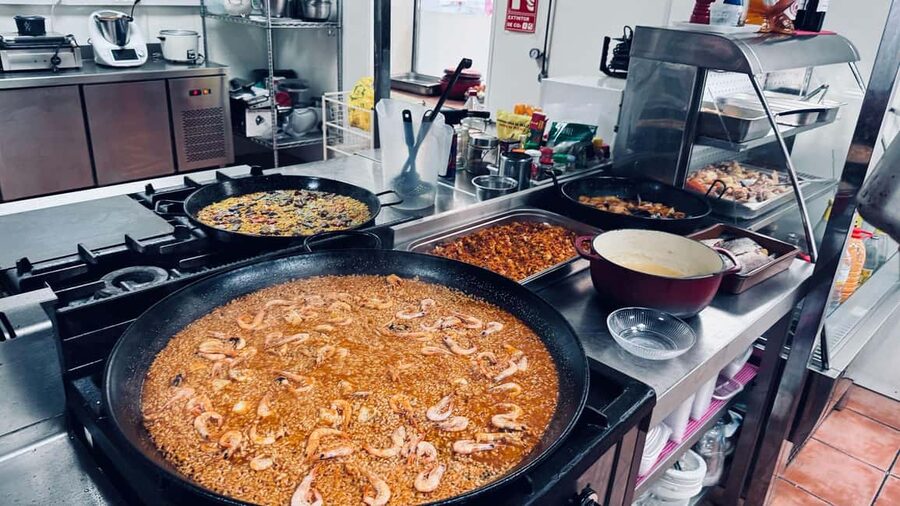
While you wait for the paella, the class serves a selection of traditional snacks and appetizers. Expect Iberian ham, tomato salad with salted fish, cold local sausages, olives, and crisps.
The salted-fish tomato salad deserves special attention. It gives you a taste of Alicante beyond paella, with a salty, fresh combination that several participants singled out as especially memorable. The tapas also make the meal more varied and prevent you from waiting hungry for the rice.
This spread is not a separate tapas crawl through the city. It is served as part of the cooking session, at the restaurant. That distinction matters if you are comparing this activity with a food tour that visits several bars. Here, the food supports the cooking lesson and the shared meal rather than replacing it.
The amount of food is generous. You should not need to plan another full lunch immediately afterward, especially since the paella, tapas, and drinks are all part of the same sitting. Consider keeping your evening meal light if you take the class earlier in the day.
More Shopping Stops in Spain:
- Early-Bird Tasting Tour of Pike Place Market
★ 5.0 · 1,154 reviews - Cusco: Peruvian Cooking Class, Cocktails & Local Market Tour
★ 4.9 · 512 reviews - Trevi Fountain, Pantheon, and Campo Dei Fiori Market Food and Wine Tour
★ 5.0 · 320 reviews - Catania: Volcanic Wine Tasting in a Metropolitan Market
★ 4.4 · 119 reviews
Sitting down to eat your own paella
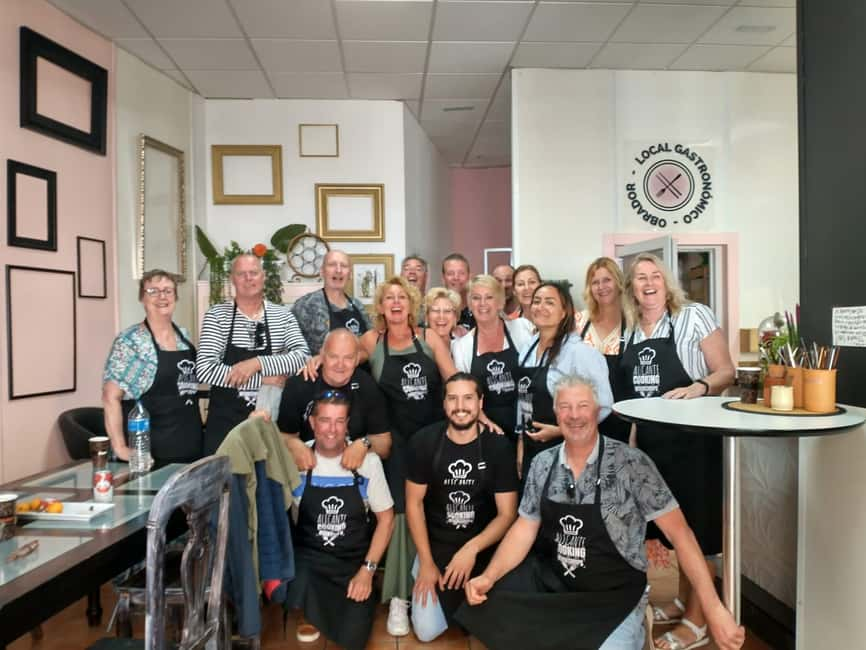
The final meal is the payoff, but it works because you have seen every stage first. You have chosen the ingredients, prepared the base, helped with the rice, made the sangria, and tasted local snacks. When the paella reaches the table, it feels connected to the market rather than like a dish served from nowhere.
The guide stays involved through the cooking and meal. Federico, Fred, and Freddy are different versions of the same guide’s name used in the supplied information, and the strongest praise centers on his friendly, patient teaching style. He is described as clear in English, comfortable in Spanish, funny without losing control of the group, and willing to answer questions.
That combination matters. A cooking class can fail if the teacher knows the recipe but cannot explain it. Here, the host’s job is part tour guide, part chef, and part group leader. He explains Alicante food traditions in the market, then turns those explanations into practical steps in the kitchen.
You also receive the recipe to take home. This is one of the best reasons to choose the class over a simple paella meal. You can try the dish again for friends and family, using the method and ingredient guidance learned in Alicante.
What the $58 price includes
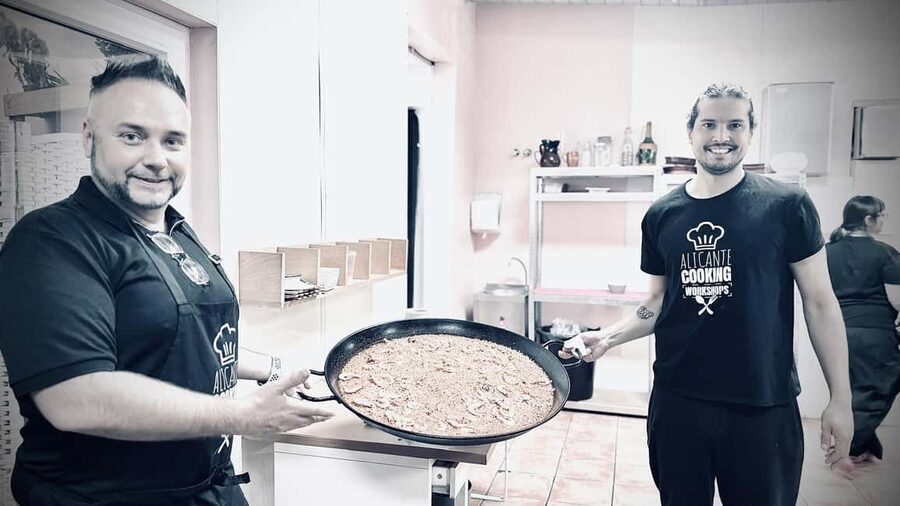
At $58 per person, the experience offers solid value for a 3.5-hour activity. You are paying for a guided Central Market visit, hands-on instruction, your chosen paella, homemade sangria or another beverage, several tapas, beer or soft drinks, bottled water, and the recipe.
A standard restaurant meal could cost less if you simply want to eat paella. But that comparison misses the main point. This experience gives you a half day of organized activity and a meal at the end, with a guide explaining the food and bringing the group together.
A separate market tour plus a cooking class would likely take more time and planning. Here, the two parts fit together. You see the ingredients, use them in the kitchen, then eat the result without needing to arrange transport between unrelated bookings.
The value is strongest for people who enjoy participation. If you dislike group activities or do not want to cook during your holiday, the price may feel high compared with ordering a plate of paella. For food lovers, solo visitors, couples, and families with older children, the combination of meal and instruction makes the cost reasonable.
Timing, language, and practical details
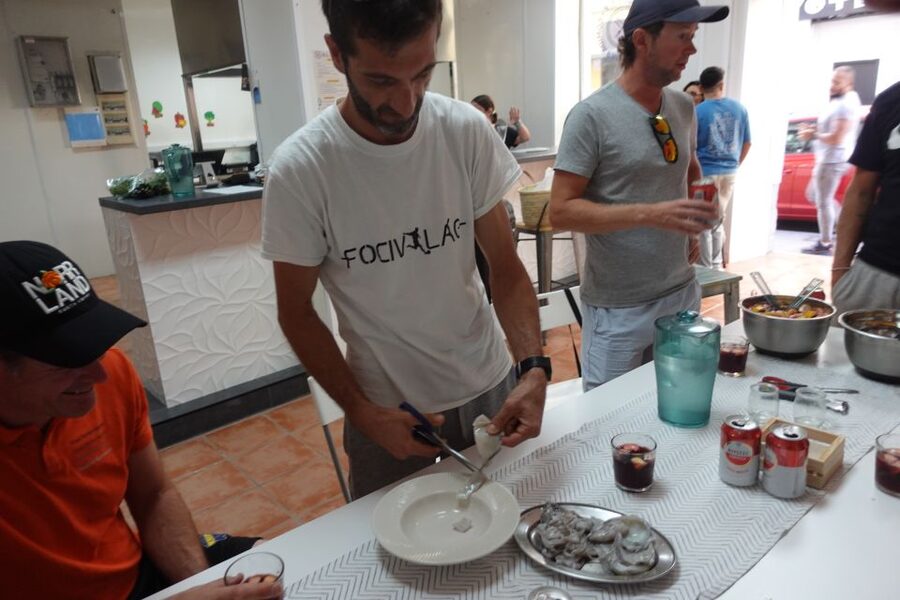
The experience lasts 3.5 hours, with several start times available depending on the date. Allow the whole block of time, since the market visit, cooking, drinks, and meal are designed as one continuous activity.
The class is offered in English and Spanish. The guide’s clear English has been especially useful for international groups, and he also translates between English and Spanish when needed.
Wear comfortable clothing and shoes. You may be moving around the market, helping in the kitchen, and standing during parts of the preparation. Pets are not allowed.
The meeting point is specific: the market entrance, beside the metal Civil War memorial. Look for the guide in the black workshop T-shirt. You can cancel up to 24 hours in advance for a full refund, and the reserve-now, pay-later option lets you keep plans flexible.
The activity is listed as wheelchair accessible. Because one past group had a problem keeping a participant with mobility needs together during the move to the restaurant, contact the provider ahead of time with any specific requirements and make sure the guide knows who needs assistance.
Who will enjoy this Alicante cooking class?
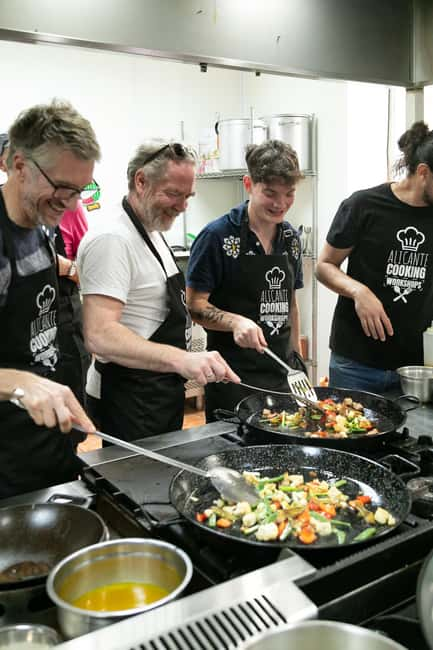
I would choose this for you if you want a local food activity with a clear beginning, middle, and end. The market visit gives you context, the cooking gives you something to do, and the shared meal gives you time to relax.
It is especially good for:
- Solo visitors who want an easy way to meet people
- Couples looking for more than another restaurant meal
- Families and groups with mixed cooking experience
- Anyone curious about Alicante food beyond the beach and old town
- Home cooks who want a recipe and practical tips
- Visitors looking for a weather-friendly activity, especially on a rainy day
You should think twice if you want a private class, a short tasting, or a quiet meal. The group size can change, and the best part of the experience depends on joining in. You will get more from it if you are willing to chop, stir, taste, ask questions, and talk with the people around you.
Should you book it?
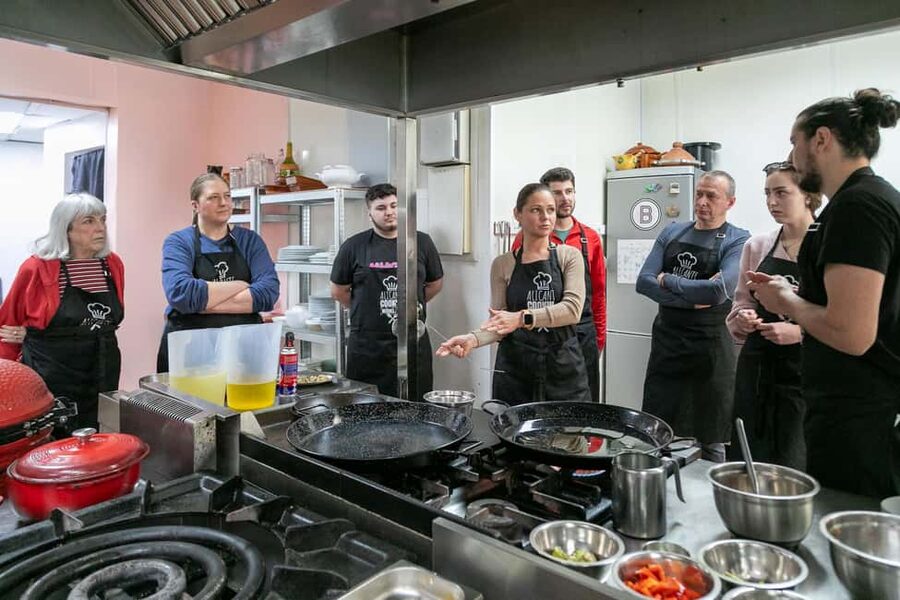
Book this Alicante paella and sangria class if you want to understand the food as well as eat it. The Central Market visit, salmorreta, choice of paella style, local tapas, drinks, and take-home recipe give the 3.5 hours real substance.
The main reason to book is the host. Federico, Fred, or Freddy brings the market and kitchen together with warmth, clear explanations, and a light touch. Just remember that this is a social group class, not a private chef experience. If that sounds like your kind of lunch, $58 is a fair price for a useful, filling, and distinctly Alicante experience.
FAQ
Where does the Alicante paella class meet?
Meet your guide at the entrance to Alicante’s Central Market. On the ground, look for the metal Civil War memorial. The guide wears a black T-shirt with white lettering that says Paella&Sangria cooking Workshop Alicante.
How long does the activity last?
The experience lasts 3.5 hours. Starting times vary, so check availability for the date you want.
Which languages are available?
The live guide leads the activity in English or Spanish.
Which types of paella can I choose?
You can choose seafood, meat, or vegetarian paella.
Is sangria included?
Yes. Sangria is included, and you can choose an alcoholic or nonalcoholic version. Beer, soft drinks, and bottled water are also available.
What food is included besides paella?
The tapas selection includes Iberian ham, tomato salad with salted fish, cold local sausages, olives, and crisps.
Can I take the paella recipe home?
Yes. The class includes the recipe so you can prepare the dish at home.
Is the activity wheelchair accessible?
The activity is listed as wheelchair accessible. If you have specific mobility needs, contact the provider in advance so the guide can prepare for them.
More Workshops and Classes in Spain
- Spanish Cooking Class Paella Tapas and Sangria in Madrid
★ 5.0 · 1,340 reviews - Madrid: Paella and Sangria Workshop in the City Center
★ 4.9 · 1,264 reviews - Barcelona: Cocktail Master Class by Mixologist with Tapas
★ 4.7 · 959 reviews - Málaga: Spanish Cooking Workshop with Paella and Sangria
★ 4.9 · 613 reviews
Freshly poured around Spain
- Picasso Museum and Walking Tour Plus Wine Tasting Upgrade★ 4.3 · 111 reviews
- Personalised Traditional Madrid Night Tapas and Drinks Tour★ 5.0 · 95 reviews
- Penedès: Discovery Tour with Cava Tasting★ 4.6 · 76 reviews
- Ibiza: Secret Coves Guided Boat Tour with Open Bar and Tapas★ 4.7 · 70 reviews
- Palamós: Sunset Boat Tour with Glass of Cava★ 4.2 · 74 reviews
- Barcelona: Montserrat Tour with Lunch & Wine Tasting Option★ 4.6 · 286 reviews
- Barcelona: Montserrat with Winery Visit and Farmhouse Lunch★ 4.7 · 178 reviews
- Manilva: Nilva Vineyard, Wine Tasting & Tapas Guided Tour★ 4.9 · 156 reviews
Alicante Drinks Tours, side by side.

Alicante: Small-Group Countryside Wine Tour with 4 Tastings
Read our review →
Alicante: Santa Bárbara Castle Wine Tasting & Tapas
Read our review →
Alicante: Craft Beer Tasting at Santa Barbara Castle
Read our review →
Alicante: Old Winery with Tastings & Gaudí’s style of Church
Read our review →

Alicante: Beer Spa Experience with Tastings and Snacks
Read our review →Lists this tasting sits in