
Review · KYOTO
Kyoto: Afternoon Japanese Izakaya Cooking Class
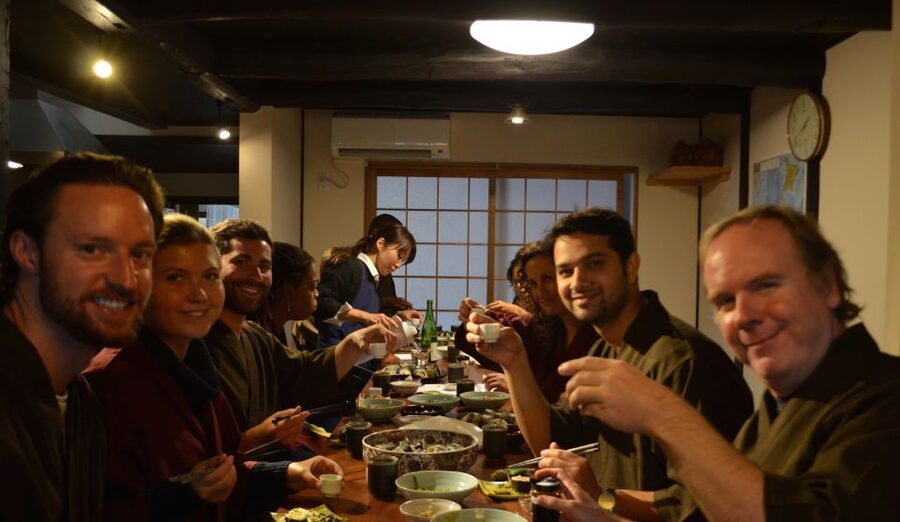
Kyoto’s best cooking lesson may be the one that skips the standard sushi routine. This three-hour izakaya class focuses on the everyday dishes you find in Japanese homes and casual restaurants, with two cooking sessions and a meal after each one. I like the practical recipes and the relaxed, talk-while-you-cook format. I also like that the English-speaking instructors, including Yumi and Yumiko, keep the food accessible to beginners.
The main tradeoff is pace. You may prepare five or six dishes in one afternoon, so the class moves briskly and leaves little time to linger over each technique. Still, the $67 price includes ingredients, equipment, an apron, instruction, and the food you prepare, which makes it a strong value for anyone who wants more than a meal and a few photos.
Key points at a glance
- Two cooking rounds: Prepare two or three dishes, eat them, then return to the kitchen for another two or three.
- More than sushi: Learn izakaya-style dishes, dashi, okonomiyaki, savory foods, and sometimes dessert.
- Recipes to take home: Step-by-step instructions make the dishes realistic to repeat in your own kitchen.
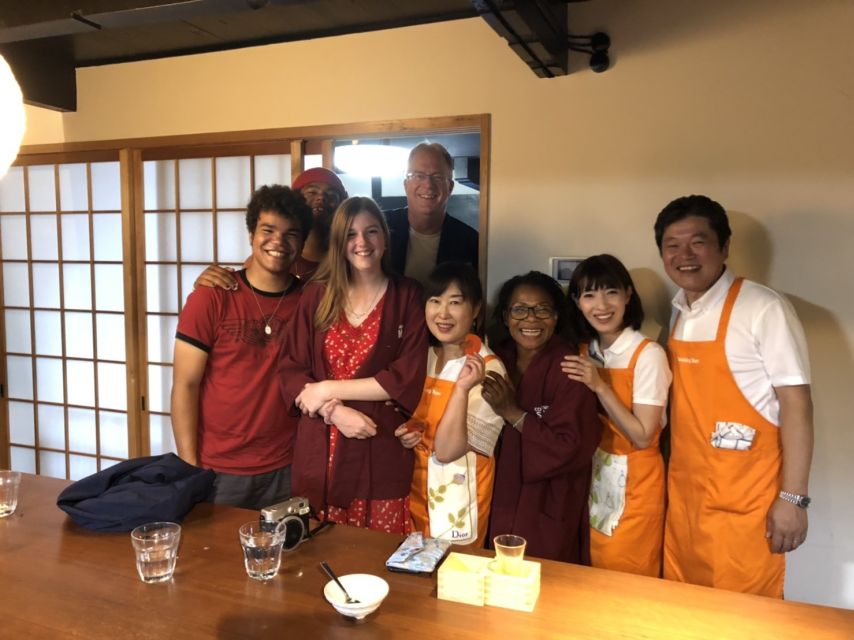
- Friendly English instruction: Yumi, Yumiko, and other English-speaking chefs explain techniques clearly and help you through each task.
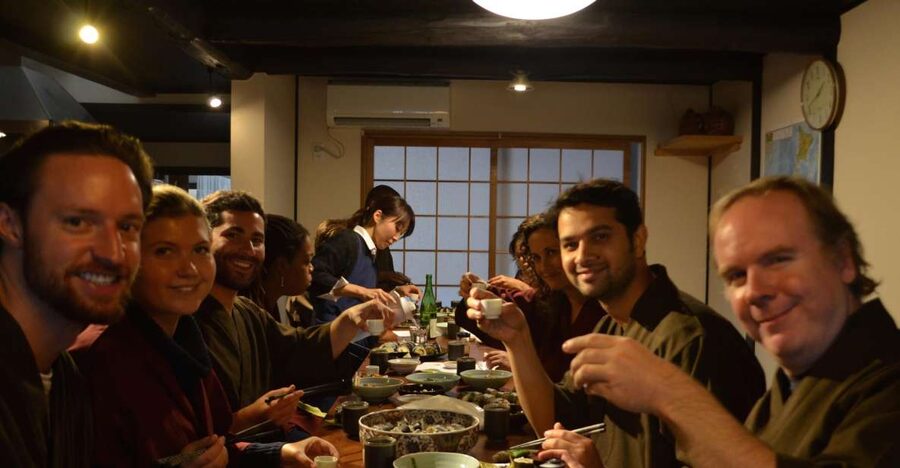
- A social afternoon: You cook and eat at the same counter, much like the easy conversation of a local izakaya.
- Useful for mixed groups: Beginners, families, teenagers, vegetarians with advance notice, and experienced cooks can all take part.
Why this Kyoto class feels different from a standard cooking lesson
The appeal begins with the menu. Instead of concentrating on one famous Japanese food, you work through a set of small dishes that reflect how people often eat in an izakaya, a casual restaurant where food arrives in several portions and conversation is part of the experience.
That gives the afternoon a useful rhythm. You are not stuck watching a chef demonstrate for hours, and you are not expected to prepare one complicated dish alone. You cook, sit down to eat, talk with the instructor, and then go back to the kitchen for the next round.
I especially like this setup for first-time visitors to Japan. You learn what ingredients such as dashi and mirin do, how several simple dishes fit together, and how Japanese food can be built from a few carefully balanced flavors. The lesson is about cooking, but it also gives you a better sense of how casual Japanese dining works.
The atmosphere is meant to be social rather than formal. Like an izakaya counter, the class encourages conversation while you prepare and eat. That makes it a good choice if you are traveling alone and want an easy way to meet people, or if your group wants an afternoon activity that is more interactive than sightseeing.
More Pub Crawls in Japan
- Tokyo Bar Hopping Tour in Shinjuku (All-You-Can-Drink + Dinner)
★ 5.0 · 3,587 reviews - Best of Shinjuku: Izakaya Food Tour (4 Stops, 14+ Tastings)
★ 5.0 · 1,863 reviews - Tokyo: Shinjuku Local Bar and Izakaya Guided Walking Tour
★ 4.9 · 1,794 reviews
Cooking Sun at Funayacho
The class meets at Cooking Sun, at Funayacho in Kyoto’s Shimogyo Ward. The supplied details do not give a walking time from a particular station or hotel, so check the exact meeting directions before setting out. The full address is Cooking Sun, Funayacho, Shimogyo Ward, Kyoto, Kyoto 600-8466.
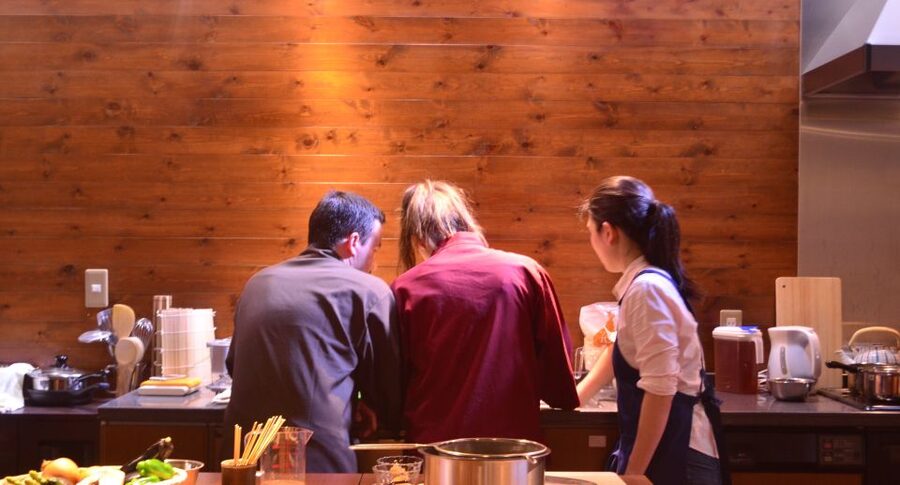
Once the session begins, the emphasis is on participation. You receive ingredients, an apron, and cooking utensils, then work through the dishes with the instructor. Several people specifically praised the organization of the cookware and ingredients, which matters when a class covers this much food in three hours.
The instruction is in English. That is important here because Japanese cooking depends on small details: how to mix a sauce, when to add a seasoning, how long to cook an ingredient, and what a finished texture should feel like. Clear English guidance lets you ask questions rather than simply copy hand movements.
The class can suit different cooking levels. Beginners receive simple explanations and step-by-step help, while experienced cooks can pay closer attention to the foundations of Japanese flavor. One experienced chef who attended found useful things to learn, which suggests the class is not limited to people who rarely cook.
The first cooking session: start with the building blocks
The first part usually covers two or three dishes. You cook them together with the chef, then sit down and eat before returning to the kitchen.
This break is more useful than it may sound. You get to taste the result while the preparation is still fresh in your mind. If a dish uses dashi, soy sauce, mirin, or another basic seasoning, you can better understand how it works when you taste the finished food right away.
Dashi is a good example. One participant described making the broth from the basics, which can give you a clearer idea of why Japanese soups and sauces have such a clean, savory taste. You may not become an expert in Japanese stock in one afternoon, but you leave with a method you can repeat.
The cooking tasks are designed to be manageable. You are not simply watching a demonstration and receiving a plate at the end. The instructors show each step, then give you a chance to do it yourself. That hands-on approach is useful for people who want to repeat the dishes at home rather than just remember what they tasted like.
This is also where the class begins to show its cultural value. Japanese food is often described through headline dishes such as sushi, ramen, or tempura. An izakaya menu offers a broader picture, with small savory plates, sauces, cooked ingredients, and food designed to share.
The second session: more dishes, more confidence
After eating the first group of dishes, you return to the kitchen for two or three more. The exact menu can vary, but the structure gives you a chance to build on what you learned earlier.
Some sessions have included six dishes in total, with five savory dishes and a dessert. Other descriptions focus on two or three dishes in each round, so you should not book expecting one fixed menu unless the supplier confirms it for your date.
Okonomiyaki has been a particular favorite for some participants. The dish is filling, fun to assemble, and easy to adapt at home once you understand the batter, fillings, and cooking process. It also shows why this class works well for people who want food they can make outside Japan, rather than recipes requiring restaurant equipment.
The second half may feel faster than the first. You are now handling more ingredients and trying to remember several techniques at once. That is not necessarily a flaw, but it is worth knowing before you arrive. If you want a slow, highly technical lesson on one dish, this is not that kind of class.
Instead, you get variety. You taste several styles of Japanese home and casual restaurant food in one sitting, and you leave with a small collection of recipes. The broad menu is one reason the class offers good value for a short afternoon.
Same town, a different pour:
- Shibuya Meltdown Nightlife Tour: All-You-Can-Drink Bar Hopping
★ 5.0 · 1,058 reviews - 1-Day Snow Monkeys, Zenko-ji Temple & Sake in Nagano
★ 5.0 · 1,020 reviews - 3-Hour Kyoto Insider Sake Brewery Tour with Tastings & Pairings
★ 5.0 · 917 reviews - Nagano: Snow Monkeys, Zenkoji Temple & Sake Day Trip
★ 4.9 · 833 reviews
Eating at the counter is part of the lesson
The meal is not an afterthought. You eat the food you have prepared during the class, in two stages, and talk with the chef while doing so.
That format helps explain the word izakaya. These restaurants are not simply places where you order one main course and leave. People often choose several dishes, share them, and spend time talking. The class borrows that social feeling without pretending to be a restaurant visit.
I like the chance to ask about ingredients while the food is in front of you. You can compare textures, taste the balance of a sauce, and decide which dishes you would actually make again. The meal also gives non-cooks a reason to join. You do not need to love kitchen work to enjoy sitting down to eat what you helped prepare.
The class is especially suitable for couples, families, and small groups with mixed interests. Teenagers have enjoyed the format, and one family found that even a reluctant home cook had a good time. If one person in your group loves food and another usually avoids cooking classes, the shared meal helps keep the afternoon appealing to both.
Vegetarians should tell the local supplier about dietary needs when booking. A vegetarian participant was accommodated with separate utensils and pans, but you should not wait until the class begins to raise the issue. The available menu changes and the supplier needs notice.
What you take home besides a full stomach
The most useful souvenir is the recipe set. Instructions are provided for the dishes, and several participants found them clear enough to use at home.
That matters because Japanese ingredients can feel unfamiliar at first. A recipe that simply says to add a sauce does not help much if you do not know what is in it or when to use it. Step-by-step notes give you a better chance of finding mirin, dashi, and similar ingredients after you return home.
The recipes also help you judge the class’s value. At $67 per person, you are paying for more than three hours of food. You receive instruction, ingredients, use of the kitchen equipment, an apron, utensils, and a meal made during the session. If you buy a cookbook, eat lunch, and take a short food tour separately, the total could easily be higher, though the comparison depends on your plans.
The class is not the cheapest way to eat in Kyoto. A local restaurant meal costs less. But a restaurant will not show you how to prepare the food, explain the ingredients in English, or give you recipes to use later. For someone who wants a skill and a cultural activity, the price is fair.
The teaching style and pace
The strongest part of the class is the teaching atmosphere. The instructors are described as warm, patient, encouraging, and clear in English. That combination is important because cooking lessons can become stressful when the teacher moves too quickly or assumes prior knowledge.
The chefs also appear to encourage conversation. You can ask about Japanese food customs while working, rather than waiting for a formal question period at the end. That relaxed style suits the izakaya theme.
The class is well organized, but organization does not mean slow. Preparing up to six dishes in three hours requires steady movement. You should expect to chop, mix, cook, listen, and eat without long pauses.
If you are a complete beginner, do not let the pace put you off. The instructions are intended to be easy to follow, and the tasks are broken into manageable steps. Still, arrive ready to take part. This is not a passive food tasting with occasional stirring.
If you have mobility concerns, the activity is listed as wheelchair accessible. For any specific access requirement, confirm the details with the provider before booking, since the supplied information does not explain the layout or equipment.
Who should book this experience
I would recommend this class to you if you meet one or more of these descriptions:
- You want to learn Japanese food beyond sushi and ramen.
- You prefer practical souvenirs to another decorative item.
- You enjoy eating in small groups and talking with a chef.
- You need an indoor activity during a break from temple visits and city walks.
- You are traveling with teenagers or family members who enjoy hands-on activities.
- You want recipes that can be repeated in a normal home kitchen.
- You are a beginner who wants patient guidance in English.
- You already cook and want a closer look at Japanese ingredients and basic techniques.
It may be less suitable if you dislike cooking, have a very restrictive diet that cannot be adjusted, or want a long, slow lesson focused on a single advanced technique. The menu is varied, and that variety comes with a fairly quick pace.
The class is also a good choice for a return visit to Kyoto. You do not need to spend the afternoon seeing another temple if you have already had your fill of major sights. A cooking session adds a different side of the city and leaves you with something you can use after your trip.
Booking details worth knowing
The activity lasts three hours, with starting times shown according to availability. It costs $67 per person.
The provider offers free cancellation up to 24 hours before the activity for a full refund. You can also reserve now and pay later, which helps if your Kyoto schedule is still shifting.
Instruction is in English, and the activity is listed as wheelchair accessible. Tell the local supplier about dietary requirements at the time of booking. This is particularly important for vegetarian requests or other changes that may affect ingredients and cooking equipment.
Should you book the Kyoto izakaya class?
Book it if you want to understand Japanese food by making it, eating it, and then trying it again at home. The two-part format, English instruction, recipe set, and broad menu give you more lasting value than a meal alone.
I would be comfortable recommending it to beginners, families, food-minded couples, and experienced cooks who want practical Japanese techniques. Just expect a busy afternoon rather than a leisurely demonstration, and confirm dietary needs before you pay.
For $67, you get a social Kyoto activity, a full meal, and several recipes that can keep working long after your holiday ends. That is a sensible exchange for three hours of your trip.
FAQ
How long does the Kyoto izakaya cooking class last?
The class lasts three hours.
How much does the cooking class cost?
The listed price is $67 per person.
Where does the class meet?
The meeting point is Cooking Sun, Funayacho, Shimogyo Ward, Kyoto, Kyoto 600-8466.
What food will I cook?
You will learn Japanese home and izakaya dishes. The class is divided into two rounds, with two or three dishes in each part. Some sessions have included six dishes, including savory dishes and dessert, but the exact menu may vary.
Will I eat the food I prepare?
Yes. You cook the first group of dishes and eat them before returning to prepare the second group. You then eat the remaining dishes as part of the class.
Is the instruction in English?
Yes. The instructor language is English.
Are ingredients and cooking equipment included?
Yes. The activity includes the cooking class, ingredients, an apron, and utensils.
Can I request a vegetarian or other special diet?
You should tell the local supplier about dietary requirements when booking. Dietary adjustments are not something to leave until the class begins.
Can I cancel the booking for a refund?
You can cancel up to 24 hours in advance for a full refund. The activity also offers a reserve-now, pay-later option.
More Workshops and Classes in Japan
- Fettuccine & Tiramisù: Cooking Class with Wine & Limoncello
★ 4.9 · 2,103 reviews - Pasta Cooking Class Near the Colosseum with 3 Spritz Cocktails
★ 5.0 · 1,686 reviews - Sorrento: Pizza Lesson, Wine, and Limoncello at a Local Farm
★ 5.0 · 1,513 reviews - Rome Tipsy Cooking Class: Make Pasta and Mix 3 Spritz Cocktails
★ 5.0 · 1,357 reviews
More Cooking Classes in Japan
- Osaka Sake Tasting with Takoyaki Cooking
★ 5.0 · 156 reviews - Rome: Pasta Making Class with Wine, Limoncello, and Dessert
★ 4.9 · 3,177 reviews - Rome Cooking Class: Make Pasta and 3 Spritz Cocktails
★ 5.0 · 2,937 reviews - Barcelona Paella Cooking Class with Market Visit, Tapas & Sangria
★ 5.0 · 2,531 reviews
Freshly poured around Japan
- Osaka: Bar-Hopping Night Tour in Namba★ 4.7 · 117 reviews
- Osaka Sake Tasting with Takoyaki Cooking★ 5.0 · 156 reviews
- Osaka: Guided Pub Crawl★ 4.4 · 331 reviews
- Nagano: Snow Monkeys, Zenkoji Temple & Sake Day Trip★ 4.9 · 833 reviews
- Kyoto: Sake Brewery and Tasting Tour in Fushimi★ 4.8 · 55 reviews
- Kobe: Guided Sake Breweries Tour with Tastings★ 5.0 · 55 reviews
- Kyoto: Insider Sake Experience with 7 Tastings and Snacks★ 5.0 · 266 reviews
- 1-Day Snow Monkeys, Zenko-ji Temple & Sake in Nagano★ 5.0 · 1,020 reviews
Pub Crawls and Bar Tours, side by side.


Madrid Tapas & Wine Tasting Walking Tour – Small Group Local Bars
Read our review →
Tokyo Bar Hopping Tour in Shinjuku (All-You-Can-Drink + Dinner)
Read our review →
Prague: Pub Crawl with Unlimited Drinks & 5-floor Club Entry
Read our review →


Amsterdam: Red Light District Pub Crawl with Unlimited Shots
Read our review →Lists this tasting sits in